Food to Try in Vietnam
What sets Vietnamese food apart
Vietnamese food is built on contrast. Every meal balances salty, sweet, sour, and spicy. Every bowl comes with a plate of raw herbs, a squeeze of lime, a dipping sauce that ties it all together. The textures shift constantly: crispy rice paper next to soft noodles, crunchy bean sprouts in a steaming broth, fried shallots scattered over smooth steamed rolls.
This is a cuisine that treats freshness as non-negotiable. Herbs are not garnish. They are structural. A bowl of phở without its accompanying plate of Thai basil, saw-leaf herb, and lime is incomplete. A bánh xèo eaten without lettuce wraps and mint misses the point entirely. The Vietnamese eat with all senses engaged. You build each bite at the table yourself.
How the Vietnamese Eat
Most Vietnamese eat out for the majority of their meals. This is not a luxury. It is practical. Cooking at home is reserved for special occasions in many households, especially in the cities. The street is the kitchen.
A typical day starts early. Breakfast is often phở, bánh cuốn (steamed rice rolls), or xôi (sticky rice with various toppings) from a street stall, eaten between 6 and 8am. Lunch is the largest meal, taken between 11am and 1pm: cơm tấm, a rice plate with grilled meat, or bún (rice noodle dishes with various toppings). Dinner can be anything from a second bowl of phở to a sit-down meal at a restaurant.
Street food is the main event
The defining feature of Vietnamese food culture is the street stall. In Hanoi and Ho Chi Minh City, the sidewalks fill with tiny plastic stools and low tables starting before dawn. Each stall typically makes one thing, and makes it extremely well. A woman who has spent twenty years perfecting her phở recipe operates from a single pot on the sidewalk. A bánh mì cart that has been at the same corner for decades draws a line at lunchtime.
This specialization matters. The best food in Vietnam almost always comes from someone who makes one dish, all day, every day. When you see a crowd of locals hunched over tiny stools on a sidewalk, sit down and order whatever they are having. If the stall has a handwritten Vietnamese sign and you're not sure what they're serving, typical translation apps won't be able to read the handwriting, but Menu Translator handles it — snap a photo and it tells you what they're serving before you commit to a stool.
Regional differences that matter
Vietnam stretches over 1,600 kilometers from north to south, and the food changes dramatically along that line. The three major regions (North, Central, and South) have distinct culinary identities.
The North: Hanoi and beyond
Northern Vietnamese food values subtlety. Dishes use fewer ingredients, less sugar, and less chili than in the south. The seasoning is restrained, letting the quality of the broth or the char on the meat do the talking. Many northern restaurant menus list variations of phở and bún with subtle but important differences, and Menu Translator breaks down exactly what each variation contains so you can order with confidence.
Phở in Hanoi is the purest version: a clear, deep beef broth that has simmered for twelve hours or more, flat rice noodles, thin slices of beef, and almost nothing else. The accompaniments are minimal compared to the south: a few herb sprigs, maybe some chili sauce on the side. Purists argue this is phở as it should be, and they have a point.
Bún chả is Hanoi's other essential dish. Charcoal-grilled pork patties and sliced pork belly arrive in a bowl of diluted fish sauce sweetened with vinegar and sugar, alongside a plate of rice noodles and a basket of herbs. You dip the noodles and herbs into the broth, fish out a piece of pork, and eat. It is simple, perfectly balanced, and the smell of the charcoal grill will follow you down the street.
Other northern essentials: bánh cuốn (paper-thin steamed rice crepes), chả cá (turmeric-marinated fish served sizzling with dill and noodles, so important it has an entire street in Hanoi named after it), and bún đậu mậm tôm (fried tofu with fermented shrimp paste, pungent and polarizing).
Central Vietnam: Huế and Hội An
Central Vietnamese food is the most complex and the spiciest. Huế was the imperial capital, and its cuisine still has that aristocratic influence: elaborate preparation, more dishes per meal, and layered flavors.
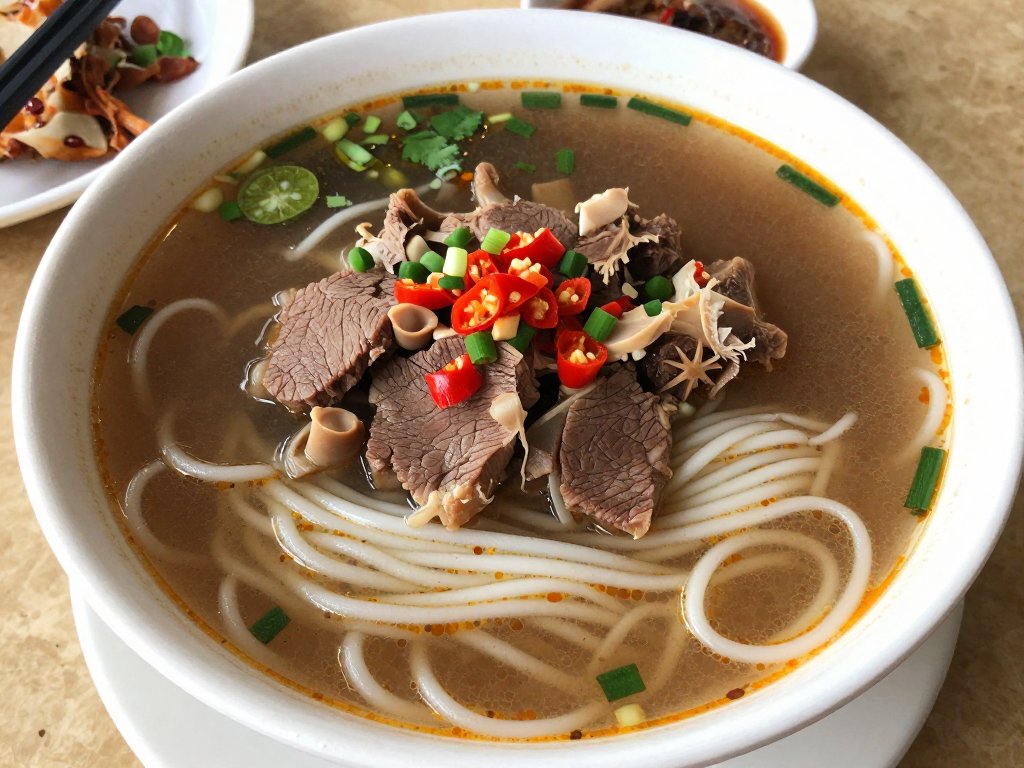
Bún bò Huế is the region's iconic soup: thick round noodles in a lemongrass and chili-infused beef broth with hunks of beef shank, pork knuckle, and cubes of blood pudding. It is bolder and more aggressive than phở, and many Vietnamese consider it the better soup.
Huế is also known for its small savory cakes and dumplings: bánh bèo (steamed rice cakes with shrimp flakes), bánh nậm (flat rice dumplings in banana leaf), and bánh lọc (translucent tapioca dumplings with shrimp and pork). Eating a sampler of these at a Huế specialty restaurant is a required experience. The menus at these places are often entirely in Vietnamese, but Menu Translator handles the script well and explains what each variation actually is, which matters when you're choosing between ten types of bánh.
Hội An, a UNESCO-listed town an hour south of Huế, has its own exclusive dish: cao lầu. The thick, chewy noodles (made traditionally with water from a specific well and lye from a local island's ash) have a texture unlike any other Vietnamese noodle. Topped with sliced pork, croutons, and fresh greens, it exists nowhere else in authentic form.
The South: Ho Chi Minh City (Saigon)
Southern food is sweeter and bolder, with more herbs. The Chinese and Cambodian influences are stronger here, and the tropical climate means more coconut, more fruit, and more sugar in the cooking. Saigon menus can be sprawling, and dish names alone rarely tell you what you're getting -- Menu Translator gives you full descriptions with ingredients and dietary info so nothing is a mystery.
Phở in Saigon comes with a massive plate of accompaniments: bean sprouts, Thai basil, saw-leaf herb, lime wedges, chili slices, and hoisin sauce. The broth is slightly sweeter than in the north. Southerners consider this the complete version; northerners consider it overloaded. Both are excellent.
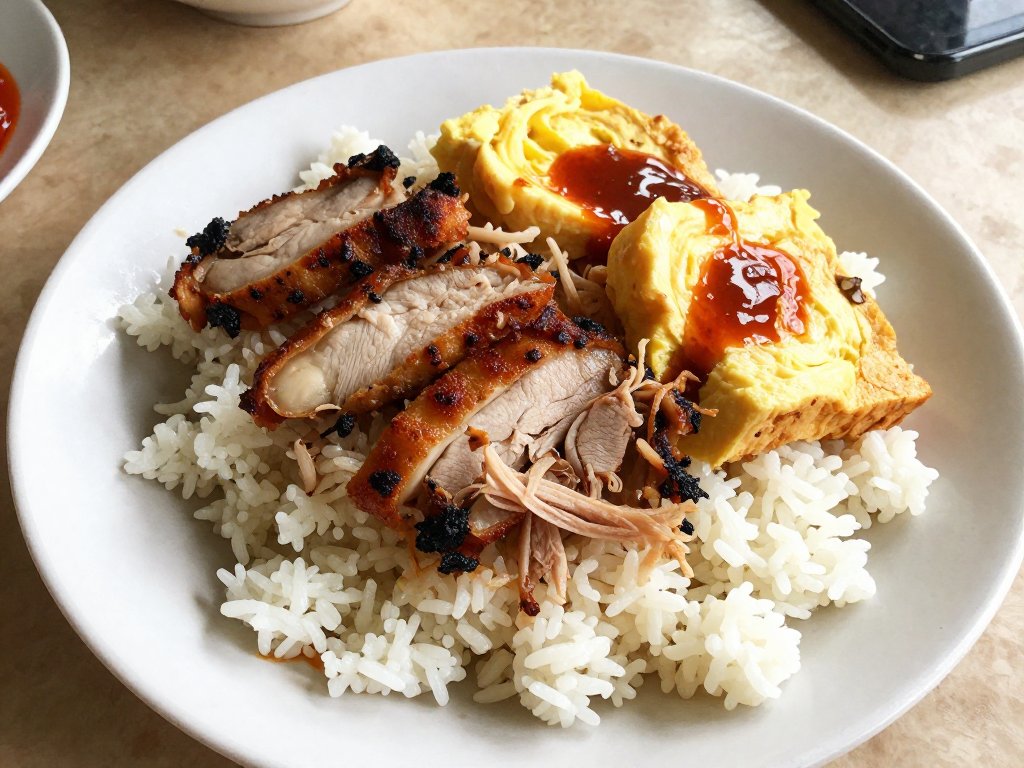
Cơm tấm (broken rice) is Saigon's signature everyday meal. Fractured rice grains, originally a byproduct of rice milling, are topped with a grilled pork chop (sườn nướng), shredded pork skin (bì), a slice of steamed egg and pork loaf (chả), and served with a side of sweet fish sauce. It costs VND 40,000-60,000 and is eaten for lunch by what seems like the entire city.
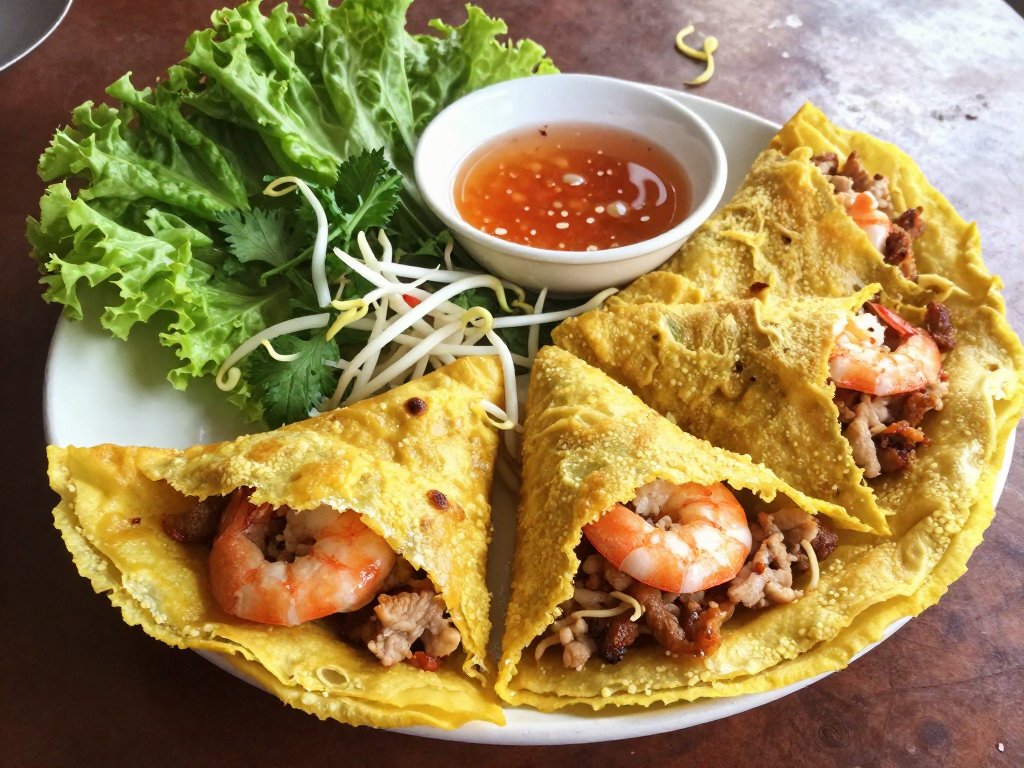
Bánh xèo in the south is larger than the central version: a full-sized, crispy, turmeric-yellow crepe stuffed with pork, shrimp, and bean sprouts. You tear off a piece, wrap it in lettuce and herbs, and dip it in nước chấm. The contrast of hot, crispy crepe with cool, fresh greens is one of the best bites in Vietnamese food.
The sauces that hold it all together
Vietnamese food cannot be understood without understanding its sauces.
Nước mắm (fish sauce) is the foundation. Made from fermented anchovies and salt, it provides the salty-savory backbone of virtually every dish. The quality varies enormously. Phú Quốc island produces the most prized version.
Nước chấm is the dipping sauce served with almost everything: fish sauce diluted with water, lime juice, sugar, garlic, and chili. Each cook has their own ratio. This is what you dip spring rolls into, pour over noodles, and drizzle on rice plates.
Hoisin sauce and sriracha (or tương ớt) are table condiments added to taste. In the south, hoisin sauce goes into phở; in the north, this is considered an outrage.
Dietary Restrictions
Vegetarian and Vegan
Vietnam is simultaneously one of the best and most frustrating countries for vegetarians. The difficulty: fish sauce is in almost everything. Even dishes that appear vegetarian (stir-fried morning glory, plain rice, vegetable soup) often contain fish sauce or shrimp paste as seasoning.
The solution: Buddhist vegetarian restaurants. Vietnam has a strong Buddhist tradition, and every city and town has cơm chay (vegetarian rice shops) and quán chay (vegetarian restaurants) that serve entirely plant-based food. Many are excellent, using tofu, mushrooms, and mock meats to recreate Vietnamese classics without any animal products. On the 1st and 15th of the lunar month, when many Vietnamese eat vegetarian for religious reasons, even mainstream restaurants offer vegetarian options.
Say "tôi ăn chay" (I eat vegetarian) clearly. In regular restaurants, this may or may not be fully understood, since fish sauce is so ubiquitous that some cooks do not consider it an animal product. Scanning the menu with Menu Translator beforehand helps you identify which dishes are most likely to be adaptable and which ones have fish sauce or shrimp paste baked into the recipe.
Gluten-Free
Vietnam is naturally one of the easiest countries for gluten-free eating. Rice is the base of almost everything: rice noodles (phở, bún, bánh), rice paper (for spring rolls), rice flour (for steamed cakes), and plain steamed rice. Soy sauce is less common than fish sauce. Bread (bánh mì, from the French influence) is the main gluten source and easy to avoid. Phở, bún chả, cơm tấm, bánh xèo, gỏi cuốn, and most Vietnamese dishes are gluten-free by default.
Practical Tips for Eating in Vietnam
Sit on the tiny stools. The best food happens at street-level, on those low plastic chairs that seem designed for children. This is where locals eat, and this is where the food is freshest and cheapest. Feeling awkward lasts about two minutes.
Follow the crowds. A stall with twenty locals and a line is almost always better than an empty restaurant with an English menu and air conditioning. Turnover means freshness. Don't let a Vietnamese-only menu steer you toward the tourist spots. Menu Translator reads Vietnamese menus instantly, so you can eat where the food is best rather than where the English is easiest.
One dish, one stall. The specialist system means the phở lady makes phở. The bánh mì cart makes bánh mì. Do not order phở at a bánh mì stall. Each vendor has perfected their single offering.
Wet wipes are essential. Many street stalls have communal tissue rolls on the table, but carry your own. Hand-washing facilities range from a bucket of water to nonexistent.
Ice is generally fine. Factory-produced ice (cylindrical with a hole in the center) is made from purified water and is safe. Crushed ice is usually fine too, especially at established stalls. The paranoia about ice in Vietnam is largely outdated.
Learn to use chopsticks. Spoons are available, but chopsticks and a soup spoon are the standard utensils. For noodle soups, you use chopsticks to lift the noodles and the spoon for the broth.
Coffee is a ritual. Vietnamese coffee is brewed one cup at a time through a small metal filter (phin) that sits on top of your glass. It drips slowly. This is intentional. Do not rush it. The condensed milk at the bottom mixes with the strong, dark coffee to create something closer to dessert than what most Westerners think of as coffee. Cà phê sữa đá (iced coffee with condensed milk) is the default order and costs VND 20,000-40,000.
Tipping is not traditional. Tipping is not part of Vietnamese culture, though it is increasingly expected at tourist-oriented restaurants. At street stalls and local restaurants, tipping would be unusual. At mid-range and upscale places, rounding up or leaving 5-10% is a kind gesture.
The French ghost in Vietnamese food
French colonialism changed Vietnamese food permanently. The bánh mì is the most obvious example: a French baguette adapted with rice flour to create a lighter, crispier bread, then filled with Southeast Asian ingredients. Pâté, another French legacy, sits inside alongside pickled vegetables and fresh herbs.
French influence also shows up in Vietnamese fondness for coffee (introduced by the French in the 19th century), in the use of butter in some dishes, and in the custard-like bánh flan (crème caramel), which you will find in almost every café.
But Vietnam absorbed these influences and made them entirely its own. A bánh mì is not a French sandwich any more than phở is a Chinese soup, despite its origins. Vietnamese food has always been good at taking outside elements and filtering them through local ingredients and local tastes until something new and distinctly Vietnamese emerges.
Eating your way through Vietnam
The best approach to eating in Vietnam is to treat it as a series of focused regional experiences rather than a single national cuisine. Spend a week in Hanoi eating phở and bún chả from sidewalk stalls. Take a few days in Huế working through the imperial dishes and spicy soups. Eat your way through Hội An's specific specialties. Then settle into Saigon's chaotic energy and eat cơm tấm, bánh xèo, and fresh spring rolls until you run out of days.
The food is cheap enough that you can eat four or five meals a day without denting your budget. And in Vietnam, that is exactly what you should do. Skip the hotel breakfast. Walk outside, find the nearest cloud of charcoal smoke, sit down on a plastic stool, and eat what the person next to you is eating. That is how Vietnam feeds itself, and it works.
Must-Try Dishes in Vietnam
From street food stalls to fine dining, these are the dishes you should not miss.
Breakfast
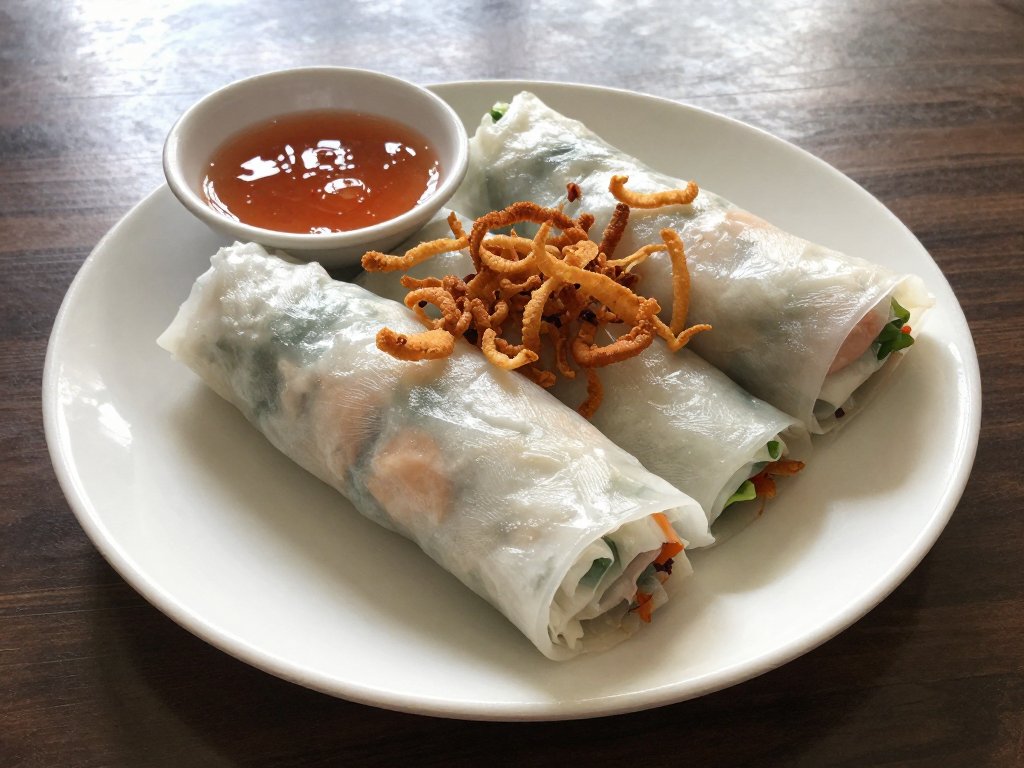
Banh Cuon
Bánh cuốn
Steamed rice flour sheets rolled around seasoned ground pork and wood ear mushrooms. Served with fried shallots, herbs, and fish sauce dip.
Appetizers
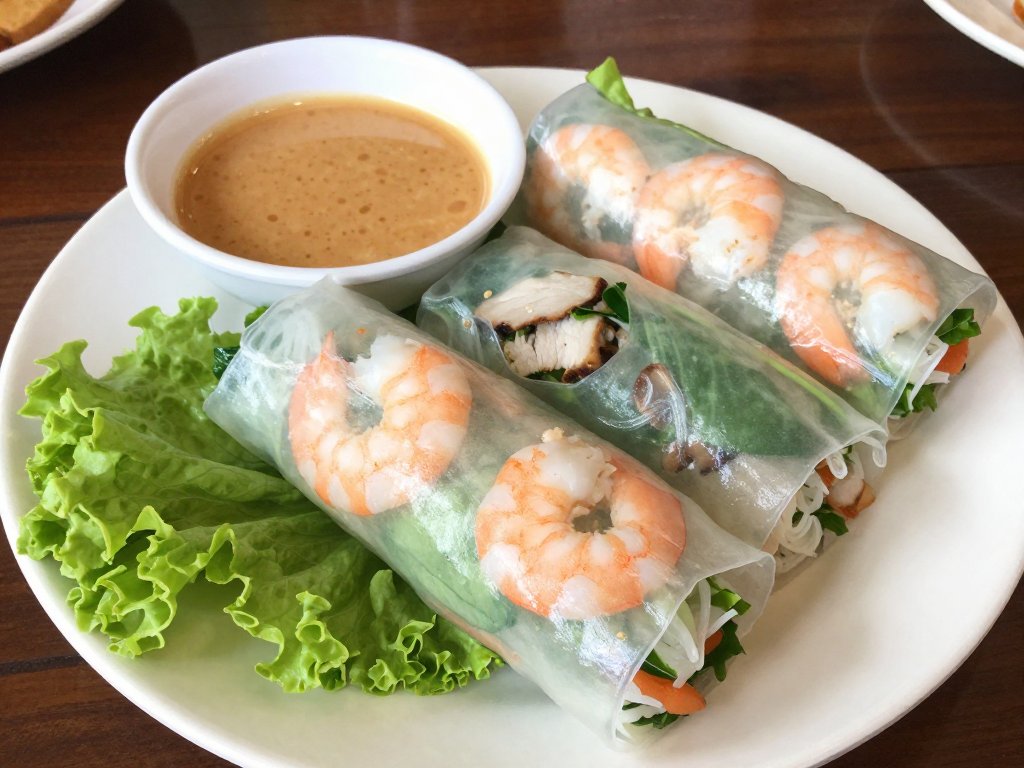
Fresh Spring Rolls
Gỏi cuốn
Translucent rice paper rolls filled with shrimp, pork, rice noodles, lettuce, and herbs. Served cold with peanut hoisin dipping sauce.
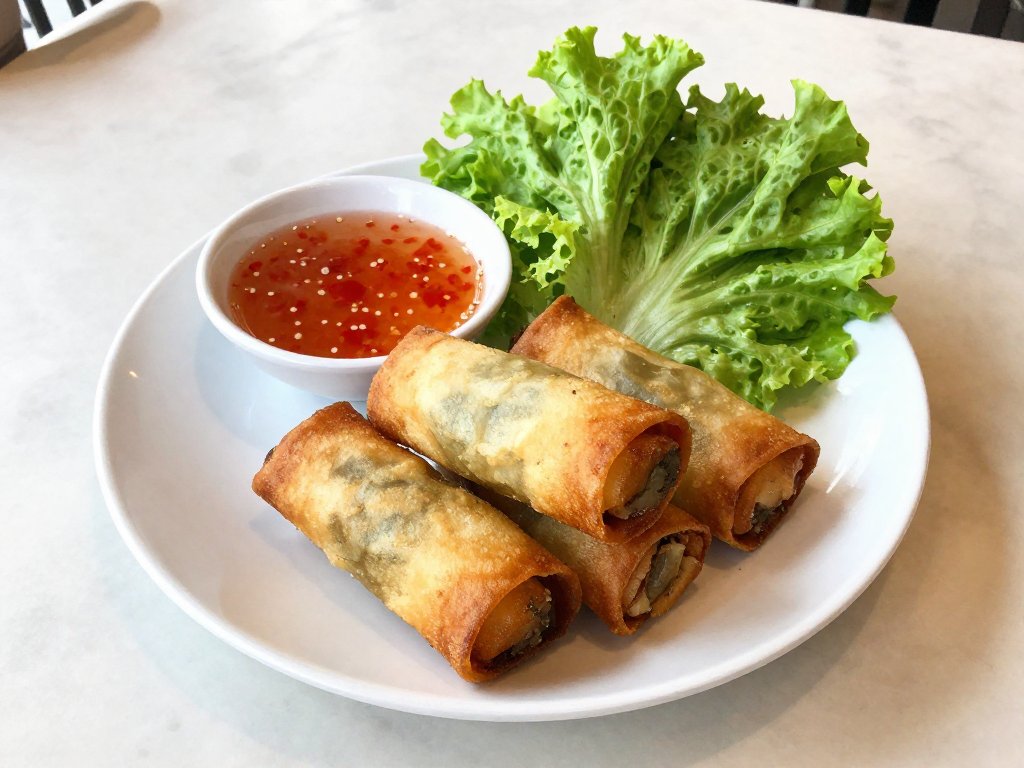
Nem Ran
Nem rán
Fried spring rolls with a crispy wrapper and savory filling of minced pork, mushrooms, glass noodles, and crab. Wrapped in lettuce and dipped in nước chấm.
Street Food
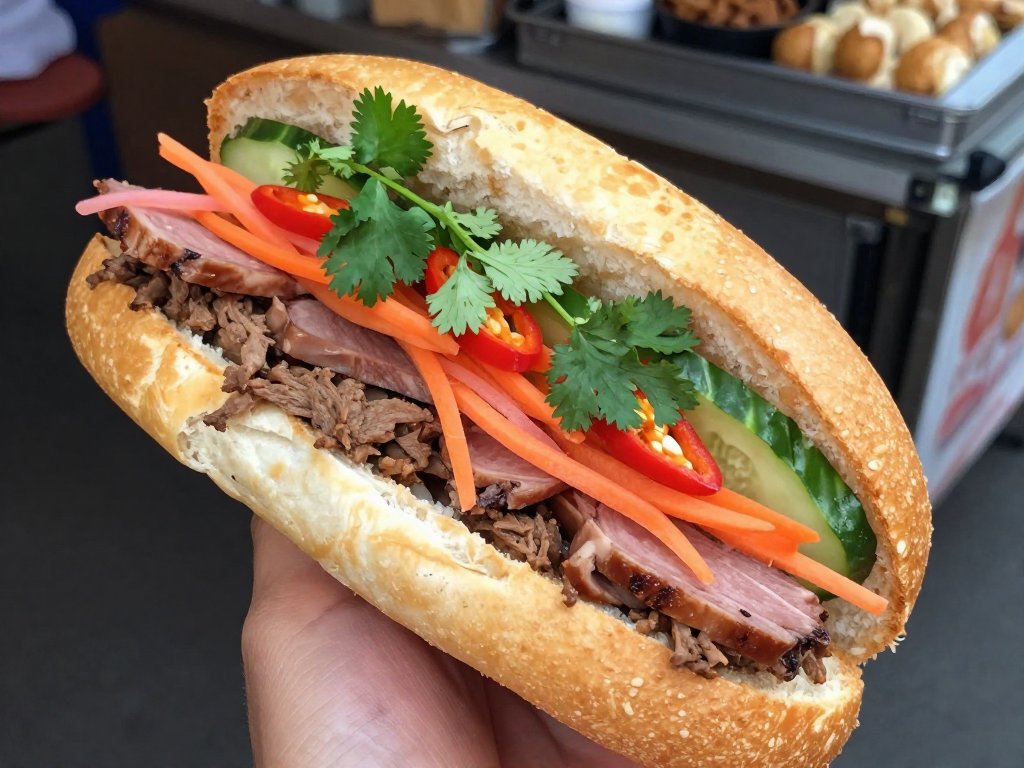
Banh Mi
Bánh mì
Crusty baguette filled with pâté, cold cuts, pickled daikon and carrot, cilantro, chili, and cucumber. A perfect fusion of French and Vietnamese flavors.
Main Courses
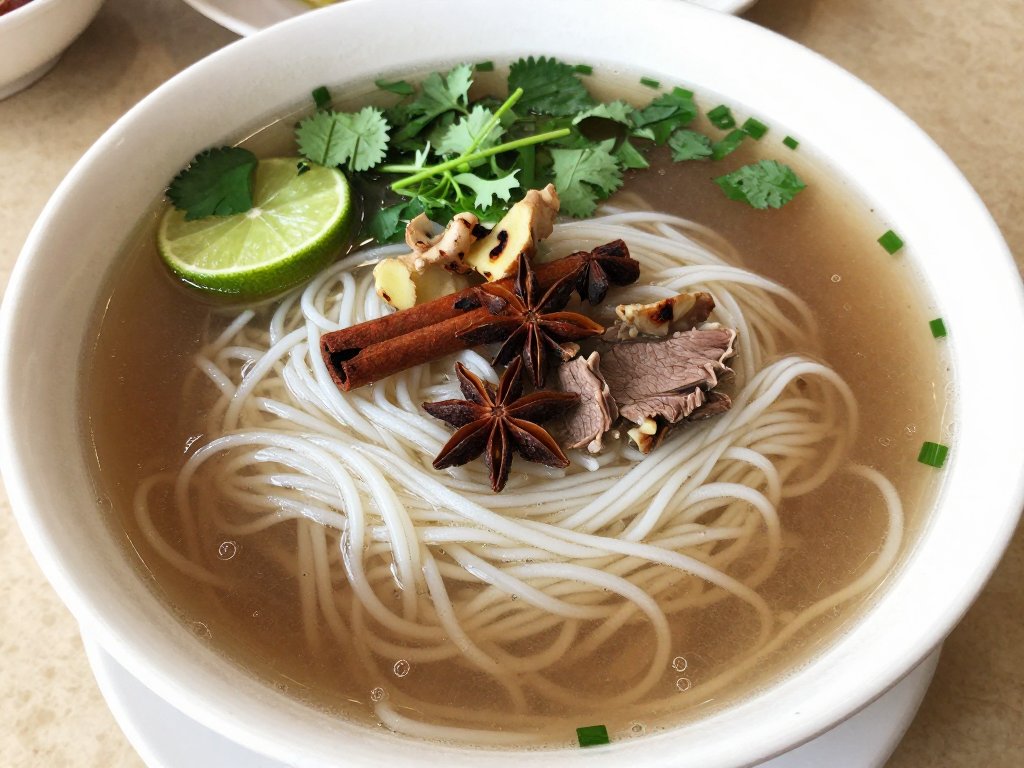
Pho
Phở
Rice noodle soup with clear, aromatic beef or chicken broth simmered for hours with star anise, cinnamon, and charred ginger. Served with fresh herbs and lime.
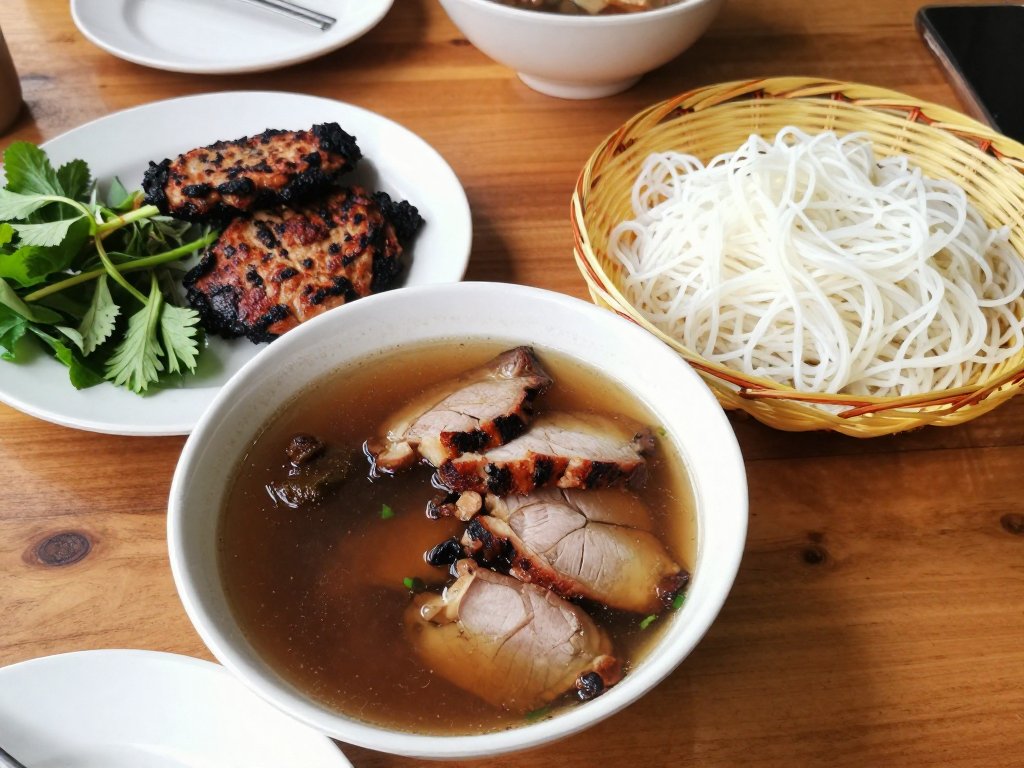
Bun Cha
Bún chả
Grilled pork patties and sliced pork belly served in a bowl of sweet-sour dipping broth alongside rice noodles and a plate of fresh herbs. A Hanoi specialty.
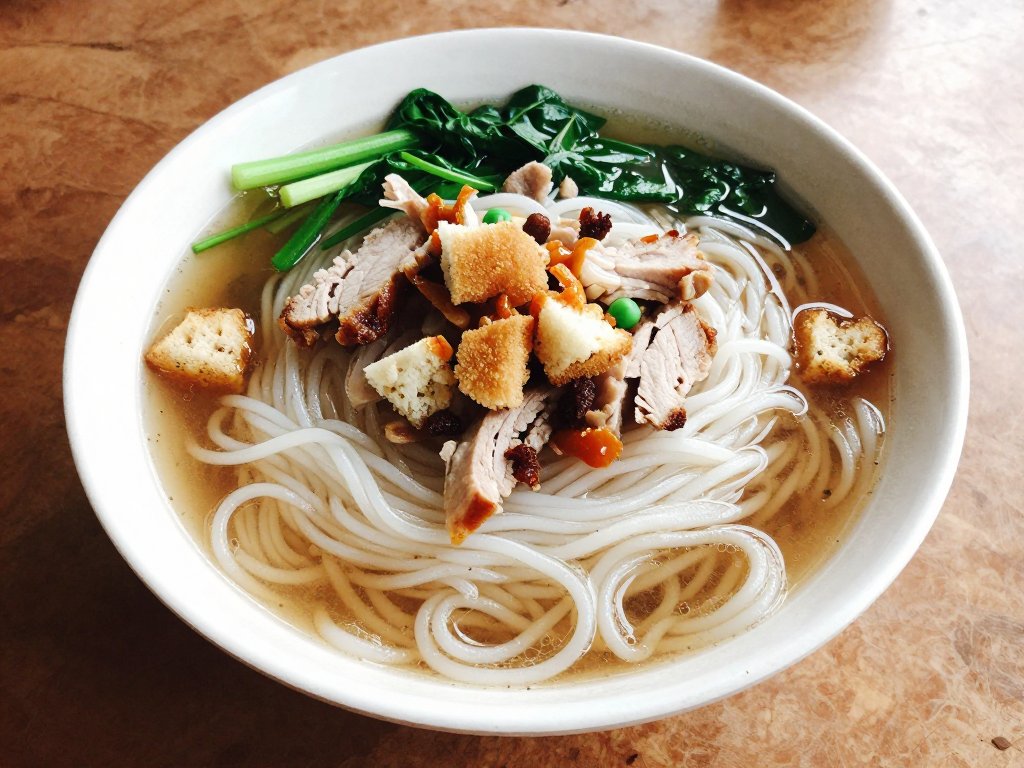
Cao Lau
Cao lầu
Thick, chewy rice noodles with sliced pork, croutons, and fresh greens in a small amount of rich broth. Found only in Hội An, made with water from a specific local well.
Broken Rice
Cơm tấm
Fractured rice grains topped with a grilled pork chop, shredded pork skin, steamed egg cake, and fish sauce. The everyday lunch of Saigon.
Banh Xeo
Bánh xèo
Crispy turmeric-yellow crepe filled with pork, shrimp, and bean sprouts. Torn into pieces, wrapped in lettuce and herbs, and dipped in nước chấm.
Bun Bo Hue
Bún bò Huế
Spicy beef noodle soup from the former imperial capital. Thicker noodles than phở, with lemongrass-chili broth, beef shank, and pork knuckle.
Desserts
Che
Chè
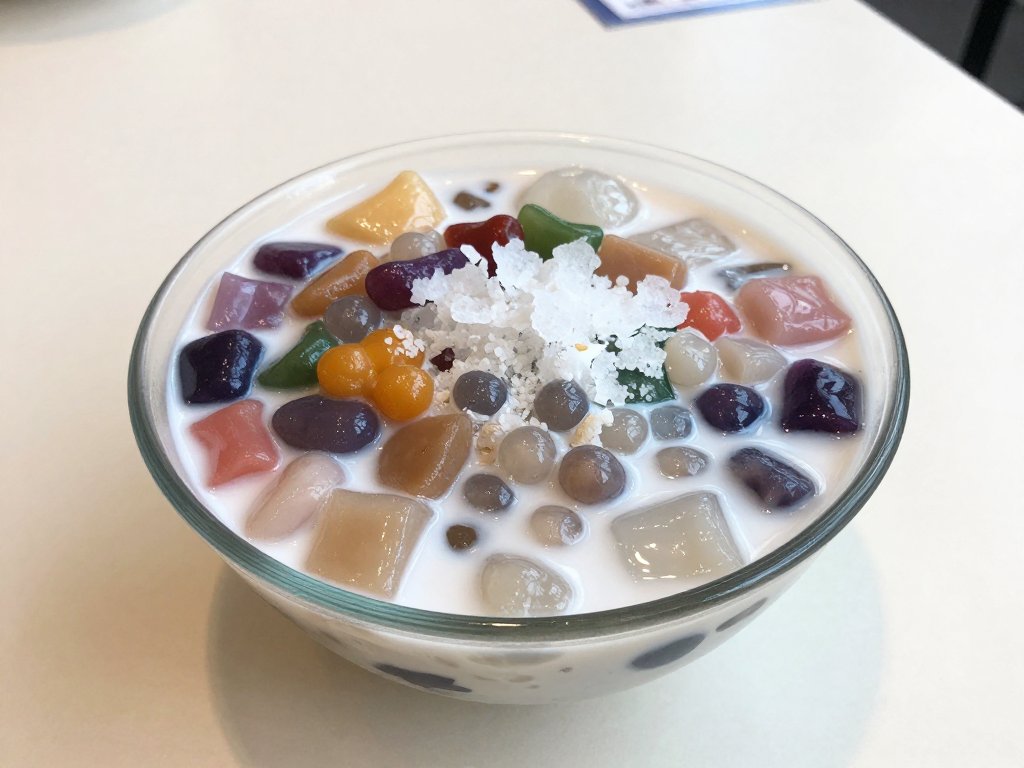
A category of sweet soups and puddings made with beans, jellies, tapioca, fruit, and coconut milk. Served warm or over ice as a snack or dessert.
Drinks
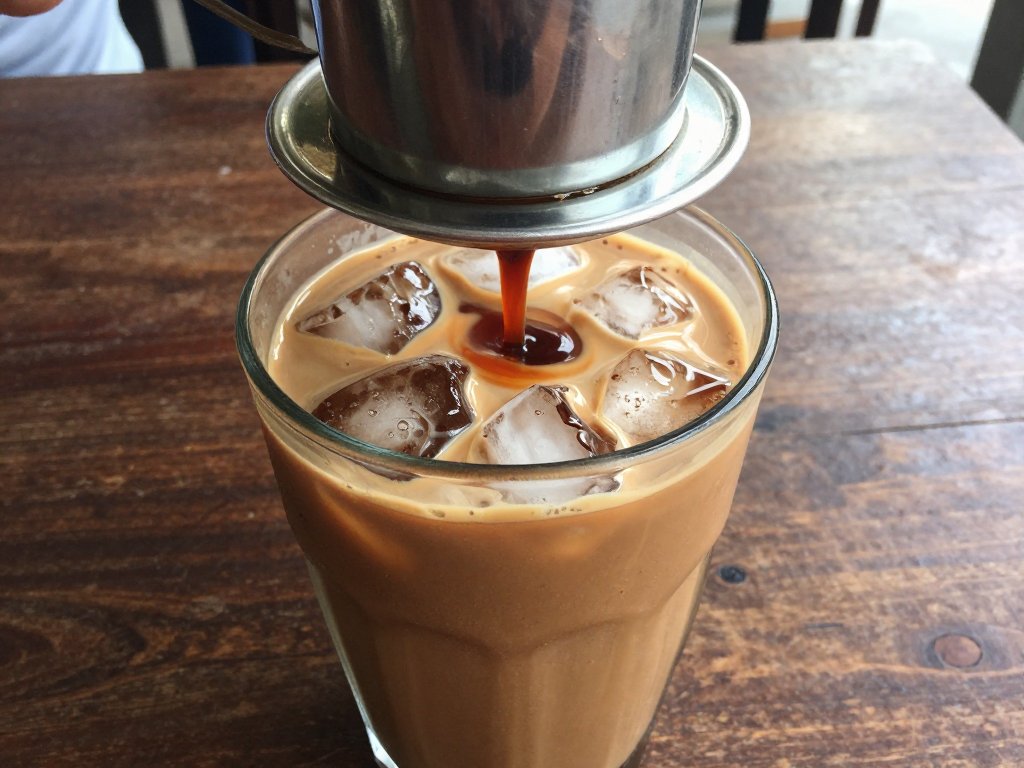
Vietnamese Coffee
Cà phê sữa đá
Strong dark-roast coffee brewed through a metal drip filter, mixed with sweetened condensed milk, and poured over ice. Intense, sweet, and addictive.
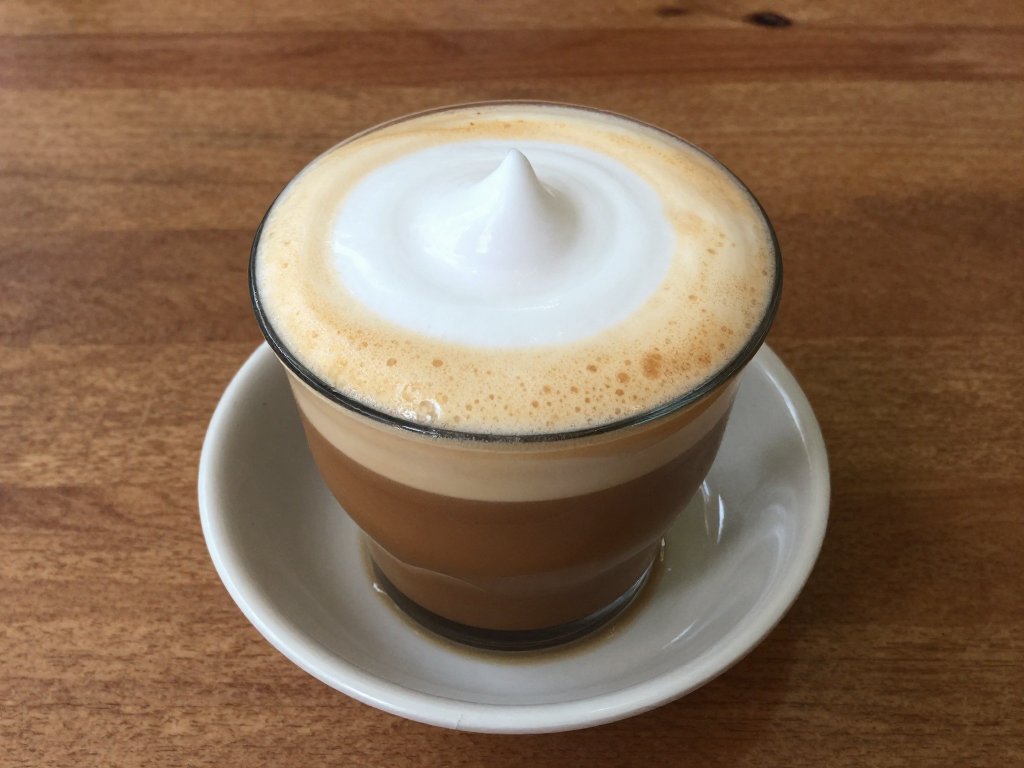
Egg Coffee
Cà phê trứng
A Hanoi specialty: strong coffee topped with a thick, creamy whip of egg yolk beaten with condensed milk. Like a warm, caffeinated custard.
Traveling to Vietnam?
Translate any menu instantly with your camera.


Useful Phrases for Dining
Learn these essential phrases to navigate restaurants and food stalls in Vietnam.
English
Vietnamese
Pronunciation
Can I see the menu, please?
Cho tôi xem thực đơn được không?
chaw toy sem tuhk duhn doo-uhk kohng
I'd like to order this.
Tôi muốn gọi món này.
toy moo-OHN goy mohn nay
I'm vegetarian.
Tôi ăn chay.
toy an chy
No MSG, please.
Không bỏ bột ngọt.
kohng baw boht ngaht
The bill, please.
Tính tiền, xin.
tin tee-EN, sin
Thank you.
Cảm ơn.
kahm uhn
Not too spicy, please.
Ít cay thôi.
eet kai toy
This is delicious.
Ngon quá!
ngon kwah
Frequently Asked Questions
Everything you need to know about dining in Vietnam.
Phở and bánh mì are essential, but do not stop there. Try bún chả in Hanoi, cao lầu in Hội An, and cơm tấm in Saigon. Seek out bánh xèo, fresh spring rolls, and bún bò Huế for the full range. Drink cà phê sữa đá daily and try egg coffee at least once.
Never struggle with a foreign menu again
Point your camera at any menu and get instant translations with dish descriptions, dietary info, and more.