
Food to Try in Thailand
Thai Food and the Art of Balance
Thai cooking revolves around balance. It's not about combining ingredients so much as calibrating four flavors against each other in every single dish. Sour, sweet, salty, and spicy all need to be present and in tension. When a som tam vendor pounds green papaya with lime, palm sugar, fish sauce, and bird's eye chilies, she's not following a recipe so much as tuning an instrument. The final squeeze of lime or extra pinch of sugar comes from tasting, not measuring.
This is why Thai food cooked outside Thailand rarely tastes right. The ingredients aren't wrong. The balance is off. When you eat pad thai from a street cart in Bangkok that's been making the same dish for thirty years, you'll understand the difference immediately.
Thailand also has one of the largest street food cultures in the world. In Bangkok alone, an estimated 300,000 street vendors serve food daily. Some of the best meals in the country cost less than $2.
How Eating Works in Thailand
Where Thais Eat
Street food stalls and carts are where a huge percentage of eating happens. Many Thais eat out for all three meals because cooking at home can actually cost more once you factor in ingredient waste and kitchen equipment. A street stall might specialize in a single dish and do nothing else, which is exactly why it's so good.
Shophouse restaurants (raan ahaan) are the next step up, usually a single room open to the street with metal tables and plastic stools. These typically have a broader menu and cost 50-100 THB per dish. Food courts inside malls and department stores are air-conditioned and clean, operating on a coupon system where you buy credits at a booth and spend them at different stalls. Refundable unused credits at the end.
Night markets are for eating and browsing. Ratchada Train Market, Jodd Fairs in Bangkok, and the Saturday Walking Street in Chiang Mai pull big crowds. Go hungry and graze. A skewer here, a bag of fruit there, some grilled squid, a coconut ice cream. When stalls have handwritten Thai signs and no English, most translation apps can't read the handwriting, but Menu Translator handles it and tells you exactly what you're lining up for.
For higher-end Thai food, Bangkok has restaurants that reinterpret traditional dishes with premium ingredients. Several Thai restaurants hold Michelin stars, though the running joke is that the best pad thai in Bangkok costs 50 THB from a grandmother's cart, not 500 THB from a chef's tasting menu.
Meal Timing
Thais eat when they're hungry, and food is available almost around the clock. That said, the loosely observed pattern: breakfast might be a bowl of jok (rice porridge) or kai jeow (Thai omelet on rice) from 6:00-9:00. Lunch is the big meal, usually 11:00-13:00. Dinner is flexible, starting anywhere from 17:00-20:00. Late-night food (grilled skewers, noodle soups, and roti) keeps going well past midnight in cities.
Table Manners
Thai table settings typically include a fork and a large spoon. The spoon is the primary utensil. You use the fork to push food onto the spoon, then eat from the spoon. Chopsticks are used only for noodle soups. Eating rice with a fork alone marks you as unfamiliar with Thai customs.
Meals are communal. Thais order several dishes to share at the center of the table, each person taking rice and adding spoonfuls from shared plates. Ordering "one dish per person plus one extra for the table" is a common formula.
Condiments are on every table: dried chili flakes (prik pon), fish sauce with sliced chilies (prik nam pla), sugar, and sometimes vinegar with chilies. Adjusting your food at the table is normal and expected. It's not an insult to the cook.
Regional Thai Food
Thai food is not one cuisine but several, and the differences are dramatic. Menu Translator helps here by not just translating dish names but explaining what each dish actually is, so you can tell a mild Massaman from a fiery southern curry before you order.
Central Thailand (Bangkok)
Central Thai food is what most people think of as "Thai food." It's the most balanced of the regional styles, with sweet, sour, salty, and spicy in careful proportion. This is where pad thai, green curry, tom kha gai (coconut chicken soup), and most dishes on international Thai menus originate. Bangkok also absorbs dishes from every other region. You can find Isaan som tam, northern khao soi, and southern curries all within a few blocks.
The royal cuisine tradition also comes from central Thailand, with elaborate dishes featuring carved vegetables and complex preparations that you'll see at higher-end restaurants.
Isaan (Northeast)
Isaan food drives Thai street food, brought to Bangkok by millions of northeasterners who migrated to the capital for work. It's the spiciest and boldest regional style. Som tam, larb, nam tok (grilled meat salad), and gai yang (grilled chicken) are all Isaan dishes. The flavor profile leans heavily on lime, fish sauce, dried chilies, and toasted rice powder.
Sticky rice (khao niew) is the staple starch here instead of jasmine rice. You pinch off pieces with your fingers and use them to scoop up larb and salads. If a restaurant serves sticky rice in small bamboo baskets, the food is Isaan-influenced.
Northern Thailand (Chiang Mai, Chiang Rai)
Northern Thai food is the mildest of the regions. The climate is cooler, the flavors are earthier, and the dishes are less sweet than central Thai cooking. Khao soi (that coconut curry noodle soup with crispy noodles on top) is the signature dish. Sai oua (northern Thai sausage with lemongrass and kaffir lime) and kaeng hung lay (Burmese-influenced pork curry) are worth ordering.
Chiang Mai has a strong khantoke tradition, a low round table set with small dishes of various northern specialties. Several restaurants offer this as a dinner set, which gives you a taste of the regional cooking for around 300-500 THB.
Southern Thailand (Phuket, Krabi, Hat Yai)
Southern Thai food is the spiciest region and the most influenced by Malay and Muslim cooking. Curries here use turmeric (giving them a yellow tint), are thinner (less coconut cream), and pack more heat. Massaman curry originated in the south, as did many seafood preparations.
In southern beach towns, seafood restaurants line the waterfronts. You pick your fish, shrimp, or crab from ice displays and choose how it's cooked. Expect to pay 200-600 THB for a seafood dish, depending on the catch and location (tourist beaches charge more).
Dietary Restrictions in Thailand
Vegetarian and Vegan
Thailand has a built-in system for plant-based eating through Buddhist food traditions. The word jay (เจ) denotes food prepared without meat, fish, eggs, dairy, or pungent vegetables (garlic, onions). You'll see yellow flags with red Chinese characters at jay food stalls, especially during the annual Vegetarian Festival in September or October.
Outside of the jay system, navigating vegetarian food takes more care. Fish sauce (nam pla) and oyster sauce are default seasonings in nearly everything. Shrimp paste (kapi) appears in curry pastes. Saying "mai sai nam pla" (no fish sauce) and "jay" together usually gets the point across, but simpler dishes like fried rice and pad thai are easier to modify than curries where the paste itself contains shrimp. Menu Translator can flag dishes that typically contain fish sauce or shrimp paste when you scan a Thai menu, giving you a better starting point for those conversations with the cook.
Tofu is widely available as a protein substitute. Many green curry, pad thai, and fried rice stalls will swap in tofu on request.
Gluten-Free
Thai food is naturally friendly to gluten-free diets. Rice and rice noodles form the base of most meals. Soy sauce is used less than in Chinese or Japanese cooking; fish sauce is the primary seasoning. The main things to watch: pad see ew uses soy sauce, some Chinese-influenced noodle dishes use wheat noodles, and soy sauce may appear in marinades for grilled meats. But on the whole, Thailand is one of the easier countries for gluten avoidance.
Halal
Southern Thailand has a large Muslim population, making halal food readily available in provinces like Pattani, Yala, and Narathiwat. In Bangkok, the area around Soi Arab (Sukhumvit Soi 3/1) has many halal restaurants. Chicken and seafood are your simplest options everywhere, as pork is the most common meat in Thai cooking.
Ordering Tips and Practical Advice
Point and order. At street stalls and food courts, this works perfectly. Point at what you want, hold up fingers for quantity, and nod. Many stalls have photos or display ingredients.
At sit-down restaurants, menus usually have English translations in tourist areas. If not, look for numbered photos. When the menu is entirely in Thai script with no pictures, snap a photo with Menu Translator and you'll see every dish described in your language, which helps when you're trying to tell the difference between three similar-sounding curries. The phrase "aroi" (delicious) with a smile after eating earns real appreciation from cooks.
Spice negotiation is important. The default for foreigners is already toned down, but you can adjust further. "Mai pet" means not spicy. "Pet nit noi" means a little spicy. "Pet mak" means very spicy, so only say this if you mean it. Some street vendors will test you with a skeptical look before actually making it hot. The spice in Thai food comes mostly from fresh bird's eye chilies and dried chili flakes, and the heat is front-loaded. It hits immediately and fades relatively fast compared to, say, Sichuan numbing spice. Menu Translator describes each dish and what's in it, so you have a better idea of what to expect before committing.
Drinks: Thai iced tea (cha yen) and Thai iced coffee (gafae yen) are extremely sweet by Western standards because they're made with sweetened condensed milk. If you want less sugar, say "waan nit noi" (a little sweet). Fresh fruit shakes (nam pan) are everywhere and usually 35-50 THB. Singha and Chang are the standard local beers, running about 60-90 THB at convenience stores.
Paying: Street food is cash only. Restaurants in malls and tourist areas accept cards. Tipping is not traditional in Thailand, but leaving small change (20-50 THB) at sit-down restaurants has become common in tourist areas. At street stalls, no tip is expected.
Getting the Most Out of Thai Food
The best advice anyone can give you about eating in Thailand: follow the crowds. If a street stall has a line of Thai people and the one next to it is empty, there is a reason. A crowd means the food is fresh and good.
Don't stick to what you know. Pad thai is good, but it's the safe choice, the equivalent of only ordering margherita pizza in Italy. Push into larb, kaeng som (sour curry), pla rad prik (fried fish with chili sauce), or whatever the uncle at the corner stall is cooking that smells incredible. Having Menu Translator on your phone makes it easier to be adventurous. When you can see what a dish actually contains, you're more willing to try something unfamiliar.
Markets are where you'll find the most variety. Or Tor Kor market in Bangkok is considered one of the best fresh markets in the world. Wander through the fruit section and try things you've never seen before. Durian season (May-August) is polarizing but worth experiencing at least once. The smell is aggressive, but the custard-like flesh converts many skeptics.
If you're in Bangkok and want a structured introduction, consider a food tour of Chinatown (Yaowarat), where the density of stalls and the variety of dishes is staggering: roasted duck, rolled noodles, oyster omelets, Chinese-Thai desserts, and more, all packed into a few blocks that come alive after dark.
Must-Try Dishes in Thailand
From street food stalls to fine dining, these are the dishes you should not miss.
Breakfast
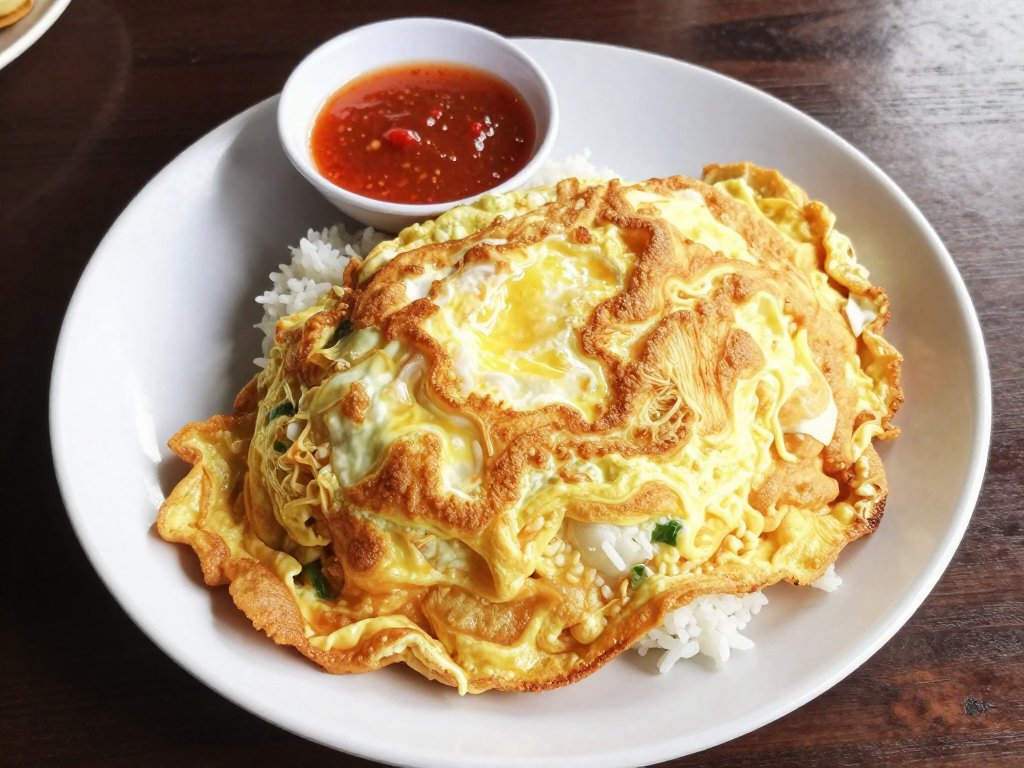
Kai Jeow
ไข่เจียว
Thai-style omelet deep-fried until puffy and golden, served over rice with chili sauce. The country's most common quick breakfast.
Appetizers
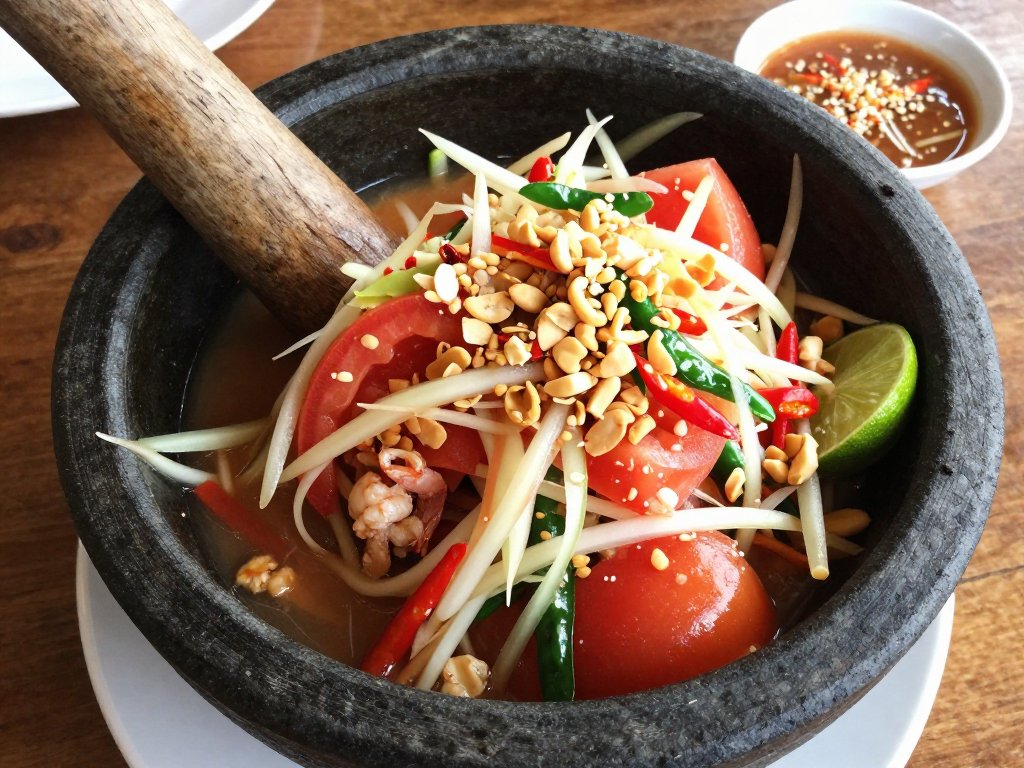
Som Tam
ส้มตำ
Green papaya salad pounded in a mortar with tomatoes, dried shrimp, peanuts, lime, chili, and fish sauce. An Isaan staple eaten across the country.
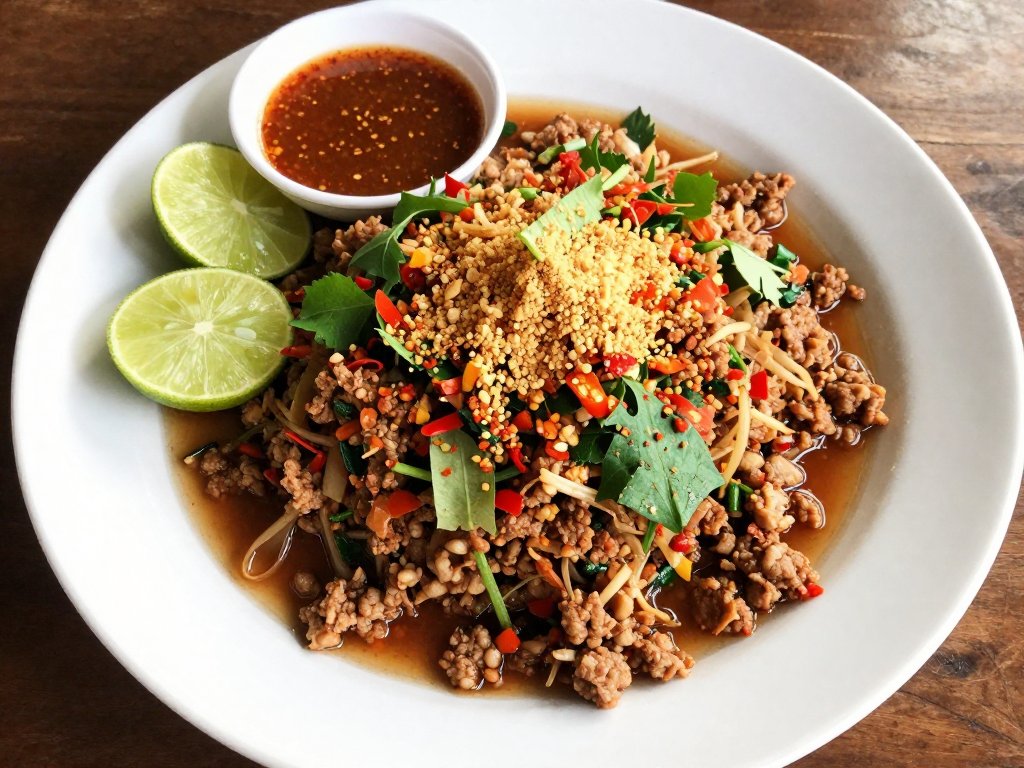
Larb
ลาบ
Spicy minced meat salad with lime, fish sauce, chili flakes, fresh herbs, and toasted rice powder. The national dish of Laos, beloved in Isaan.
Street Food
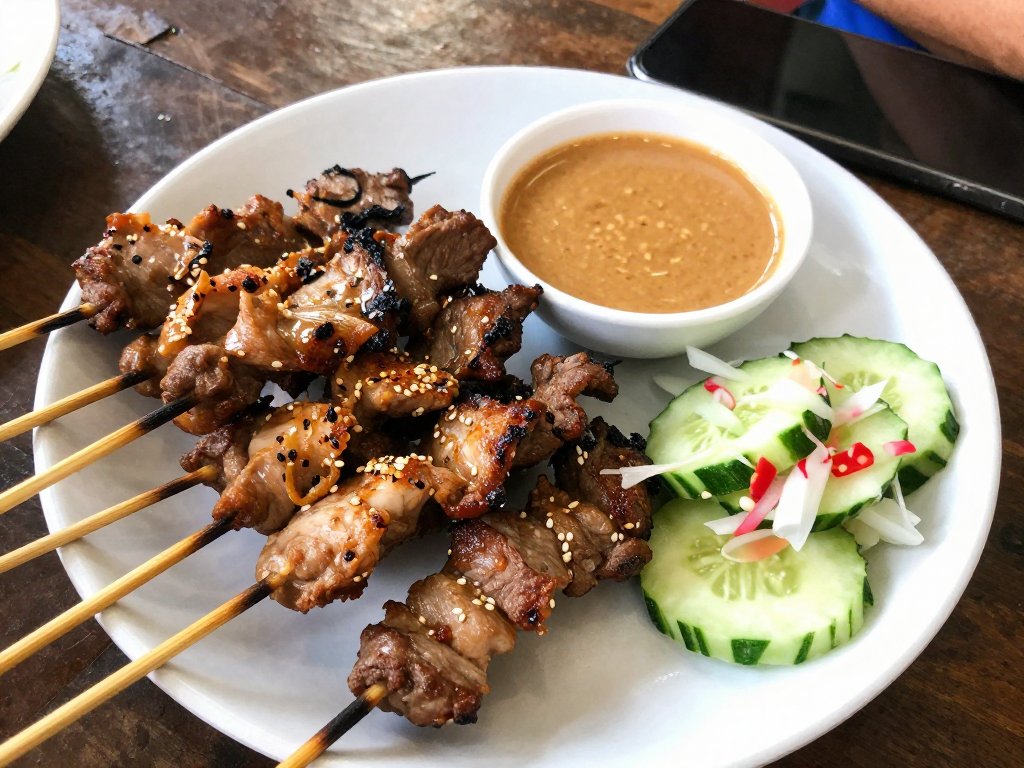
Satay
สะเต๊ะ
Marinated meat grilled on skewers, served with peanut dipping sauce and a tangy cucumber relish. Usually pork or chicken.
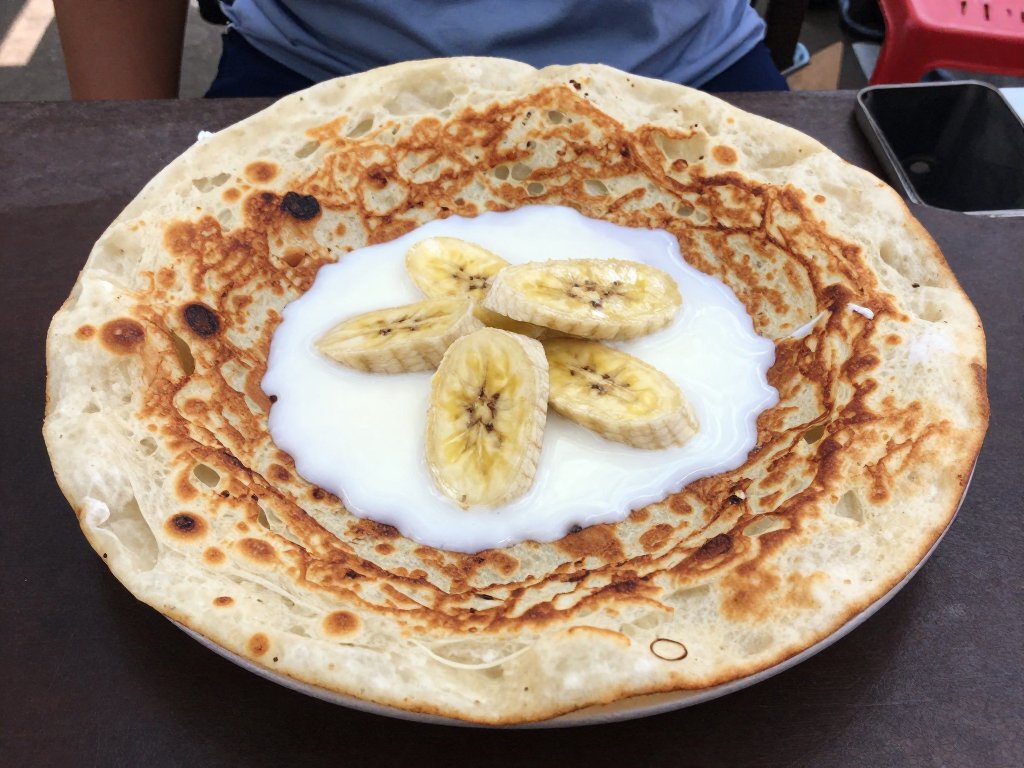
Roti
โรตี
Crispy fried flatbread served with sweetened condensed milk and banana, or with curry for a savory version. Found at Muslim-run street stalls.
Main Courses
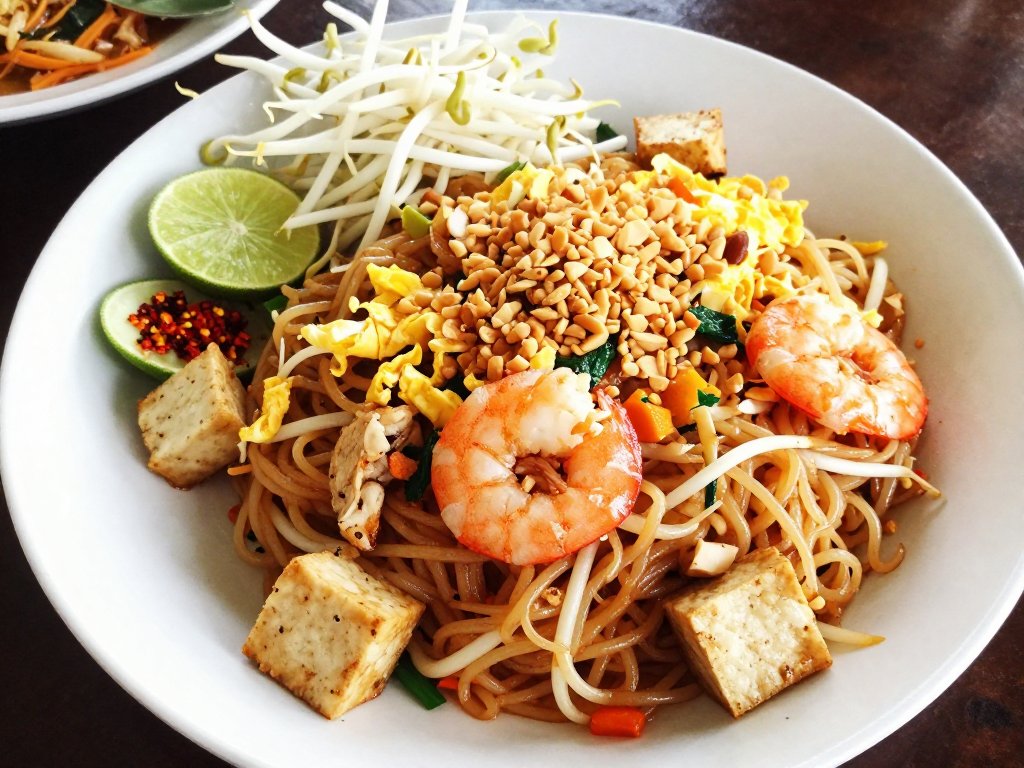
Pad Thai
ผัดไทย
Stir-fried rice noodles with egg, tofu, shrimp or chicken, bean sprouts, and crushed peanuts. Finished with lime and chili flakes.
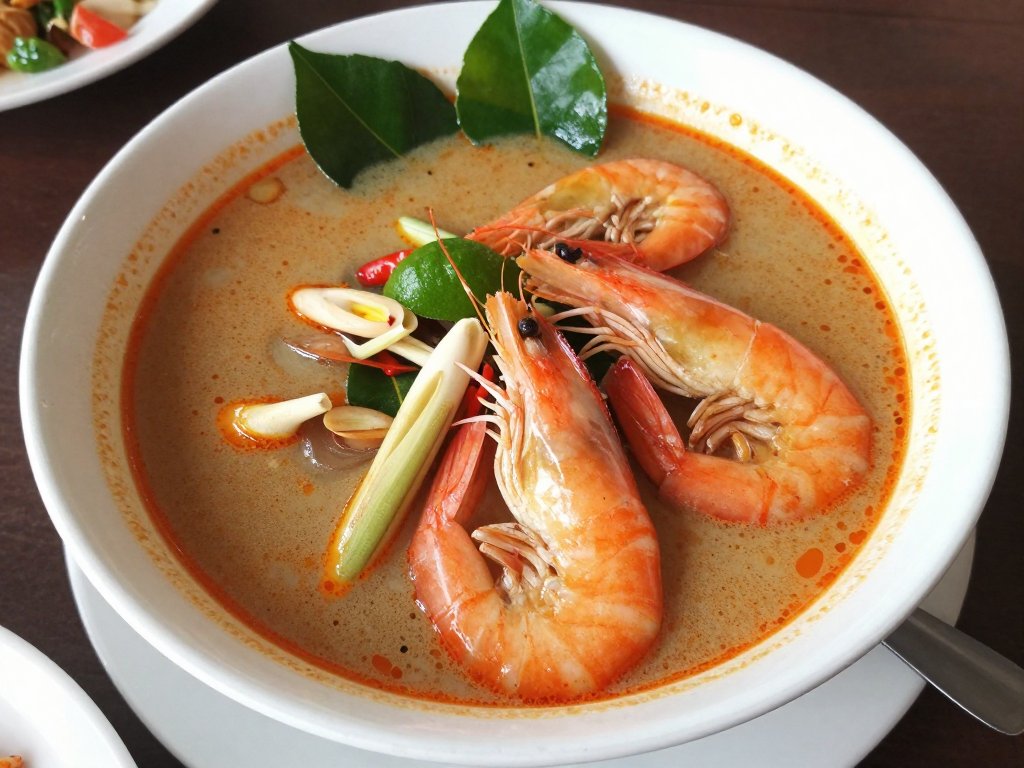
Tom Yum Goong
ต้มยำกุ้ง
Hot and sour soup with shrimp, lemongrass, galangal, kaffir lime leaves, and chili. The balance of sour, spicy, and savory defines Thai cooking.
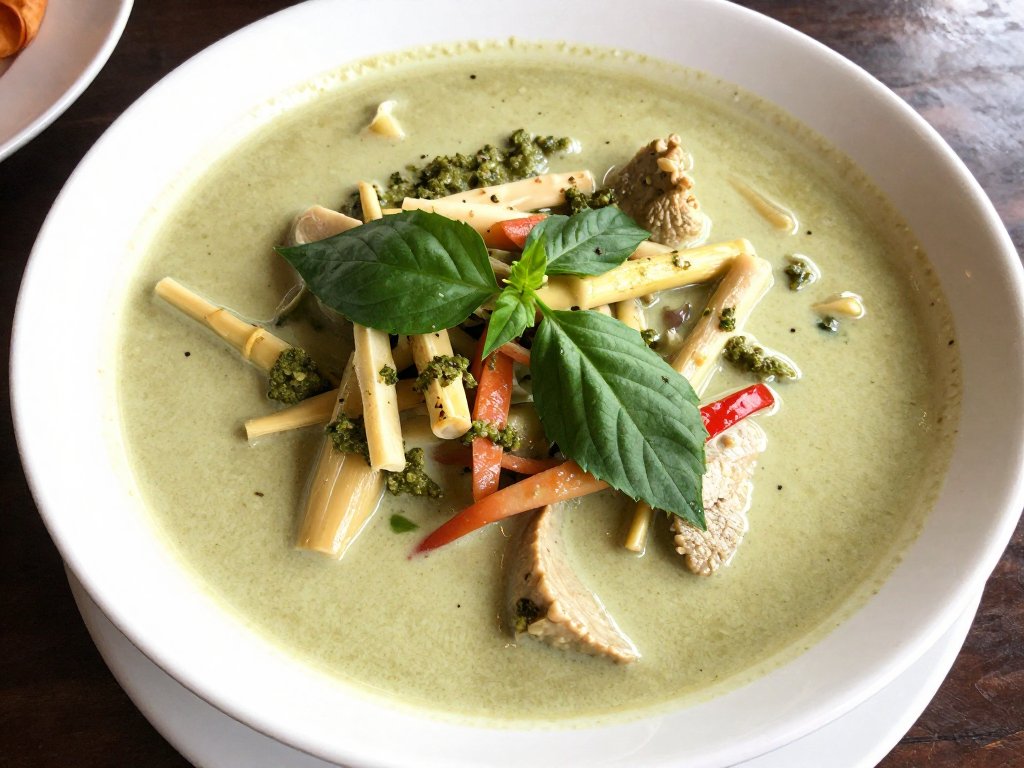
Green Curry
แกงเขียวหวาน
Coconut milk curry with green chili paste, Thai basil, bamboo shoots, and your choice of protein. Sweeter and more fragrant than red curry.
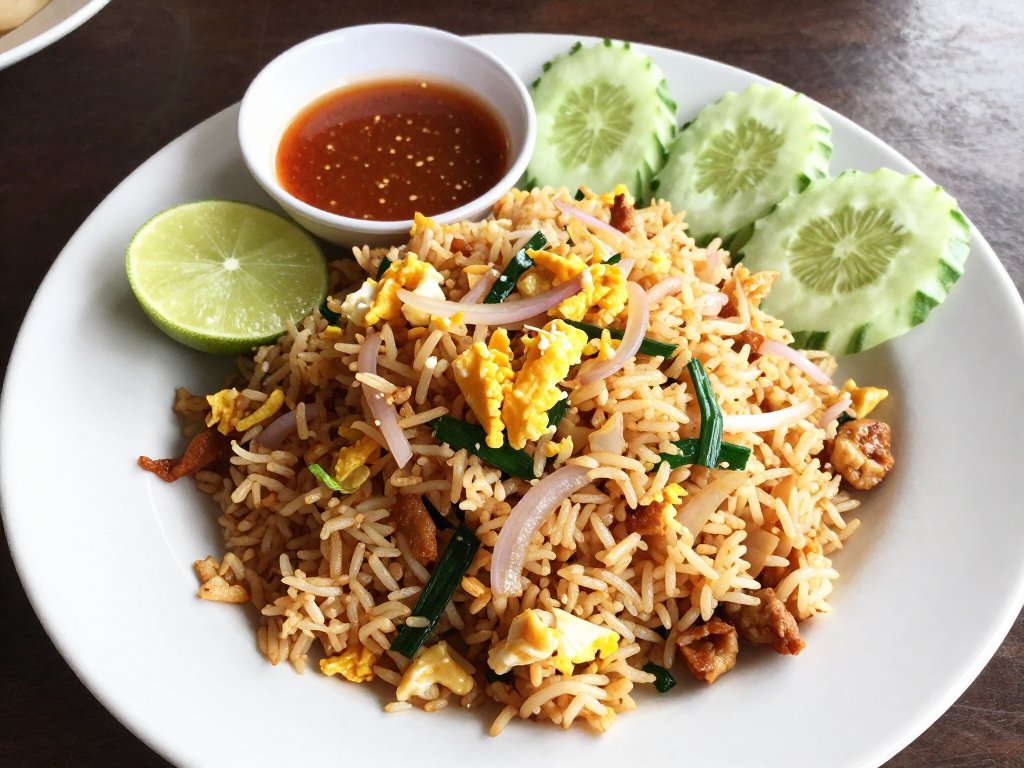
Khao Pad
ข้าวผัด
Thai fried rice with egg, onion, and your choice of protein, seasoned with fish sauce and served with a lime wedge and cucumber slices.
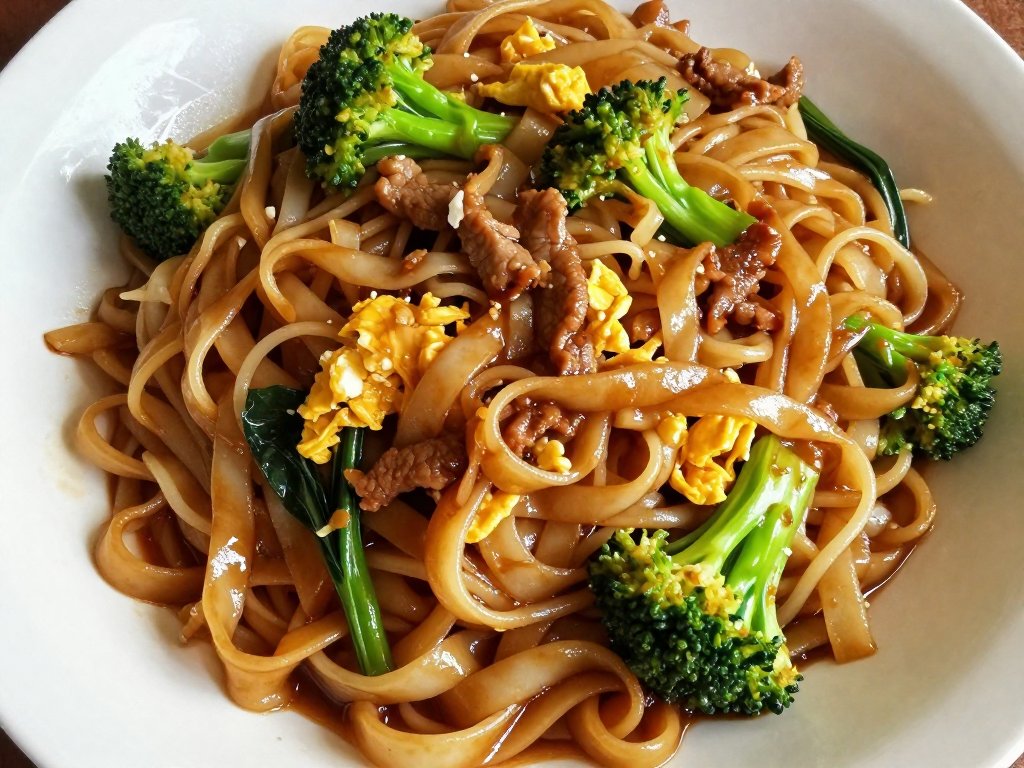
Pad See Ew
ผัดซีอิ๊ว
Wide rice noodles stir-fried with dark soy sauce, Chinese broccoli, egg, and meat. Smoky wok flavor (wok hei) is essential.
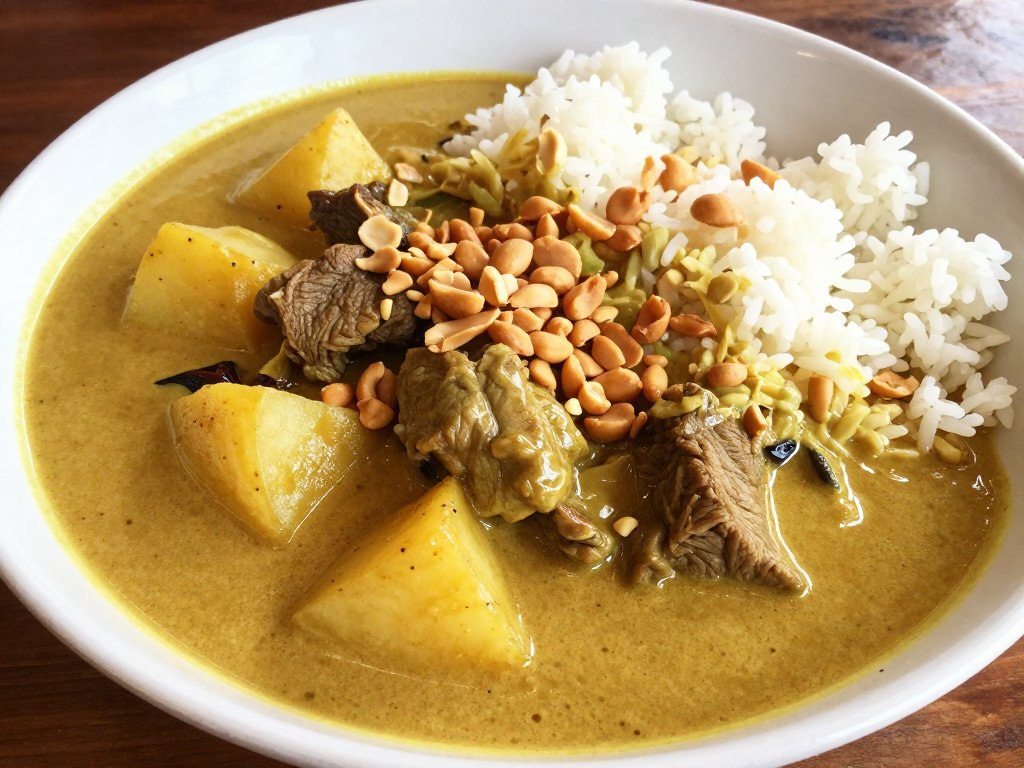
Massaman Curry
แกงมัสมั่น
Rich, mild curry with Persian-influenced spices (cardamom, cinnamon, star anise), slow-cooked with potatoes and peanuts.
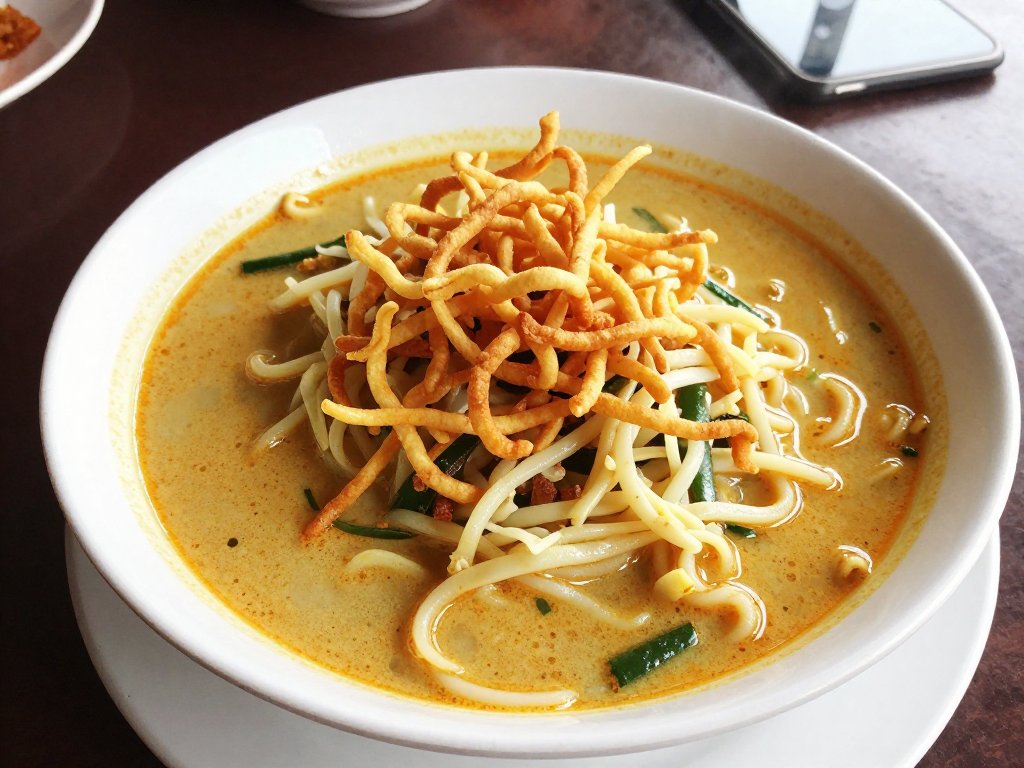
Khao Soi
ข้าวซอย
Northern Thai curry noodle soup with coconut broth, egg noodles, and crispy fried noodles on top. A Chiang Mai specialty.
Desserts
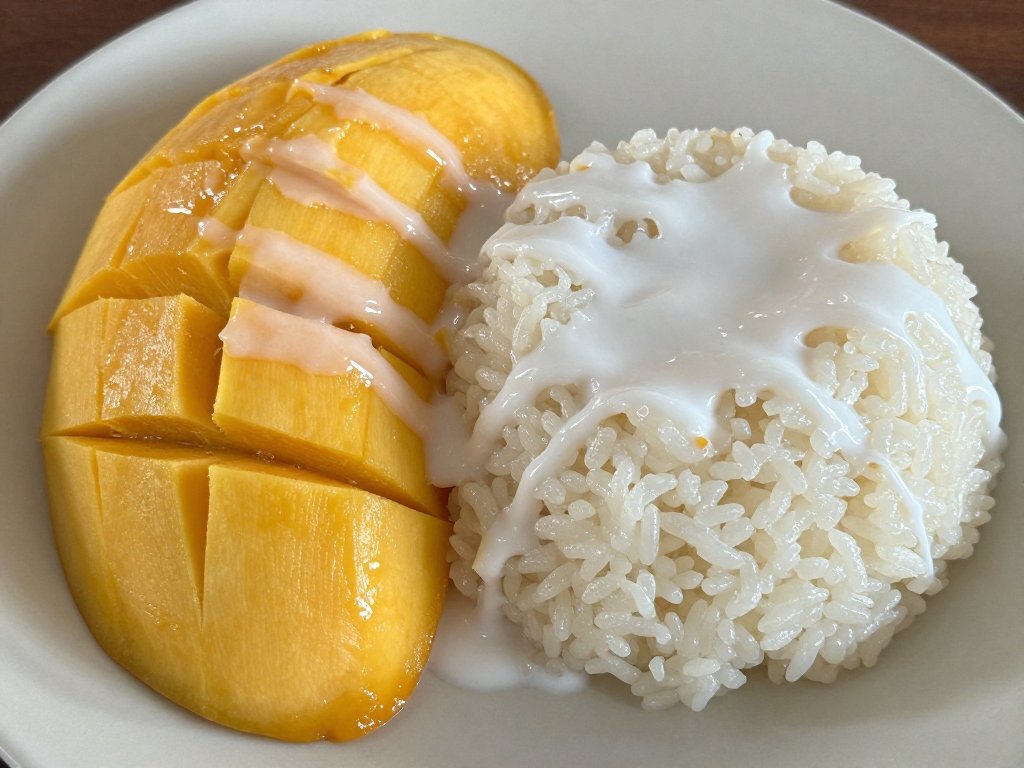
Mango Sticky Rice
ข้าวเหนียวมะม่วง
Sweet sticky rice soaked in coconut cream, served with ripe mango slices and a drizzle of coconut sauce. Thailand's signature dessert.
Drinks
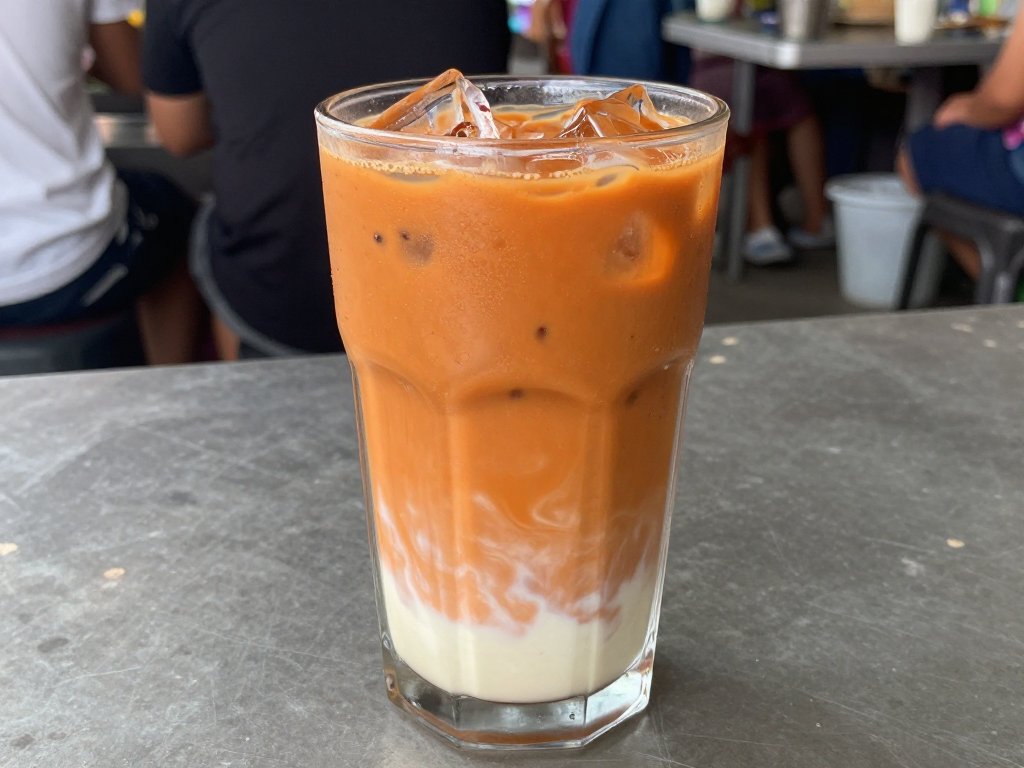
Thai Iced Tea
ชาเย็น
Strong black tea brewed with star anise and sweetened condensed milk, poured over ice. Bright orange color from food coloring in the tea mix.
Traveling to Thailand?
Translate any menu instantly with your camera.


Useful Phrases for Dining
Learn these essential phrases to navigate restaurants and food stalls in Thailand.
English
Thai
Pronunciation
Can I see the menu, please?
ขอดูเมนูหน่อยครับ/ค่ะ
kaw doo menoo noy krap/ka
I'd like to order this.
ขอสั่งอันนี้ครับ/ค่ะ
kaw sang an nee krap/ka
Not spicy, please.
ไม่เผ็ดครับ/ค่ะ
mai pet krap/ka
I'm allergic to peanuts.
แพ้ถั่วลิสงครับ/ค่ะ
pae tua lisong krap/ka
Check, please.
เก็บเงินด้วยครับ/ค่ะ
gep ngern duay krap/ka
Thank you.
ขอบคุณครับ/ค่ะ
kop kun krap/ka
Is this vegetarian?
อันนี้เจไหมครับ/ค่ะ
an nee jay mai krap/ka
Delicious!
อร่อยมาก
aroi mak
Frequently Asked Questions
Everything you need to know about dining in Thailand.
Pad thai, tom yum goong, and green curry are the essential starting points. After those, try som tam (green papaya salad) for a taste of Isaan cooking, khao soi in Chiang Mai for northern Thai flavors, and mango sticky rice when mangoes are in season (April-June). Street food stalls often serve better versions than restaurants.
Never struggle with a foreign menu again
Point your camera at any menu and get instant translations with dish descriptions, dietary info, and more.