
Food to Try in Spain
Why Spanish food is worth paying attention to
Spain does not have one cuisine. It has dozens, shaped by geography, climate, and centuries of cultural overlap. The Atlantic coast of Galicia produces some of Europe's best seafood. The interior meseta relies on hearty stews and roasted meats. Andalusia leans on olive oil, fried fish, and cold soups to survive scorching summers. And the Basque Country has more Michelin stars per capita than almost anywhere on earth.
What ties it all together is a shared attitude toward eating: food is social and unhurried. The Spanish don't eat to fuel up. They eat to spend time together.
How Meals Work in Spain
The Spanish eating schedule will throw off most visitors. Breakfast is minimal: a coffee and a tostada con tomate or a croissant at a café counter, usually standing up. Lunch is the main event, starting anywhere from 1:30 to 3:30pm, and it is a full multi-course affair. Dinner is light by comparison, but it starts late. 9:30 or 10pm is normal, and midnight dinners on weekends are not unusual.
Between lunch and dinner, many Spaniards fill the gap with a merienda around 5-6pm: a sandwich, a slice of tortilla, or coffee with something sweet.
The Menú del Día
The best deal for budget travelers is the menú del día, a fixed-price lunch offered at most restaurants on weekdays. For EUR 12-18, you get a starter, a main course, dessert or coffee, and bread plus a drink (often wine, beer, or water). It is a real full meal, not a tourist special, and locals pack these places. Look for handwritten signs on chalkboards outside.
Tapas Culture
Tapas are not just small plates. They are a way of eating. In some parts of Spain (particularly Granada, León, and parts of Almería) you still get a free tapa with every drink you order. In the Basque Country, the equivalent is pintxos (pronounced PEEN-chohs), small bites arranged on the bar counter that you grab with a toothpick. You keep the toothpicks and pay based on how many you collected.
In most cities, tapas cost EUR 3-6 each. A racion is a larger portion for sharing, and a media racion is somewhere in between. The etiquette is informal: lean against the bar, point at what looks good, and order a caña (small draft beer) or a glass of wine to go with it. When the chalkboard menu behind the bar is all in Spanish and the bartender is moving fast, scanning it with Menu Translator lets you see what everything is before you have to decide on the spot. Unlike typical translation apps that struggle with handwritten text, Menu Translator handles chalkboard menus just fine.
Regional Differences You Should Know
Basque Country and the North
San Sebastián has the highest concentration of Michelin-starred restaurants relative to its size of any city on earth. But the real draw is the pintxos bars packed along the old town's narrow streets. Bar-hop through Parte Vieja, grabbing one or two pintxos at each stop. Order txakoli (a local sparkling white wine) and let the bartender pour it from a height.
Beyond pintxos, look for bacalao al pil-pil (salt cod in an emulsified garlic sauce), marmitako (tuna and potato stew), and txuleta (a massive aged beef chop, often over a kilo, grilled over charcoal). Basque menus can be particularly opaque since many dishes use Euskara names alongside Spanish, so Menu Translator is handy here for seeing not just the translation but what the dish actually involves.
Catalonia
Barcelona's food scene pulls from both Spanish and Mediterranean traditions. Pa amb tomàquet (bread rubbed with tomato) shows up at every meal. Fideuà is a paella-like dish made with short noodles instead of rice, and it is often better than the paella at the same restaurant. Crema catalana, the custard dessert with a crackly caramelized top, predates French crème brûlée by centuries, as Catalans will happily tell you.
Head to the Boqueria market off La Rambla for an overwhelming spread of produce, cured meats, and seafood, but eat at the stalls in the back where locals go, not the overpriced juice stands near the entrance.
Andalusia
This is the land of olive oil, fried fish, and cold soups. Gazpacho and salmorejo (a thicker, creamier version topped with hard-boiled egg and jamón) are summer essentials. The coastline serves pescaíto frito (a mixed platter of tiny fried fish), and it is addictive when done right.
Seville, Córdoba, and Granada each do things differently. Seville does exceptional tapas. Granada gives you free tapas with every drink. Córdoba is known for salmorejo and oxtail stew. The sherry triangle around Jerez produces fortified wines that pair perfectly with the local food.
Galicia
The northwest corner is where Spain's seafood is best. Pulpo á feira (octopus with paprika and olive oil) is the signature dish, served on wooden plates at ferias and pulperías. Percebes (goose barnacles) are ugly, expensive, and unforgettable. Empanada gallega, a large savory pie filled with tuna or pork, is the local street food.
Galicia also produces Albariño, a crisp white wine that matches its seafood perfectly.
Dietary Restrictions
Vegetarian
Spain is easier for vegetarians than its reputation suggests. Tapas culture works in your favor: patatas bravas, pimientos de padrón (small green peppers blistered in oil), tortilla española, gazpacho, and various cheese and mushroom dishes are widely available. Ask for the vegetable options and you will usually find something.
The main trap is hidden meat. Jamón is treated almost as a seasoning. It turns up in vegetable soups, sprinkled on salads, and mixed into things you would not expect. Always ask: "¿Lleva carne o jamón?" (Does it contain meat or ham?). Scanning the menu with Menu Translator can also help here, as it flags common dietary concerns for each dish, so you can spot the ones likely to contain hidden jamón or meat stock before ordering.
Vegan
Vegan dining is more difficult outside Barcelona and Madrid, where dedicated vegan restaurants have become common. Traditional Spanish cooking relies heavily on eggs, dairy, and cured pork. Gazpacho, pan con tomate, and simple grilled vegetables are safe bets. In smaller towns, you may need to explain what you need in detail, though scanning the menu with Menu Translator will at least show you which dishes are naturally vegan so you know what to ask for.
Gluten-Free
Spain is actually quite manageable for gluten-free diets. Rice is central to many dishes (paella, arroz negro, arroz caldoso), potatoes are everywhere, and many tapas are naturally gluten-free. Croquetas and anything "empanado" (breaded) are the obvious things to avoid. Awareness of celiac disease is relatively high in Spain compared to other Southern European countries.
Practical Tips for Ordering
Point and ask. At tapas bars, it is completely normal to point at what someone else is eating and say "¿Qué es eso?" (What is that?). Staff expect it. For sit-down menus, a quick scan with Menu Translator shows you what each dish actually is, which makes the whole ordering process faster and more fun.
Order in rounds. The Spanish way to eat tapas is to order two or three dishes at a time, eat them, then order more. Do not try to order everything at once.
Bread is usually not free. At sit-down restaurants, bread brought to the table will appear on the bill, typically EUR 1-2 per person. At tapas bars, bread sometimes comes with certain dishes.
Water costs money. Tap water (agua del grifo) is safe to drink everywhere but many restaurants will push bottled. You can ask for tap water, though some places refuse. A bottle of water costs EUR 1.50-3.
Wine is cheap. A glass of house wine at a tapas bar can cost as little as EUR 1.50-2.50. Spain is one of the world's largest wine producers, and everyday table wine is excellent and absurdly affordable.
Sobremesa is sacred. After a meal, Spaniards linger at the table talking over coffee, digestifs, or just conversation. This is called sobremesa, and it can last as long as the meal itself. No waiter will rush you or bring the check until you ask for it. You will need to flag someone down and ask for "la cuenta."
What to Drink
Spanish coffee culture is straightforward. A café solo is an espresso. A café con leche is espresso with hot milk. Order a cortado if you want something in between. In summer, ask for café con hielo. They will give you a glass of ice to pour your hot coffee over.
Beer comes in several sizes. A caña is a small glass (about 200ml), a tubo is a tall glass, and a jarra is a pint. Most bars serve whatever the local lager is on tap. Craft beer has exploded in cities like Barcelona and Madrid, but the default caña at a neighborhood bar is part of the ritual.
For wine, try a tinto de verano (red wine mixed with lemon soda) on hot days. It is lighter and more refreshing than sangría, and what locals actually drink. Sangría is fine, but it is largely a tourist product. Sherry (fino or manzanilla) with seafood tapas is one of the best food-and-drink pairings you'll find anywhere.
Avoiding Tourist Traps
A few warning signs: restaurants with photos of the food on the menu, waiters standing outside recruiting customers, and locations directly on major tourist plazas. These spots charge more and deliver less.
Walk one or two streets off the main drag and look for places where Spanish is the dominant language you hear. If the menú del día is written on a chalkboard in only Spanish, that is usually a good sign, and with Menu Translator on your phone, a Spanish-only menu is no barrier. You get the authentic spot without the guesswork.
In Barcelona, avoid eating on La Rambla itself. In Madrid, skip the restaurants ringing the Plaza Mayor (the bars on surrounding streets like Calle de la Cava Baja are far better). In any coastal tourist town, the restaurants closest to the beach are almost always the worst value.
The Spanish Approach to Food
Eating in Spain is not about efficiency. There is no grab-and-go culture. Even a weekday lunch involves sitting down, eating multiple courses, and taking your time. The food is rarely complicated: good ingredients prepared simply, with olive oil, garlic, and salt doing most of the work.
The best meals in Spain often come from the least fancy places: a family-run bar where the tortilla is made fresh that morning, a chiringuito on the beach grilling sardines over coals, or an old-school taberna where the same waiter has been pouring cañas for thirty years. That is where the food is honest, and where eating feels the way it should.
Must-Try Dishes in Spain
From street food stalls to fine dining, these are the dishes you should not miss.
Breakfast
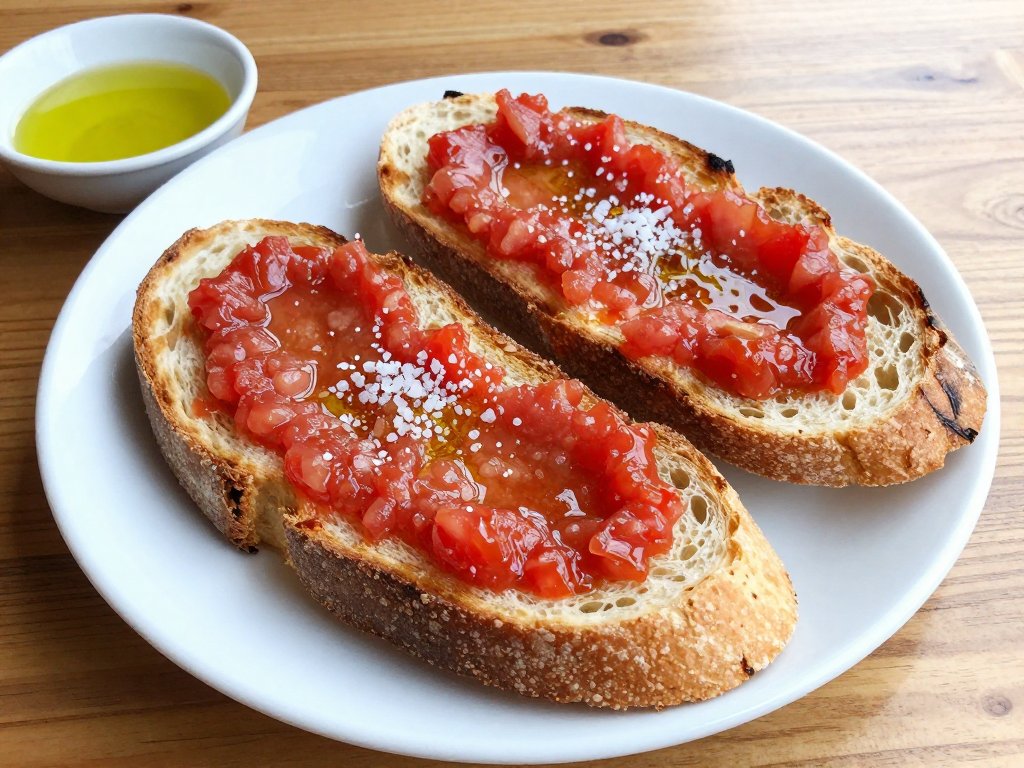
Tostada con Tomate
Toasted bread rubbed with ripe tomato and drizzled with olive oil. The standard Spanish breakfast, especially in Andalusia and Catalonia.
Appetizers
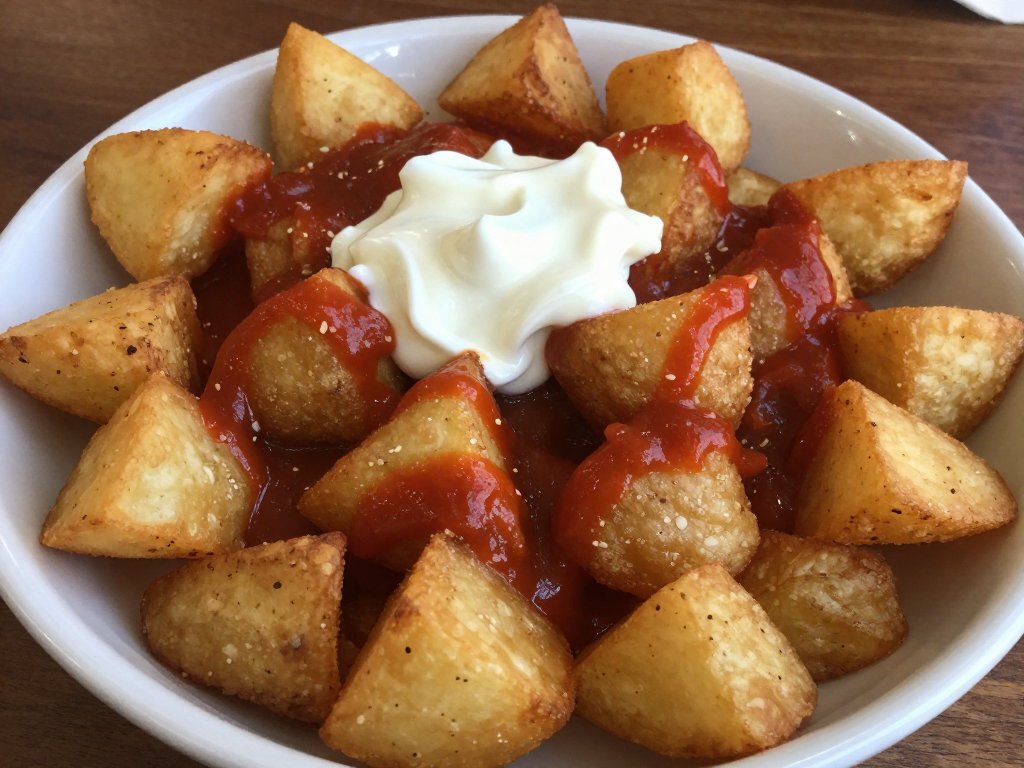
Patatas Bravas
Crispy fried potato cubes served with spicy bravas sauce and often a garlic aioli. Every bar has its own version.
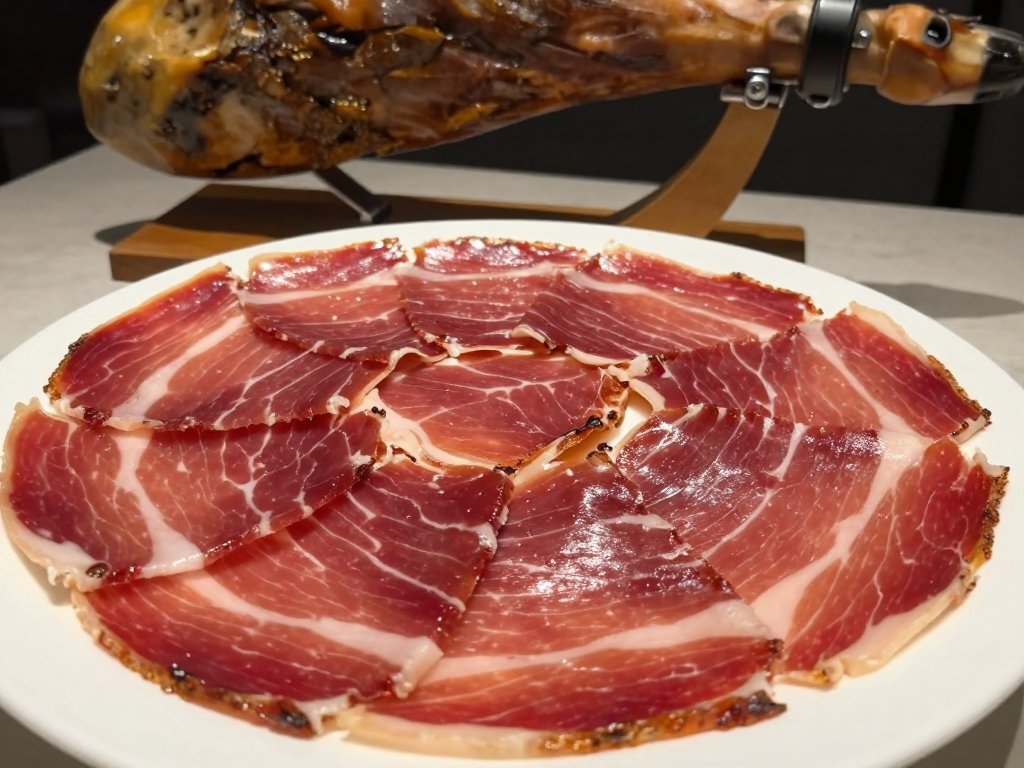
Jamón Ibérico
Dry-cured ham from free-range Iberian pigs. The acorn-fed bellota grade is considered among the finest cured meats in the world.
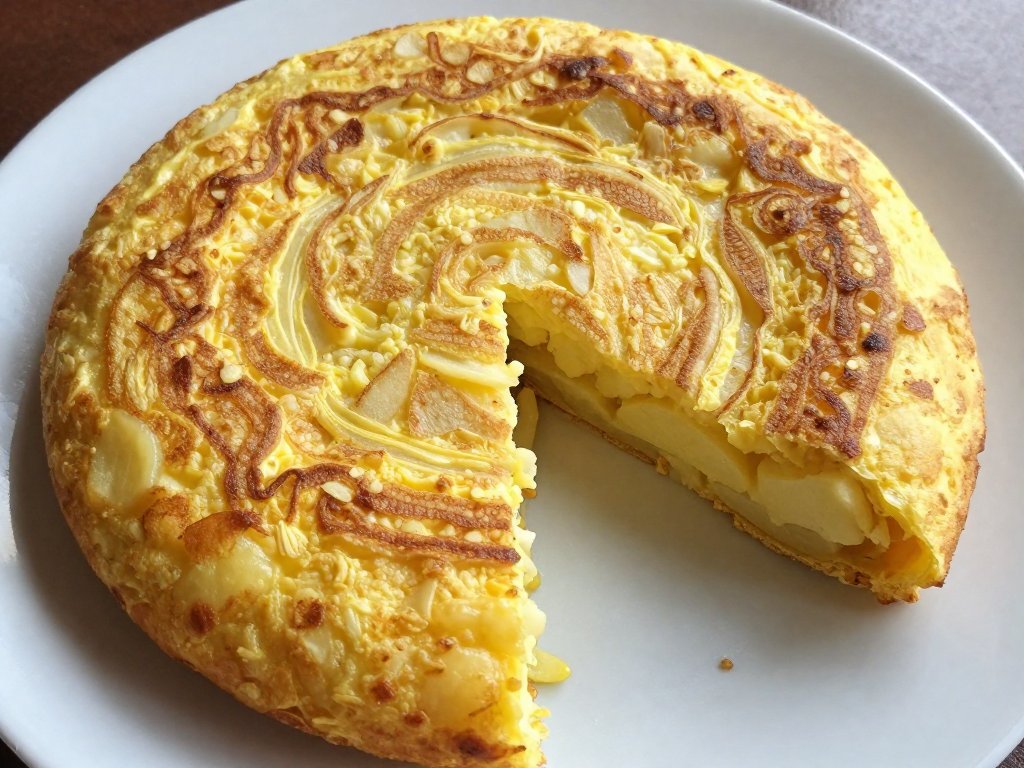
Tortilla Española
Thick potato and egg omelette, sometimes with onion. Served at room temperature as a tapa or light meal.
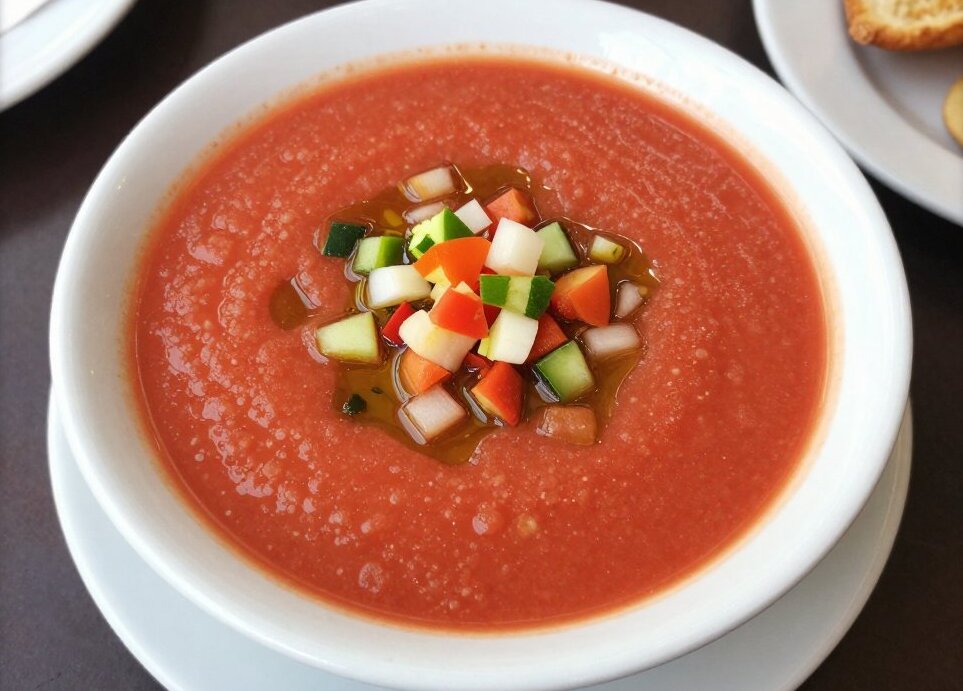
Gazpacho
Cold tomato-based soup blended with peppers, cucumber, garlic, olive oil, and bread. A staple of Andalusian summers.
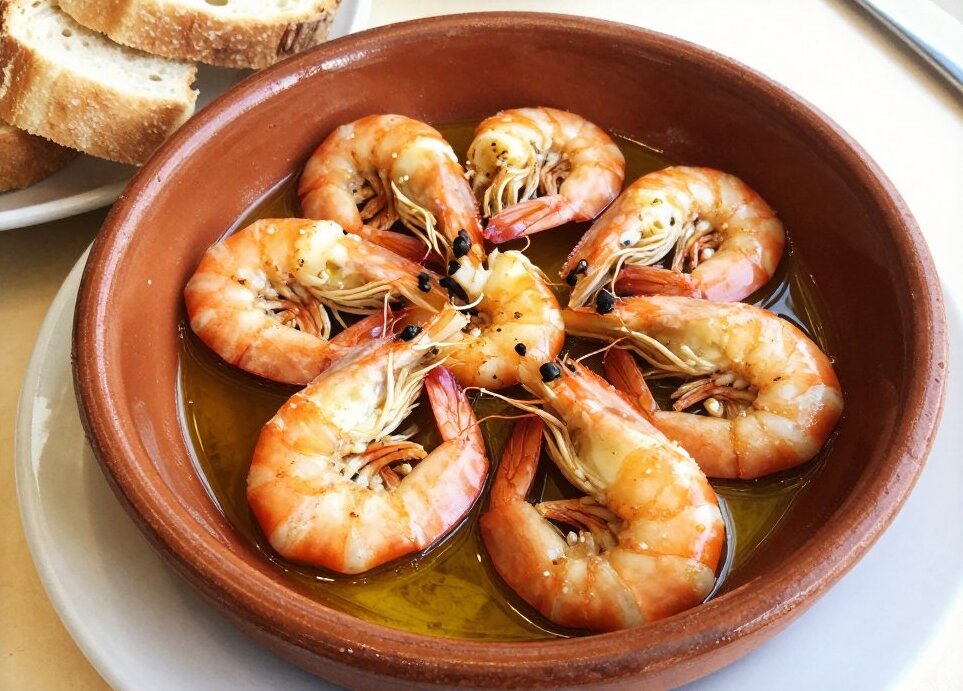
Gambas al Ajillo
Sizzling prawns cooked in olive oil with sliced garlic and dried chili. Served in a small clay dish with bread for dipping.
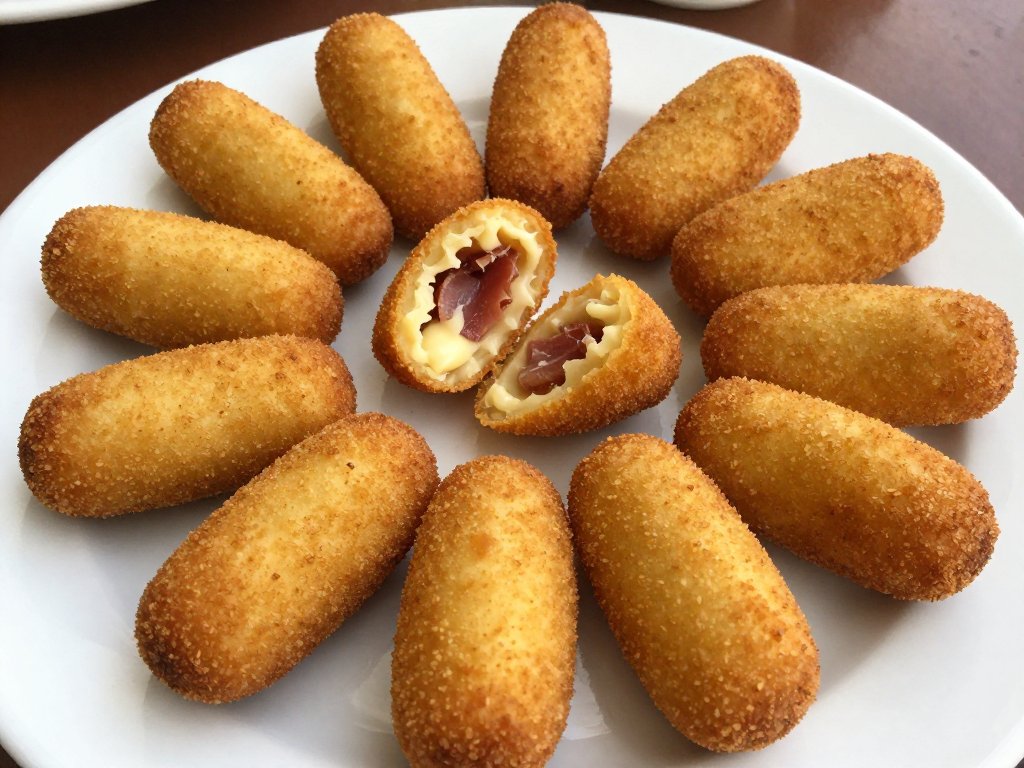
Croquetas de Jamón
Crispy breaded rolls filled with creamy béchamel and diced jamón. One of the most popular tapas across Spain.
Street Food
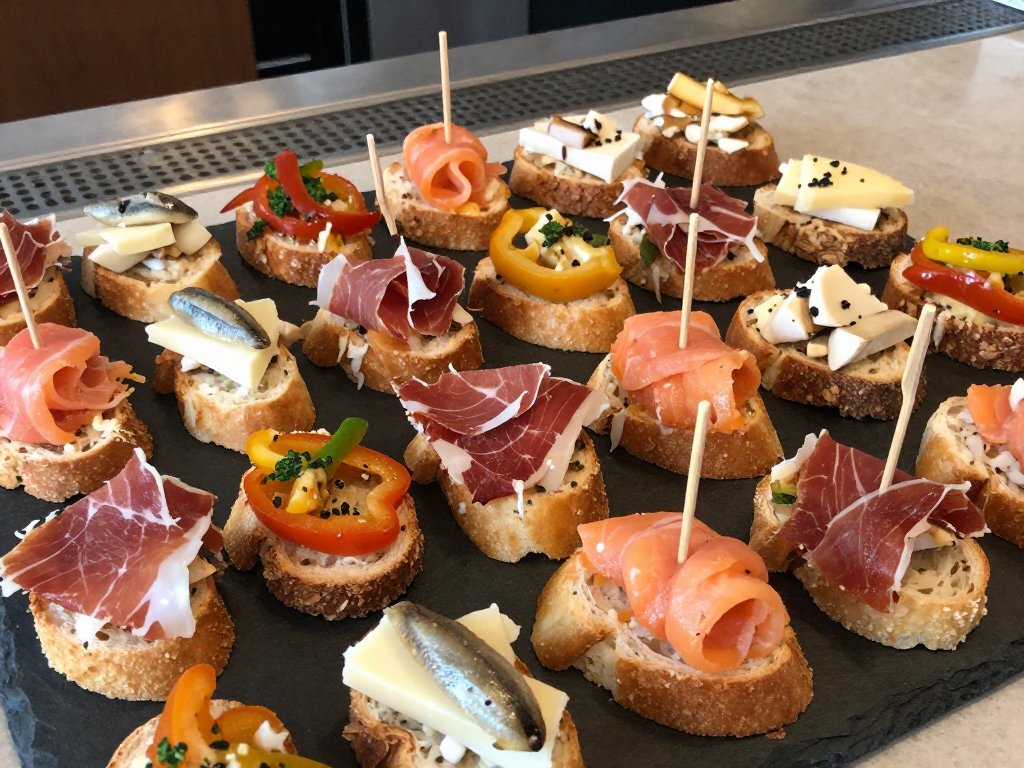
Pintxos
Small snacks served on bread and held together with a toothpick, originating from the Basque Country. Bars line them up along the counter.
Main Courses
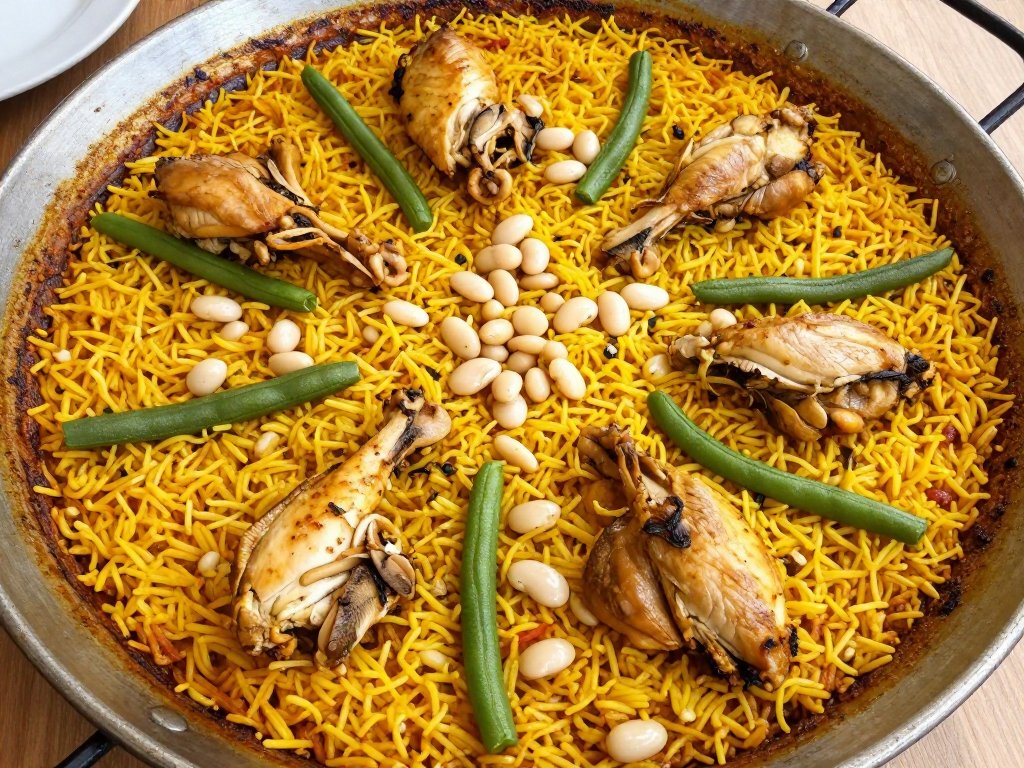
Paella Valenciana
Saffron-infused rice cooked in a wide shallow pan with rabbit, chicken, green beans, and white beans. The original version from Valencia.
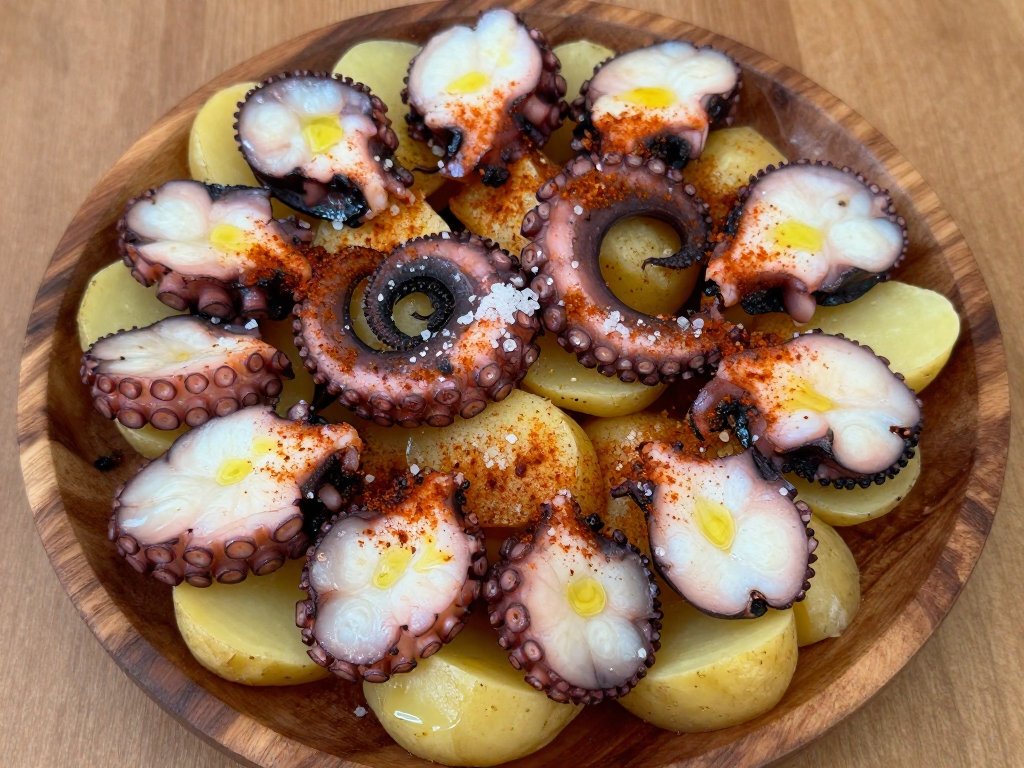
Pulpo a la Gallega
Pulpo á feira
Galician-style octopus boiled tender and served on a wooden board with olive oil, coarse salt, and smoked paprika.
Desserts
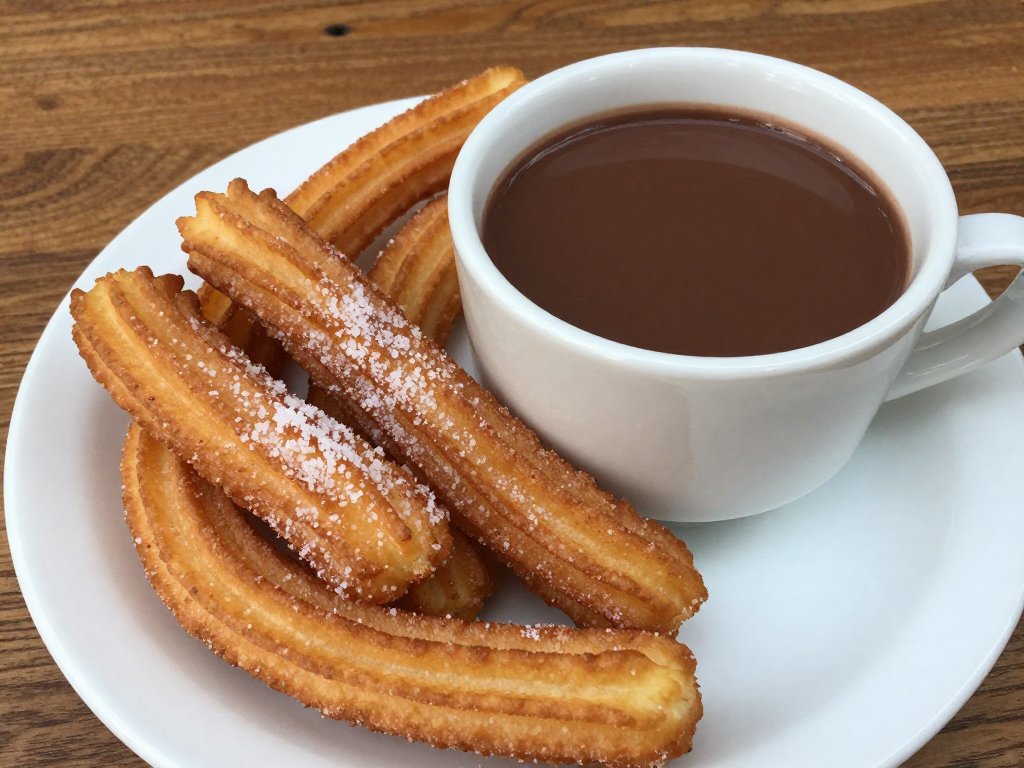
Churros con Chocolate
Fried dough sticks served with thick hot chocolate for dipping. Eaten for breakfast or as a late-night snack.
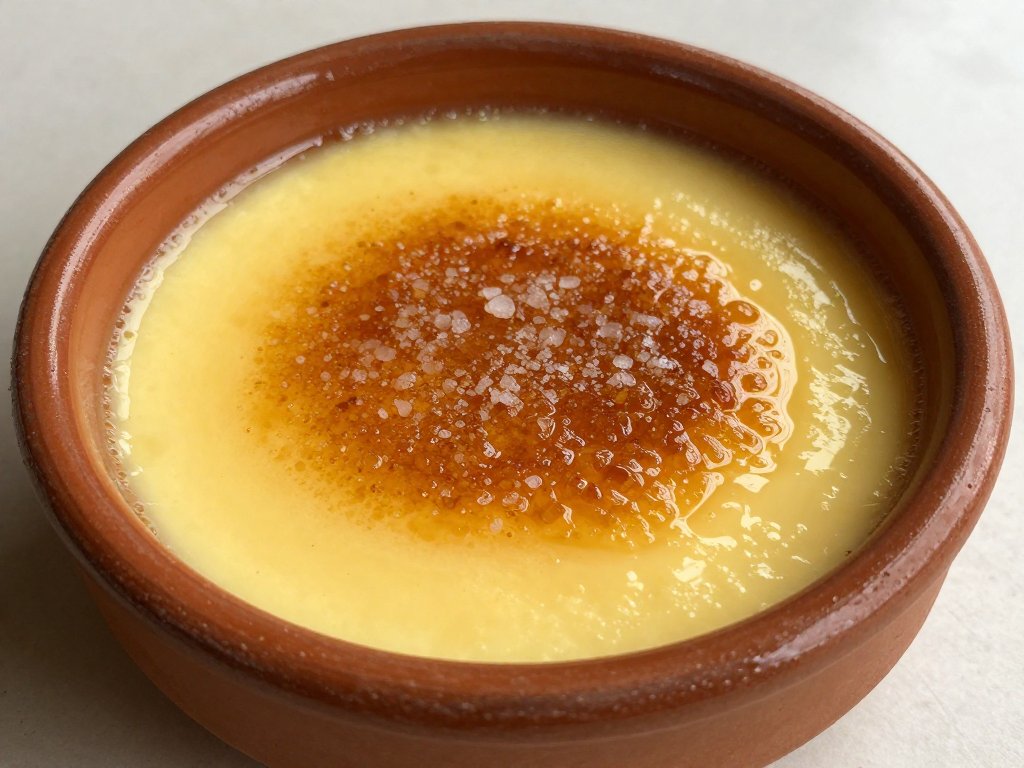
Crema Catalana
Catalan custard dessert with a caramelized sugar crust, flavored with lemon zest and cinnamon. Similar to crème brûlée but older in origin.
Drinks
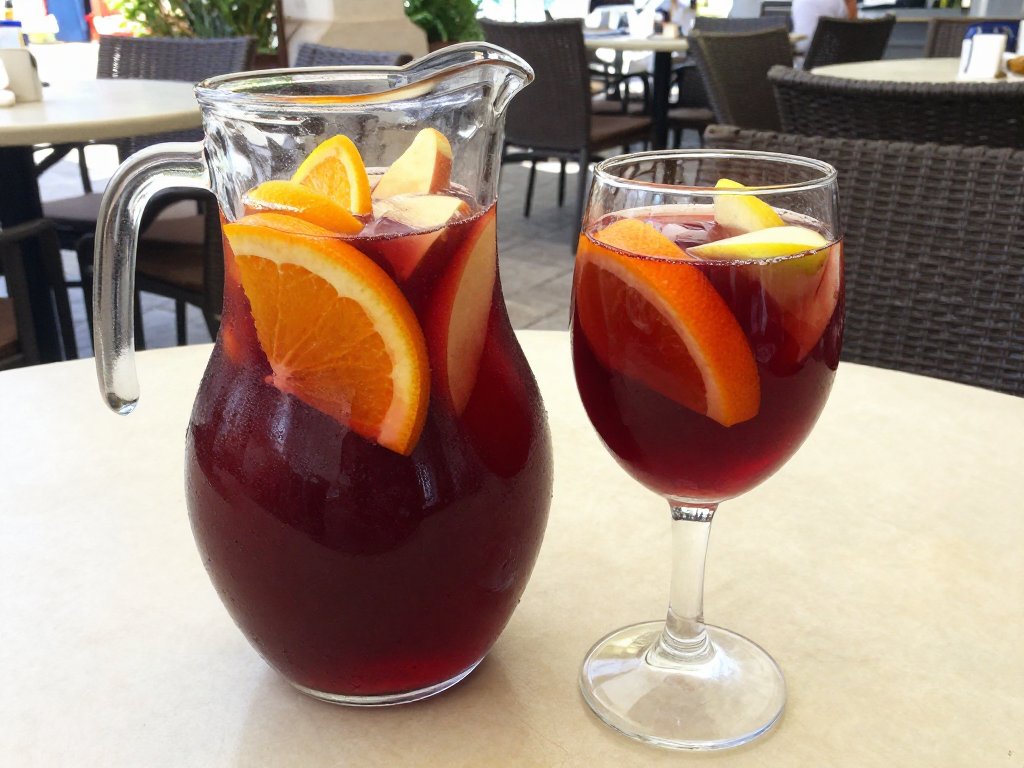
Sangría
Red wine punch mixed with chopped fruit, sugar, and a splash of brandy. Widely served at restaurants and outdoor terraces.
Traveling to Spain?
Translate any menu instantly with your camera.


Useful Phrases for Dining
Learn these essential phrases to navigate restaurants and food stalls in Spain.
English
Spanish
Pronunciation
Can I see the menu, please?
¿Puedo ver la carta, por favor?
PWEH-doh vehr lah KAR-tah, por fah-VOR
I'd like to order this, please.
Me pone esto, por favor.
meh POH-neh EHS-toh, por fah-VOR
Do you have anything without gluten?
¿Tienen algo sin gluten?
tee-EH-nen AHL-goh seen GLOO-ten
The bill, please.
La cuenta, por favor.
lah KWEN-tah, por fah-VOR
Thank you very much.
Muchas gracias.
MOO-chahs GRAH-thee-ahs
I'm allergic to shellfish.
Soy alérgico al marisco.
soy ah-LEHR-hee-koh ahl mah-REES-koh
What do you recommend?
¿Qué me recomienda?
keh meh reh-koh-mee-EN-dah
A beer, please.
Una caña, por favor.
OO-nah KAH-nyah, por fah-VOR
Frequently Asked Questions
Everything you need to know about dining in Spain.
Start with tapas classics like patatas bravas, jamón ibérico, and croquetas de jamón. Try paella in Valencia (never from a tourist-trap photo menu), pintxos in San Sebastián, and gazpacho anywhere in Andalusia during summer.
Never struggle with a foreign menu again
Point your camera at any menu and get instant translations with dish descriptions, dietary info, and more.