
Food to Try in Greece
Why Greek food works
Greek food operates on a simple principle: start with excellent ingredients and do not ruin them. When your olive oil is this good and your seafood was pulled from the Aegean that morning, you do not need complicated technique. You need a grill and the good sense to let things taste like themselves.
This is both the strength and the frustration of Greek cooking. At its best (a village taverna on a quiet island, octopus drying on a line outside, a plate of grilled fish with nothing but lemon and oil) it is perfect. At its worst (a tourist restaurant near the Acropolis serving microwaved moussaka with frozen fries) it is forgettable. Knowing where and how to eat in Greece makes all the difference.
How Greeks Eat
Greeks eat late, especially in summer. Lunch drifts from 1:30 to 3pm. Dinner rarely starts before 9pm, and on weekends 10 or 11pm is not unusual. The midday break is still respected in smaller towns and islands, when shops close and the streets go quiet.
The Taverna
The taverna is the default restaurant type in Greece. These are casual, family-run places with paper tablecloths, a straightforward menu, and a kitchen you can often walk into to point at what you want. This is not a gimmick. Looking at the food before ordering is completely normal and often encouraged.
Taverna food is home cooking scaled up: moussaka, pastitsio, stews cooked in the morning and served at room temperature, grilled meats and fish, and lots of olive oil. Dishes described as "lathera" (cooked in oil) are a whole category: green beans, okra, eggplant, and other vegetables braised in tomato and olive oil until soft. At tavernas where the menu is handwritten in Greek, standard translation apps tend to fail on the handwriting, but Menu Translator reads it and shows you each dish described in your language along with what's in it. You'll see each dish described in your language along with what's in it.
Meze Culture
The Greek way to eat, especially when drinking, is to share a spread of meze (small plates ordered for the table). Tzatziki, taramasalata (fish roe dip), melitzanosalata (smoky eggplant dip), dolmades, fried calamari, saganaki (fried cheese), and olives are standard starters. You pick at them slowly over an hour or two with bread, ouzo, or wine.
This is not appetizer-then-main dining. It is a meal in itself, and often the best way to eat in Greece. Order five or six meze dishes for two people and you will be full and happy. If names like taramasalata and melitzanosalata blur together on the menu, Menu Translator breaks down each one so you know exactly what you are ordering.
Regional Differences
Athens and the Mainland
Athens has everything from street-level souvlaki joints to modern restaurants reinterpreting Greek classics. The neighborhoods of Psyrri and Exarchia have strong taverna scenes. Monastiraki is the place for a late-night gyros after a few drinks.
Thessaloniki, Greece's second city, arguably has better food than Athens. The cuisine shows Ottoman and Sephardic influences. Bougatsa (custard or cheese wrapped in phyllo) is a Thessaloniki breakfast institution. The Modiano and Kapani markets are worth a morning of eating.
In the Peloponnese, food turns toward earthy stews, pork, and local wine. Kalamata gives its name to the famous olives. In Epirus to the northwest, pies (pites) are the specialty: cheese pies, meat pies, and wild greens pies made with paper-thin homemade phyllo.
The Islands
Island food depends on what the sea and the rocky terrain provide. Seafood dominates, but so do hard cheeses, capers, sun-dried tomatoes, and wild herbs. Each island group has its own character.
The Cyclades (Santorini, Mykonos, Naxos) produce cherry tomatoes, white eggplant, and fava (a yellow split pea puree that is a Santorini specialty, not to be confused with fava beans). Mykonos has high-end dining and high prices to match. Naxos, with its fertile inland plains, has better everyday food at half the cost.
Crete is different. The Cretan diet is the original Mediterranean diet, studied by scientists for decades for its link to longevity. It is built on olive oil (Cretans consume more per capita than anyone), wild greens (horta), snails, lamb, and barley rusks (dakos) topped with tomato and mizithra cheese. Chania and Rethymno have good taverna scenes.
The Northeast
Lesvos is the ouzo capital of Greece, where the spirit is distilled. The island's cuisine features sardines, salt-cured fish, and kalitsounia (small cheese pies). Samos and Ikaria (another "blue zone" known for longevity) have their own food traditions shaped by isolation and self-sufficiency.
Dietary Restrictions
Vegetarian
Greece is good for vegetarians, partly due to the Orthodox Christian fasting calendar. During Lent and other fasting periods, many traditional dishes are prepared without meat, eggs, or dairy. These dishes persist year-round: gigantes plaki (giant baked beans in tomato sauce), briam (roasted mixed vegetables), gemista (tomatoes and peppers stuffed with rice and herbs), and the entire "lathera" category of oil-braised vegetables.
A meze spread of tzatziki, Greek salad, spanakopita, dolmades, fried zucchini, and gigantes is a complete vegetarian meal.
Vegan
Vegan eating is possible but requires some effort. Feta and yogurt are foundational to Greek cooking, and many dishes that appear vegan include cheese. Lathera dishes, dolmades (without meat), and horta with lemon are naturally vegan. Lenten dishes (nistisima) are vegan by definition, so ask for "nistisimo" options, and the waiter will understand. Scanning the menu with Menu Translator beforehand helps you identify which dishes are naturally plant-based, so you arrive at the conversation with the waiter already knowing your best options.
Gluten-Free
Bread is central to Greek meals and phyllo pastry is used constantly, but many Greek dishes are naturally gluten-free: grilled meats and fish, salads, dips (except bread-based ones like skordalia), rice, legumes, and most vegetable dishes. The main things to avoid are phyllo-wrapped dishes, breaded items, and pasta dishes like pastitsio. Menu Translator flags dietary information for each dish, which makes it easier to spot what is safe when the menu is all in Greek.
Practical Tips for Eating Well
Walk into the kitchen. At traditional tavernas, especially outside Athens, it is normal to walk to the kitchen and look at what is cooking. Point at what you want. Staff are used to this and some will invite you back themselves.
Order the fish by weight. Fresh fish at tavernas is priced per kilogram, not per portion. The waiter will show you the whole fish, you pick one, and it gets weighed. Expect to pay EUR 40-65 per kilo for fresh catch. Farmed fish (sea bream, sea bass) is cheaper at EUR 25-35 per kilo. Always ask "Is it fresh or frozen?" ("Einai fresko i katepsigmeno?") If you're unsure what a particular fish or preparation is, Menu Translator can help you decode the Greek names on the menu so you know whether you're ordering grilled sea bream or stewed cuttlefish.
Bread charges are standard. A basket of bread and often a small dish of olive oil or dip will arrive at your table without ordering it. This is the "couvert" and costs EUR 1-2 per person. It is added to the bill automatically.
House wine is a solid bet. Many tavernas serve their own house wine (hima) from the barrel in copper jugs. It costs EUR 5-8 per half-liter and ranges from rough to surprisingly good. Ask for "varelisio krasi" (barrel wine). Try it before committing to a bottle.
Tipping is modest. Greeks typically round up or leave 5-10% at tavernas. At cafes, leaving the small change is fine. Service charges are rarely included in the bill. Cash tips are preferred.
Greek coffee has rules. When ordering Greek coffee (elliniko), you must specify sweetness: sketo (no sugar), metrio (medium), or glyko (sweet). It is brewed in a small pot and served with the grounds. Do not drink the sludge at the bottom.
Freddo is the modern drink. Younger Greeks have largely switched from frappe (made with instant coffee) to freddo espresso and freddo cappuccino. Both are shaken with ice until frothy and served cold. They are excellent in summer and available at every cafe.
Eating on the Islands
Island dining comes with a price premium, especially on Mykonos and Santorini. A waterfront meal on Mykonos can easily cost EUR 50-80 per person. The same food on Naxos, Paros, or a less touristed island might cost EUR 15-25.
For the best island food, avoid restaurants on the main port strip and walk into the back streets. Look for tavernas where the owner is also the cook and the menu changes based on what was caught that morning. Ask what is fresh today: "Ti exete fresko simera?" These off-the-beaten-path spots rarely have English menus, but that's part of the charm. Use Menu Translator to read the Greek menu and you'll eat better than the crowds on the waterfront.
On Crete, eat in the villages rather than the resort towns. Cretan food at its source (a mountain village taverna serving lamb chops, horta, and local raki) is as good as eating gets in Greece, and it costs almost nothing.
How Greeks treat the table
Greeks do not eat alone if they can help it. Meals are shared and loud and nobody is watching the clock. The table is covered in plates, everyone reaches across, arguments happen over whether the lamb needs more lemon, and nobody is in a rush. The word "kerasma" (to treat someone to food or drink) comes up constantly. If someone insists on paying, let them. You can buy next time.
After the meal, expect complimentary fruit, a small dessert, or a shot of raki or tsipouro. This is standard at most tavernas and is not added to the bill. It signals that the meal is over and the owner appreciates your visit.
Food in Greece is not about innovation or technique. Good company, a plate of something honest, and nowhere to be afterward. That is more than enough.
Must-Try Dishes in Greece
From street food stalls to fine dining, these are the dishes you should not miss.
Appetizers
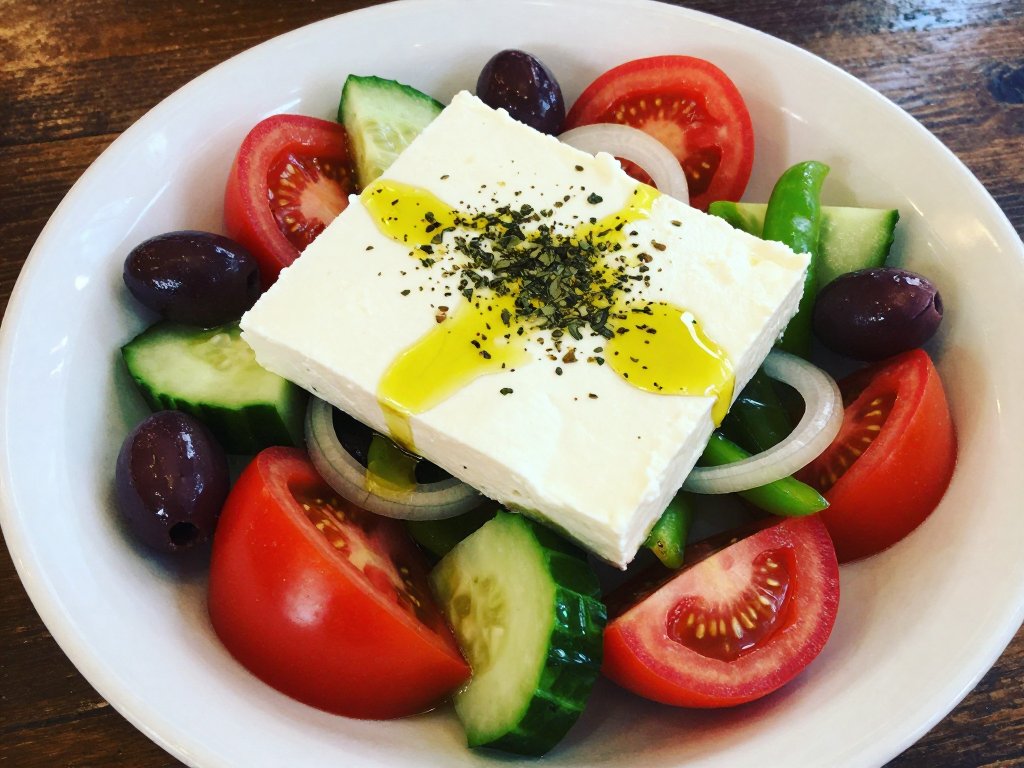
Greek Salad
Χωριάτικη σαλάτα
Tomatoes, cucumbers, onions, green peppers, and olives topped with a thick slab of feta and dressed with olive oil and oregano. No lettuce.
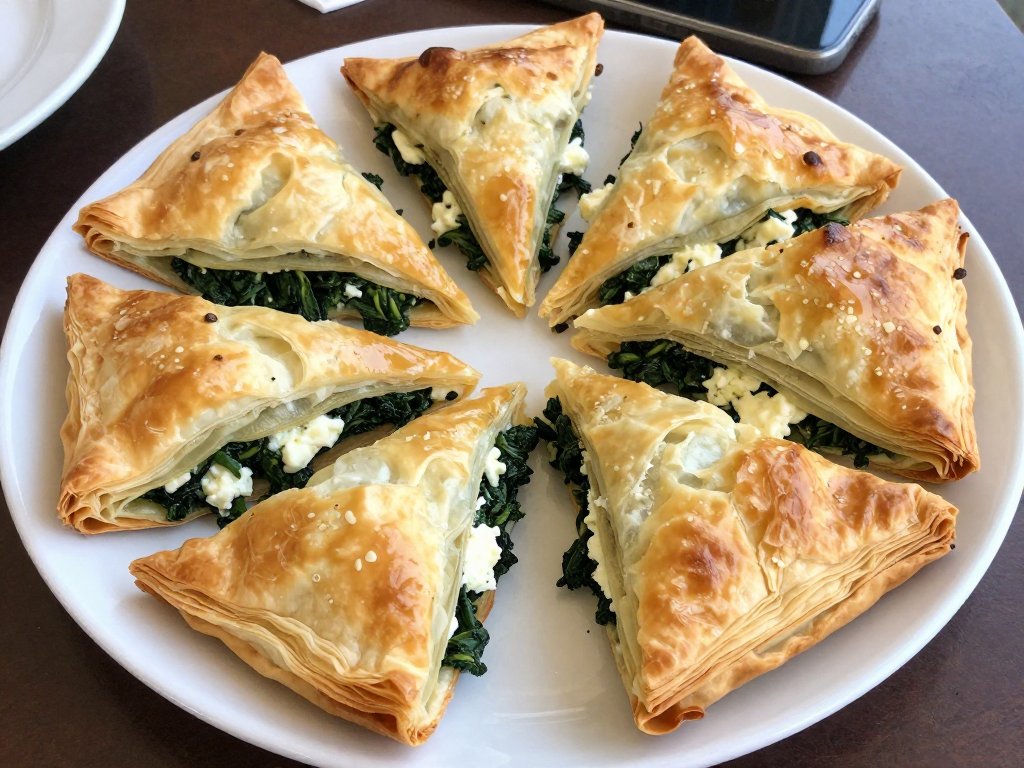
Spanakopita
Σπανακόπιτα
Flaky phyllo pastry filled with spinach, feta cheese, and herbs. Baked as a large pie or individual triangles.
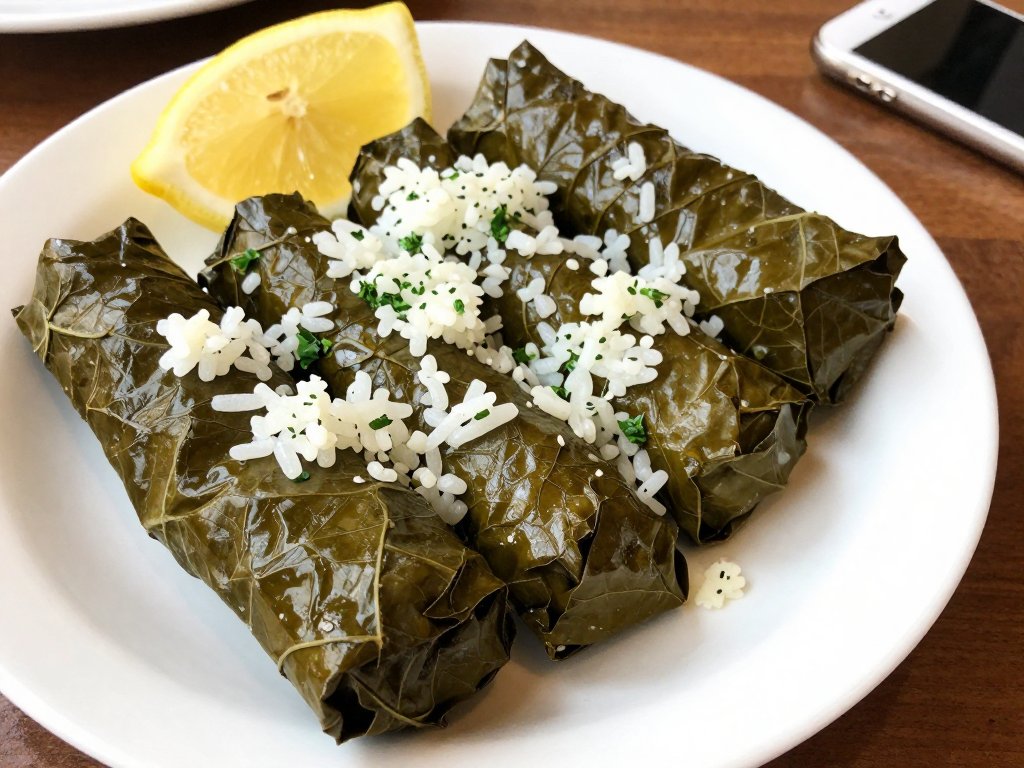
Dolmades
Ντολμάδες
Grape vine leaves stuffed with rice, herbs, and sometimes minced meat. The meatless version served cold with lemon is a classic meze.
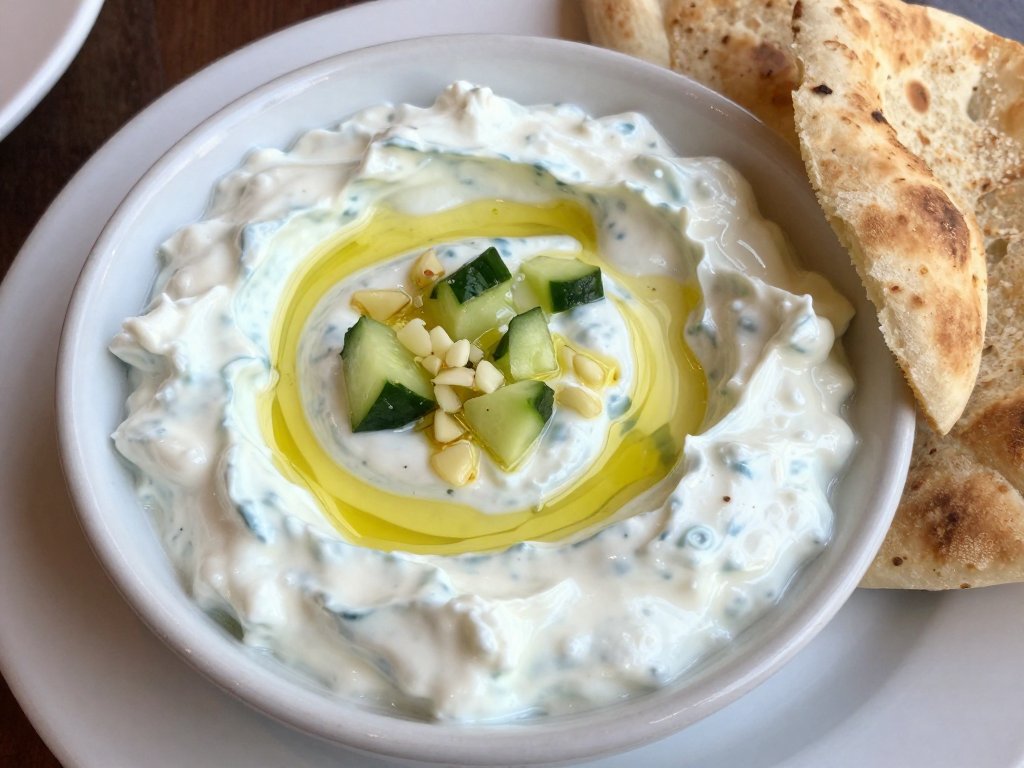
Tzatziki
Τζατζίκι
Thick yogurt dip blended with grated cucumber, garlic, olive oil, and sometimes dill. Served as a meze or condiment with grilled meats.
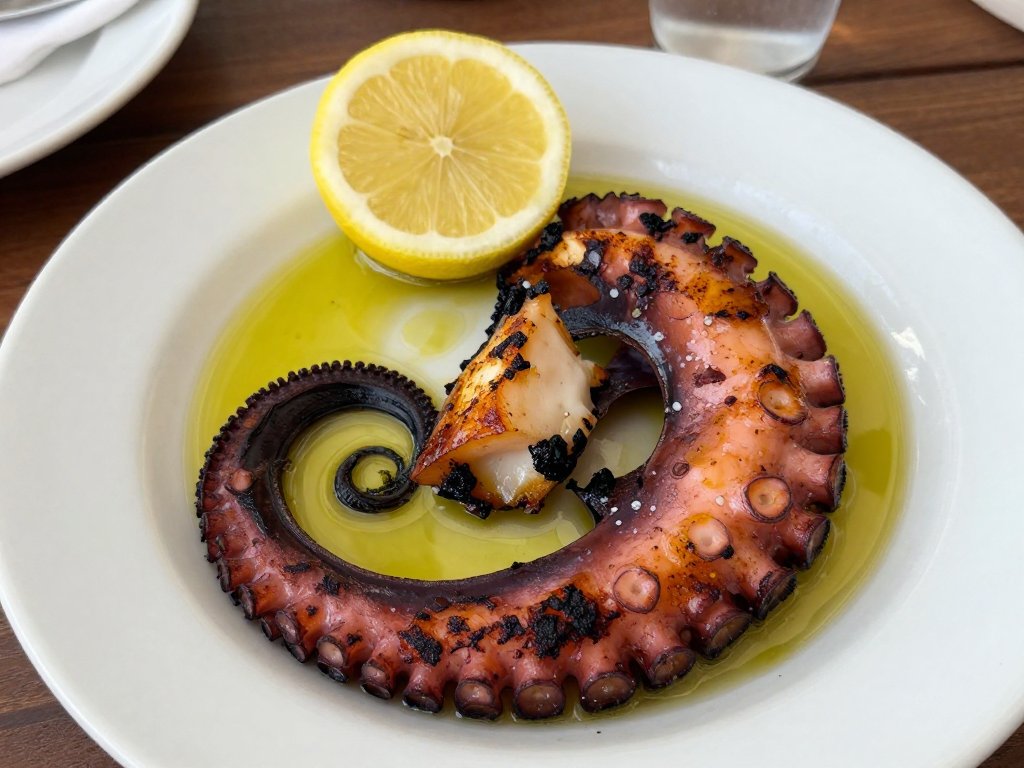
Grilled Octopus
Χταπόδι σχάρας
Octopus charred over coals and dressed with olive oil and lemon. A classic taverna starter, especially on the islands.
Street Food
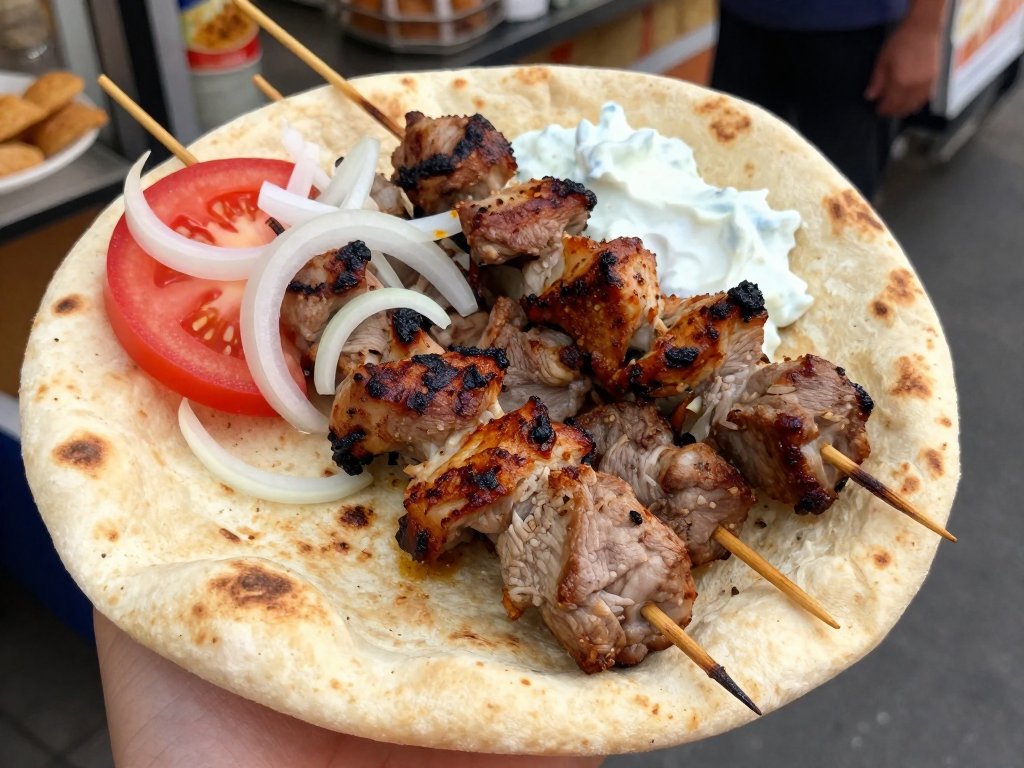
Souvlaki
Σουβλάκι
Small pieces of marinated pork or chicken grilled on skewers. Served in pita with tomato, onion, and tzatziki, or on a plate with sides.
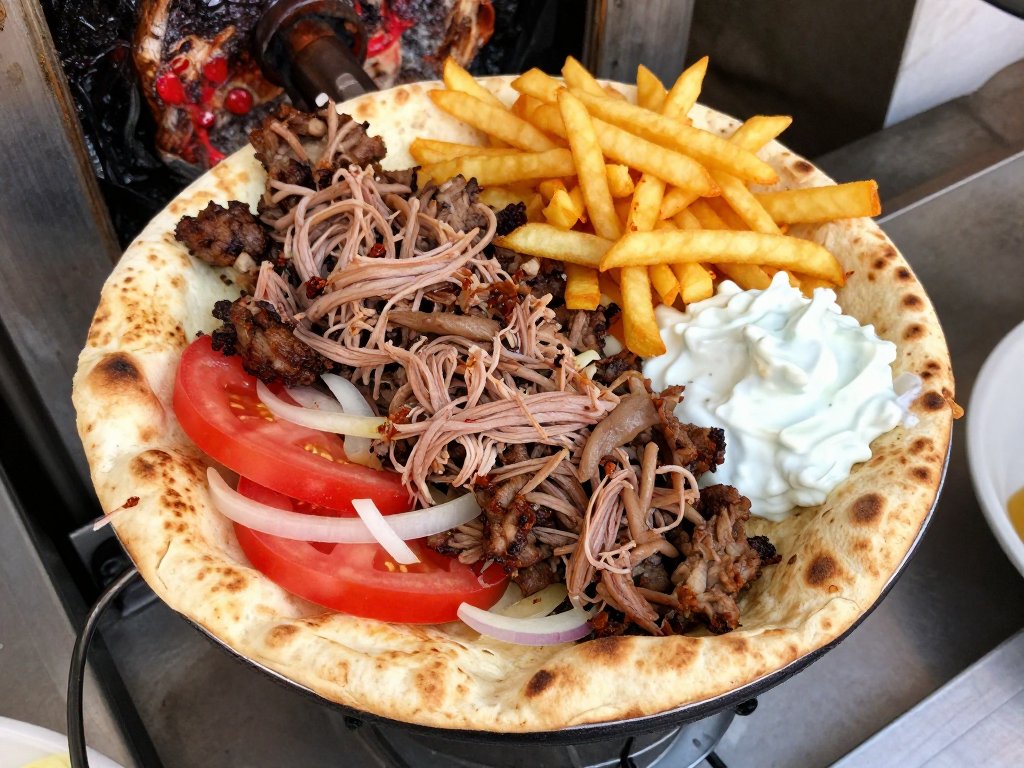
Gyros
Γύρος
Meat cooked on a vertical rotisserie, shaved thin and served in pita with tomato, onion, fries, and tzatziki. Pork is the traditional choice.
Main Courses
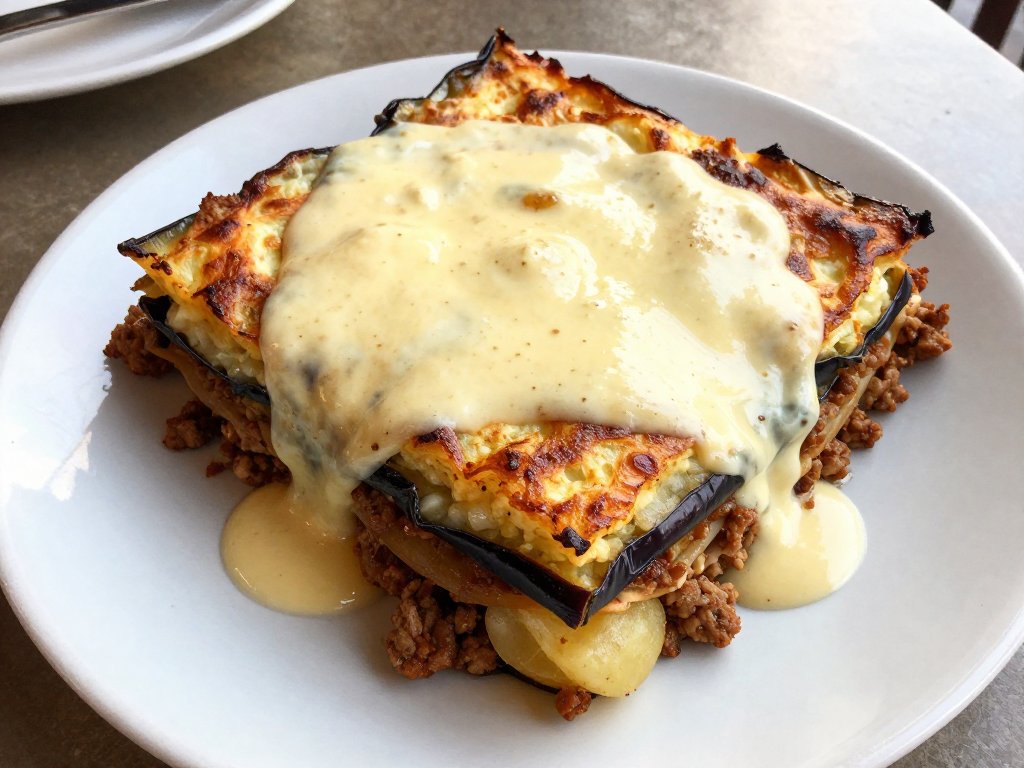
Moussaka
Μουσακάς
Layered casserole of eggplant, spiced ground meat, and potatoes topped with thick béchamel sauce and baked until golden.
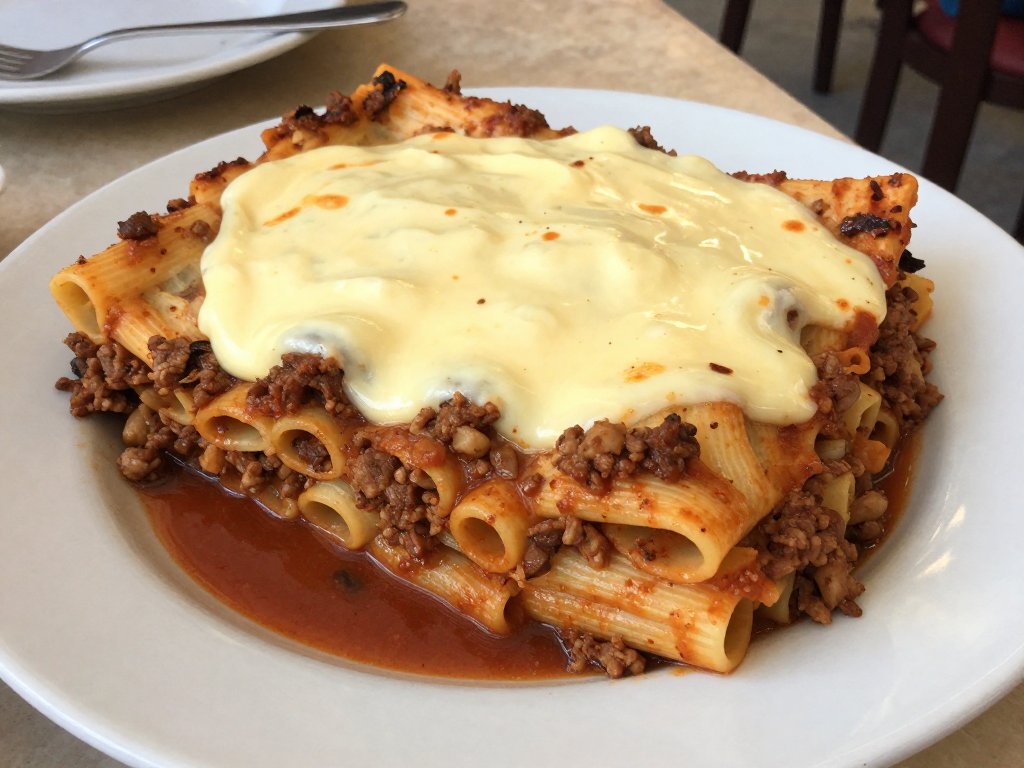
Pastitsio
Παστίτσιο
Baked pasta dish with tubular noodles, spiced meat sauce, and creamy béchamel topping. Often called Greek lasagna.
Desserts
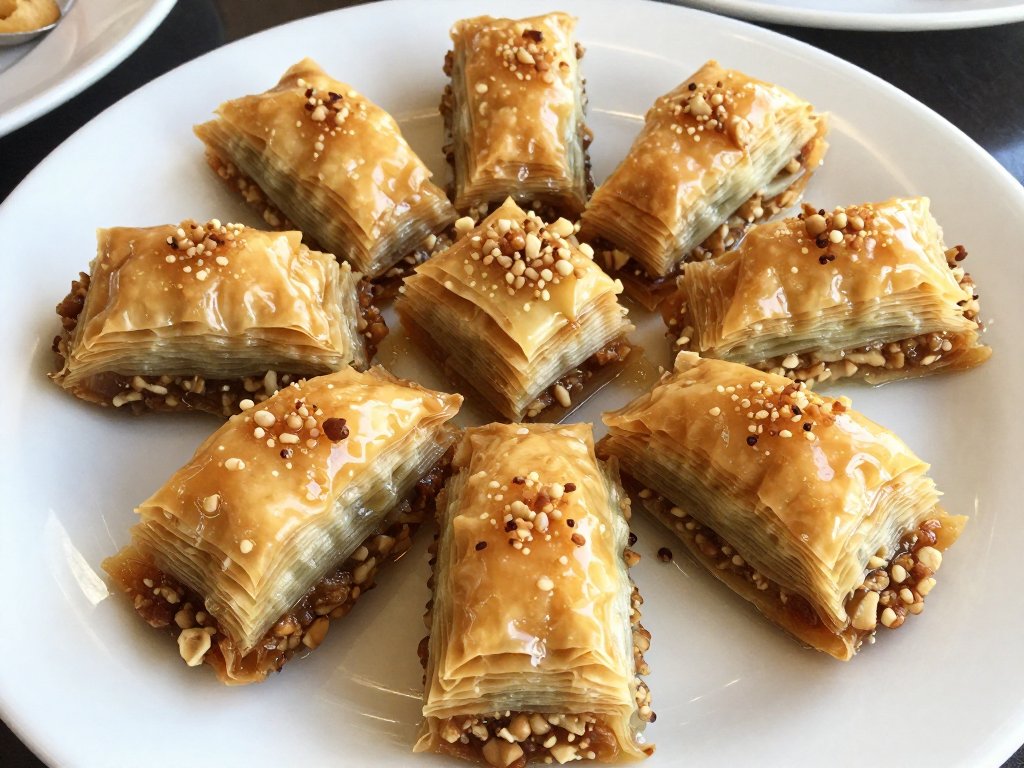
Baklava
Μπακλαβάς
Layers of phyllo dough filled with chopped nuts and soaked in honey syrup. Rich, sweet, and served in small diamond-shaped pieces.
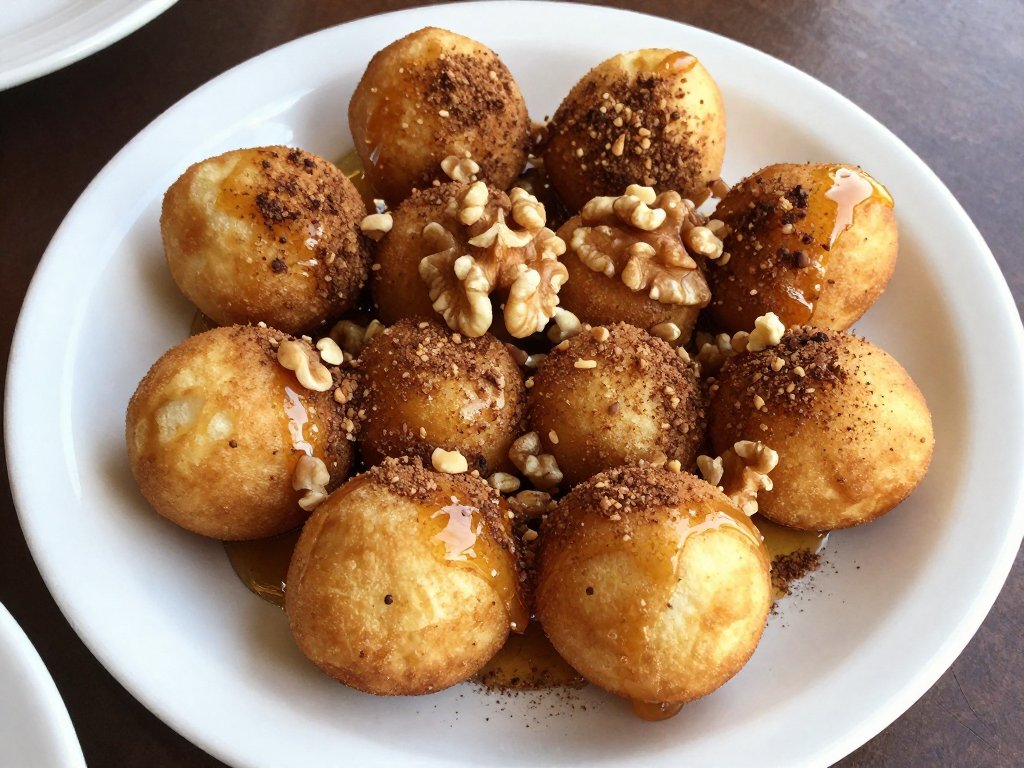
Loukoumades
Λουκουμάδες
Small deep-fried dough balls drizzled with honey and sprinkled with cinnamon and walnuts. Served hot as a street dessert.
Drinks
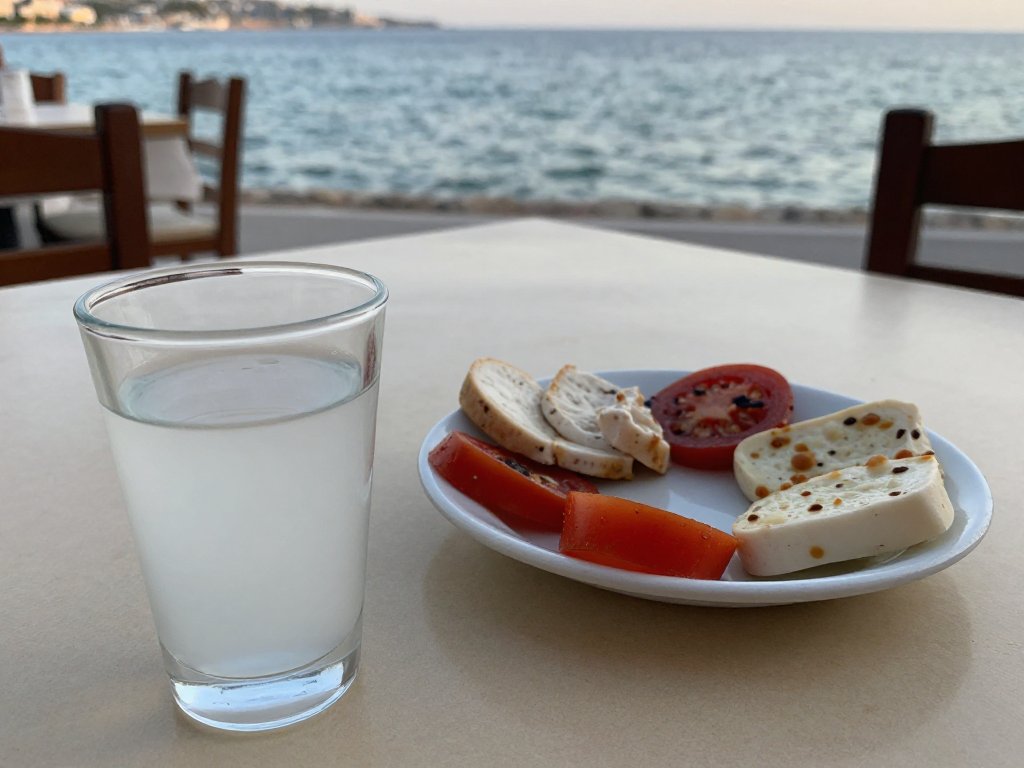
Ouzo
Ούζο
Anise-flavored spirit that turns milky white when mixed with water. Traditionally sipped alongside meze dishes.
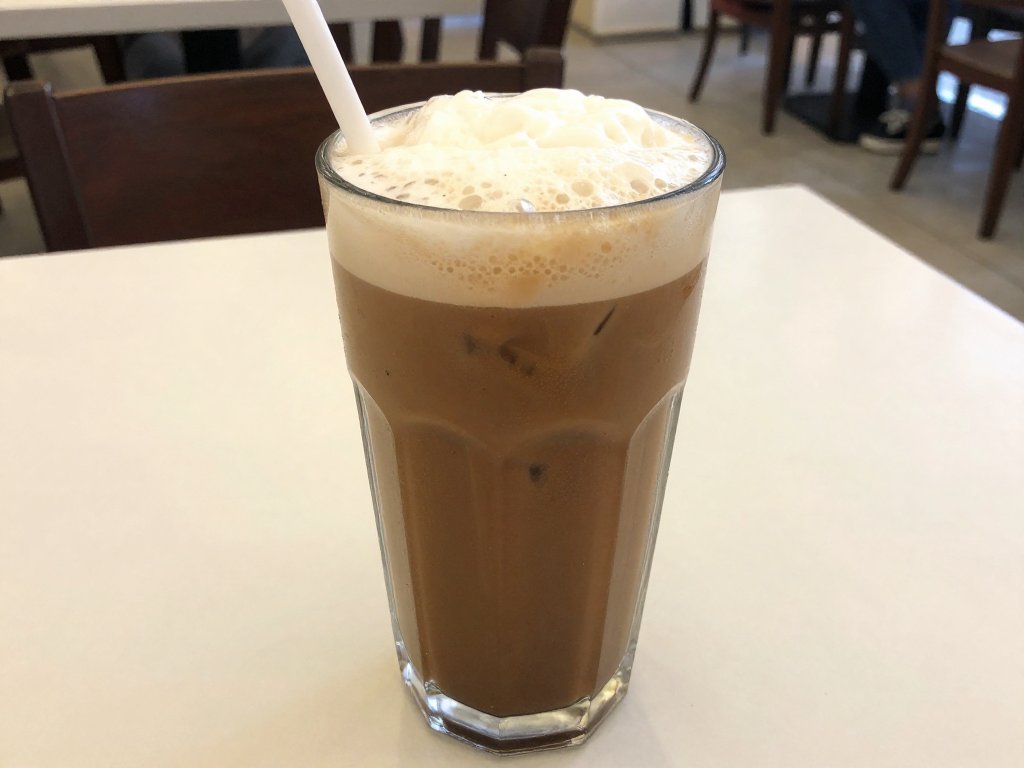
Frappe
Φραπέ
Instant coffee shaken with water, sugar, and ice into a frothy cold drink. A Greek summer institution, served everywhere.
Traveling to Greece?
Translate any menu instantly with your camera.


Useful Phrases for Dining
Learn these essential phrases to navigate restaurants and food stalls in Greece.
English
Greek
Pronunciation
Can I see the menu, please?
Μπορώ να δω τον κατάλογο, παρακαλώ;
boh-ROH nah doh ton kah-TAH-loh-goh, pah-rah-kah-LOH
I'd like to order this.
Θα ήθελα αυτό, παρακαλώ.
thah EE-theh-lah af-TOH, pah-rah-kah-LOH
Do you have vegetarian dishes?
Έχετε φαγητά χωρίς κρέας;
EH-heh-teh fah-yee-TAH hoh-REES KREH-ahs
The bill, please.
Τον λογαριασμό, παρακαλώ.
ton loh-gah-ree-ahz-MOH, pah-rah-kah-LOH
Thank you.
Ευχαριστώ.
ef-hah-ree-STOH
I'm allergic to nuts.
Είμαι αλλεργικός στους ξηρούς καρπούς.
EE-meh ah-ler-yee-KOHS stoos ksee-ROOS kar-POOS
Water, please.
Νερό, παρακαλώ.
neh-ROH, pah-rah-kah-LOH
Frequently Asked Questions
Everything you need to know about dining in Greece.
Start with a proper horiatiki (Greek salad), souvlaki or gyros from a street stand, and moussaka at a taverna. Try grilled octopus by the sea, spanakopita from a bakery, and finish with loukoumades drizzled in honey. Do not leave without sitting down for a full meze spread with ouzo.
Never struggle with a foreign menu again
Point your camera at any menu and get instant translations with dish descriptions, dietary info, and more.