
Food to Try in France
Why France Matters for Food
French cooking shaped how the entire Western world thinks about restaurants, menus, sauces, and professional kitchens. Auguste Escoffier codified the brigade system and the five mother sauces. The Michelin Guide started here. The idea that a meal should progress from lighter to heavier courses, that wine should match food, that a chef is an artist. This all comes from France.
But here's what actually matters to you as someone about to eat there: France has an extraordinarily deep bench of everyday good food. The gap between a random bistro in a small French town and a random restaurant in most other countries is enormous. A cheese course after dinner is standard. The bread on the table is baked that morning. The house wine is drinkable. These aren't luxuries in France. They're expectations.
What surprises most visitors isn't the fancy stuff. It's the Tuesday lunch at a neighborhood bistro: a simple but perfectly made terrine to start, steak with a pan sauce and fries, a crème caramel, and a glass of côtes-du-rhône. Total cost: 18 EUR. That's the actual experience of eating in France.
How the French Eat
The Daily Rhythm
Petit déjeuner (breakfast) is simple and sweet. A croissant or tartine (half a baguette with butter and jam) with coffee. That's it. French people do not eat eggs, bacon, or savory food for breakfast. If your hotel offers an "American breakfast," it's there for tourists.
Coffee in the morning is either café (espresso) or café crème (espresso with steamed milk, roughly equivalent to a latte). Nobody orders café crème after noon. After lunch and dinner, it's straight espresso only.
Déjeuner (lunch) was historically the main meal, and in smaller towns it still is. Lunch service runs 12:00-14:00, and many restaurants close after that until dinner. The formule or menu du jour is the way to eat lunch: a fixed-price two- or three-course meal for 14-25 EUR that represents the best cooking-to-price ratio in the country. Workers, retirees, and students all eat these daily. Formule boards are often handwritten in French only, so scanning one with Menu Translator tells you not just the translation but what each dish actually is.
Dîner (dinner) starts at 19:30 at the earliest. Making a reservation for 19:00 in Paris will get you seated in an empty room. Prime time is 20:00-21:00. Dinner is usually lighter than lunch, though this depends on the occasion.
Goûter is the 16:00 snack, primarily for children, but adults certainly participate. A pain au chocolat, a crêpe, or a slice of cake with tea or coffee. It's not on any restaurant menu; it's what you eat walking past a boulangerie.
Restaurant Types
Bistro. The workhorse of French dining. Small, often family-run, with a chalkboard menu that changes daily or weekly. Classic bistro dishes: onion soup, coq au vin, blanquette de veau, steak frites, crème brûlée. Expect to spend 25-50 EUR per person for dinner with wine. When the chalkboard is in cursive French and you can't quite make out what "blanquette de veau" or "tête de veau" actually means, scanning it with Menu Translator clears things up fast — unlike standard translation apps that choke on handwritten text, it reads chalkboard menus reliably. You'll see each dish explained in your language before the waiter arrives.
Brasserie. Larger than a bistro, originally linked to Alsatian beer brewing. Brasseries serve food continuously (a major advantage, since there's no gap between lunch and dinner), offer a wider menu, and often have grand art deco or Belle Époque interiors. Famous Parisian brasseries like Bouillon Chartier and Le Bouillon Pigalle serve traditional food at remarkably fair prices.
Boulangerie. Bakery. This is where you buy bread and basic pastries (croissants, pain au chocolat). A good boulangerie bakes everything on-site; chains and industrial bakeries use frozen dough. Look for the "Artisan Boulanger" sign on the door. It means the bread is made from scratch on premises.
Pâtisserie. Pastry shop. More elaborate and expensive than a boulangerie. This is where you find tarts, éclairs, macarons, mille-feuille, and sculptural desserts. Pierre Hermé, Jacques Genin, and Cédric Grolet run some of Paris's most famous pâtisseries, but every French town has at least one excellent local version.
Café. Primarily for drinks, but most serve simple food: croque-monsieur, salade niçoise, omelettes, and tartines. The Parisian café has a specific pricing system: drinking at the zinc counter (comptoir) is cheapest, sitting inside costs more, and sitting on the terrace costs the most. A café at the counter is about 1.20 EUR; on a Champs-Élysées terrace, it might be 5 EUR.
French Restaurant Etiquette
Always say "bonjour" when entering any shop, café, or restaurant. This is non-negotiable. Not greeting people is considered deeply rude in France, ruder than most foreigners realize. When leaving, say "merci, au revoir."
Waiters in France are professionals, not students working part-time. They will not hover over you or rush you. They will not bring the check until you ask for it. Sitting at a table after eating is your right, not an imposition. When you're ready, make eye contact or say "l'addition, s'il vous plaît."
Water is free if you ask for tap water: "une carafe d'eau, s'il vous plaît." Ordering bottled water (Evian, Badoit) costs 4-7 EUR. Bread comes automatically and is free; it's part of the meal, not an extra.
Tipping: service is included in all French restaurant prices (service compris). You are not expected to tip. Leaving a euro or two for good service, or rounding up the bill, is a nice gesture but entirely optional.
Regional French Food
France has at least a dozen distinct food regions. The differences are real and worth traveling for.
Paris and Île-de-France
Paris concentrates food from every region, but it has its own traditions: the bistro tradition, Parisian café culture, and the croissant (originally Viennese, perfected in Paris). The city's market streets (Rue Mouffetard, Rue Cler, Rue Montorgueil) are where Parisians shop for food daily. Walk through, buy a piece of cheese, some charcuterie, a baguette, and eat on a park bench. That's a Parisian meal.
For bistros, avoid the 1st and 8th arrondissements (tourist-heavy Champs-Élysées area) and head to the 11th (Oberkampf, Charonne), 10th (Canal Saint-Martin), or 5th (Latin Quarter side streets). Le Comptoir in the 6th, Le Baratin in the 20th, and Chez l'Ami Jean in the 7th are local favorites across different price ranges. These neighborhood spots rarely have English menus, but that's a feature, not a problem. Scan the French menu with Menu Translator and you'll eat better than anyone stuck in the tourist-oriented restaurants near the Louvre.
Lyon
Lyon has a legitimate claim to the best food in France. The city invented the bouchon, a specific type of restaurant serving Lyonnaise classics: quenelles (pike fish dumplings in cream sauce), saucisson chaud (warm sausage with lentils), tablier de sapeur (breaded tripe), and cervelle de canut (herbed fromage blanc). The Presqu'île and Vieux Lyon neighborhoods have the highest concentration of bouchons. Bouchon menus are notoriously cryptic even for French visitors, so pointing Menu Translator at one saves you from accidentally ordering tablier de sapeur (breaded tripe) when you wanted saucisson chaud.
Lyon also hosts Paul Bocuse's legacy restaurants and has a covered food market, Les Halles de Lyon Paul Bocuse, that's one of the best food markets in Europe.
Provence and the Mediterranean Coast
Olive oil replaces butter here. Garlic, herbs, and tomatoes define the flavor base. Bouillabaisse, the saffron-scented fish stew, is Marseille's signature, though a proper version with the correct fish costs 50-70 EUR per person and should be ordered in advance. Ratatouille, tapenade (olive spread), socca (chickpea flour pancake from Nice), pissaladière (onion tart), and salade niçoise all originate from this coast.
Rosé wine dominates. Provence produces more rosé than any other French region, and drinking it ice-cold on a terrace overlooking lavender fields is as clichéd as it sounds. Still completely worth doing.
Alsace
Alsace, on the German border, has food that looks and feels more Germanic: choucroute garnie (sauerkraut with sausages and pork), flammekueche (thin-crust flatbread with crème fraîche, onions, and lardons), and baeckeoffe (a slow-cooked meat and potato casserole). The wines are white (Riesling, Gewurztraminer, Pinot Gris) and exceptional with the local food. Menu Translator is especially handy here, since it'll explain what flammekueche and baeckeoffe actually are instead of just translating the words. Strasbourg's Christmas markets are famous, and the food there (bredele cookies, vin chaud, pretzels) is its own seasonal cuisine.
Brittany and Normandy
Brittany's contribution is the crêpe, specifically the galette, a savory buckwheat crêpe filled with ham, cheese, and egg (the "complète"). Crêperies are everywhere, and a galette with a bowl of cider (Brittany's drink, not wine) costs about 8-14 EUR.
Normandy runs on butter, cream, apples, and seafood. Camembert, Pont-l'Évêque, and Livarot cheeses come from here. Calvados (apple brandy) appears both in cooking and drinking. Moules-frites (mussels and fries) are a coastal standard, best in the Mont Saint-Michel bay area. Normandy menus are full of regional terms that don't translate literally, so Menu Translator's dish descriptions help you understand what you're actually ordering.
Southwest (Gascony, Périgord, Toulouse)
This is the land of fat: duck fat, specifically. Confit de canard, foie gras, magret de canard (duck breast), and cassoulet (a heavy bean, sausage, and duck stew from Toulouse and Castelnaudary) define the region. The food here is hearty, not refined. Farmer food, refined over centuries. Périgord is also truffle country, and in winter (December-February), truffle markets sell fresh black truffles at 500-1000 EUR per kilo.
Dietary Restrictions
Vegetarian
French cooking relies heavily on meat and animal products, but options exist if you know where to look. The cheese course alone can sustain a vegetarian. France produces over 400 varieties. Vegetable gratins, omelettes, ratatouille, salads, soups, and crêpes with non-meat fillings are available at most restaurants.
Paris has a growing number of dedicated vegetarian and vegan restaurants, with the Marais and 10th/11th arrondissements having the highest concentration. Outside Paris and Lyon, vegetarian options thin out considerably. In rural France, expect the standard to be an omelet or a cheese plate.
Vegan
Difficult in traditional French cooking. Butter, cream, and eggs are structural elements, not garnishes. A sauce is built on butter. A pastry is built on butter. Vegetables are cooked in butter. This is not something French kitchens adapt easily or willingly.
In Paris, vegan restaurants have multiplied since 2020, and many modern bistros now offer a vegan option. Outside major cities, bring patience and willingness to explain. The phrase "je suis végan, sans beurre, sans crème, sans oeufs, sans fromage" (I'm vegan, no butter, cream, eggs, cheese) covers the bases. Scanning the menu with Menu Translator first lets you identify which dishes are closest to vegan before you start negotiating with a waiter who may not share your enthusiasm for the concept. Provençal cooking is the most naturally vegan-friendly regional style, with its olive oil base and vegetable focus.
Gluten-Free
France is bread country, so going gluten-free means skipping the baguette, croissants, crêpes, quiche, and most pastries. That's a lot of what makes French food special. That said, awareness has improved. Many restaurants understand "sans gluten" and can accommodate requests. Main courses are often naturally gluten-free: grilled meats, fish, ratatouille, and salads. Dedicated gluten-free bakeries exist in Paris. Galettes (buckwheat crêpes) in Brittany are naturally gluten-free, provided the batter is pure buckwheat.
Practical Tips for Eating in France
Bread protocol: the bread basket arrives without asking and is free. Tear off pieces with your hands, never cut with a knife. Place bread directly on the table or tablecloth next to your plate, not on the plate itself. Use bread to push food onto your fork and to mop up sauces (the chef considers this a compliment).
Cheese course: served after the main course, before dessert. A cheese plate arrives with three to five varieties. Take a thin slice of each, working from mildest to strongest. Cut round cheeses in wedges from the center, not across the nose (the pointed tip).
Wine ordering: at bistros and brasseries, house wine by the carafe (pichet, a quarter or half liter) is almost always good and cheap. A pichet of red (25cl) costs 4-8 EUR. If you want still water, specify "carafe d'eau" for free tap water. "L'eau plate" gets you still bottled water; "l'eau gazeuse" is sparkling.
Market shopping: every French town has a weekly market, and many have daily covered markets (halles). Go in the morning, bring a canvas bag, and buy cheese, charcuterie, fruit, bread, and whatever's in season. A picnic assembled from a French market costs a fraction of a restaurant meal and is often better than a mediocre one.
The "non" face: French service culture values directness. If you ask for a modification and the answer is no, it means no. Substitutions and customizations are less common than in American restaurants. The chef made a dish a certain way; that's how it comes. This isn't rudeness; it's a different philosophy about food. The flip side is that when a French server recommends something, they mean it. "Je vous conseille le..." (I recommend the...) is worth listening to.
Decode before you order. French menus, especially at bistros and bouchons, assume you know what the dishes are. Terms like "ris de veau" (sweetbreads), "andouillette" (tripe sausage), and "boudin noir" (blood sausage) can catch you off guard if you order blind. Menu Translator gives you dish-by-dish descriptions in your language, so you know exactly what you're getting into. No surprises when the plate arrives.
Must-Try Dishes in France
From street food stalls to fine dining, these are the dishes you should not miss.
Breakfast
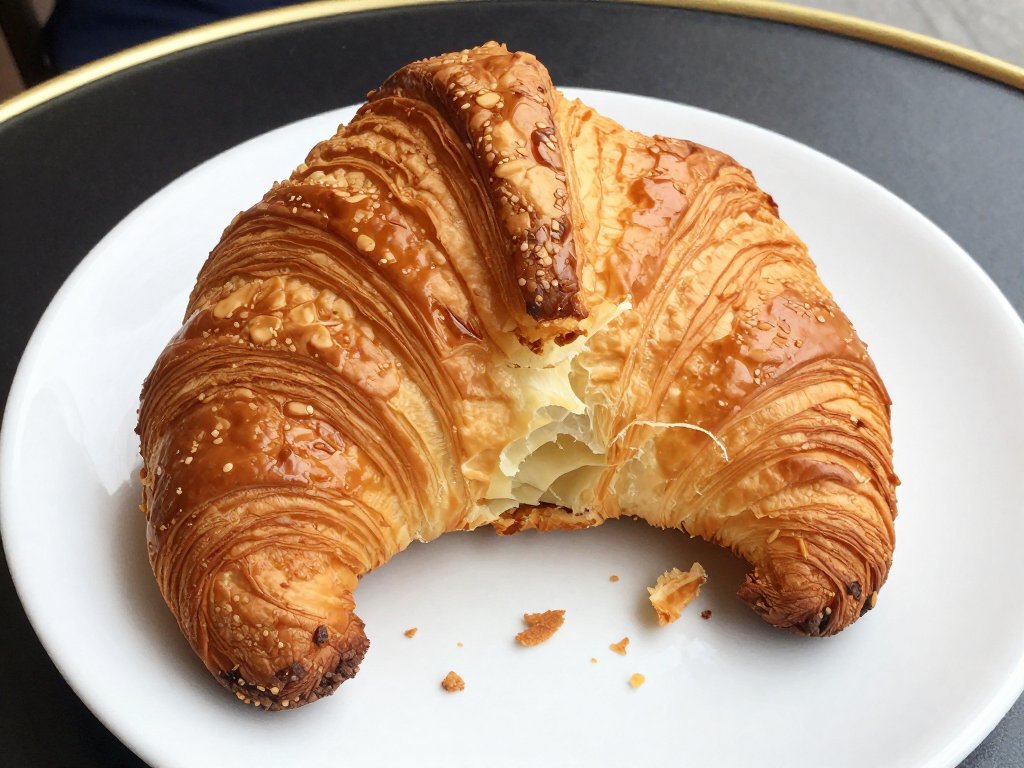
Croissant
Laminated butter pastry with dozens of flaky layers. A good one shatters when you bite into it and leaves crumbs everywhere. That's correct.
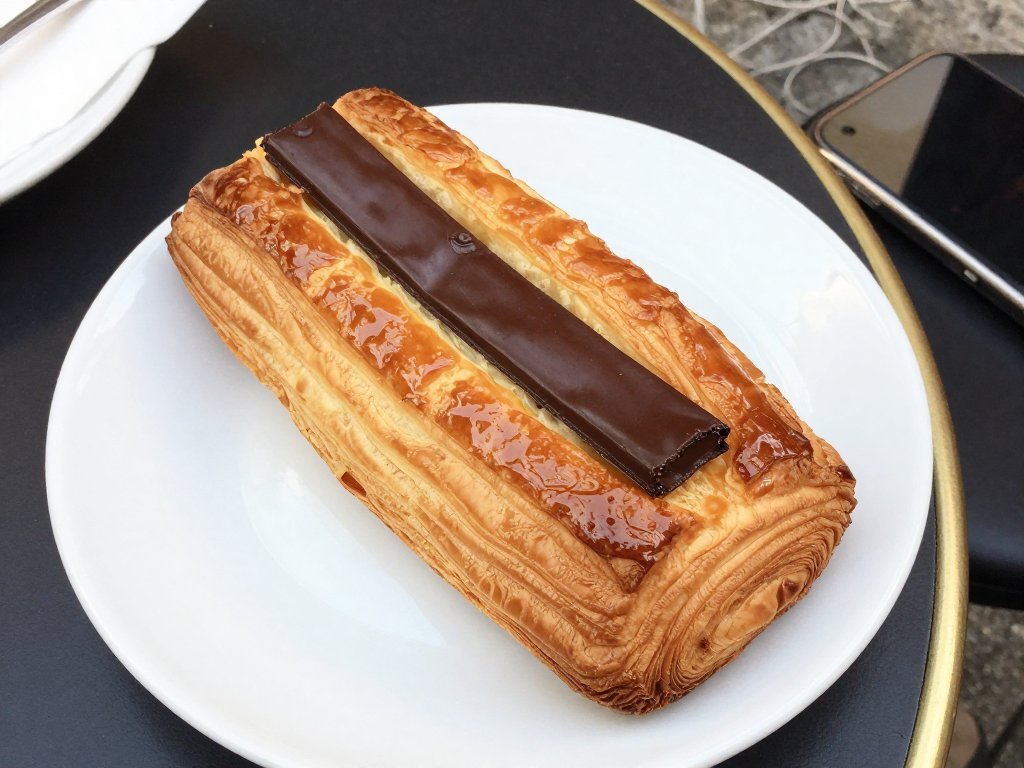
Pain au Chocolat
Rectangular laminated pastry with two bars of dark chocolate inside. Called 'chocolatine' in southwestern France (do not bring this up in Paris).
Appetizers
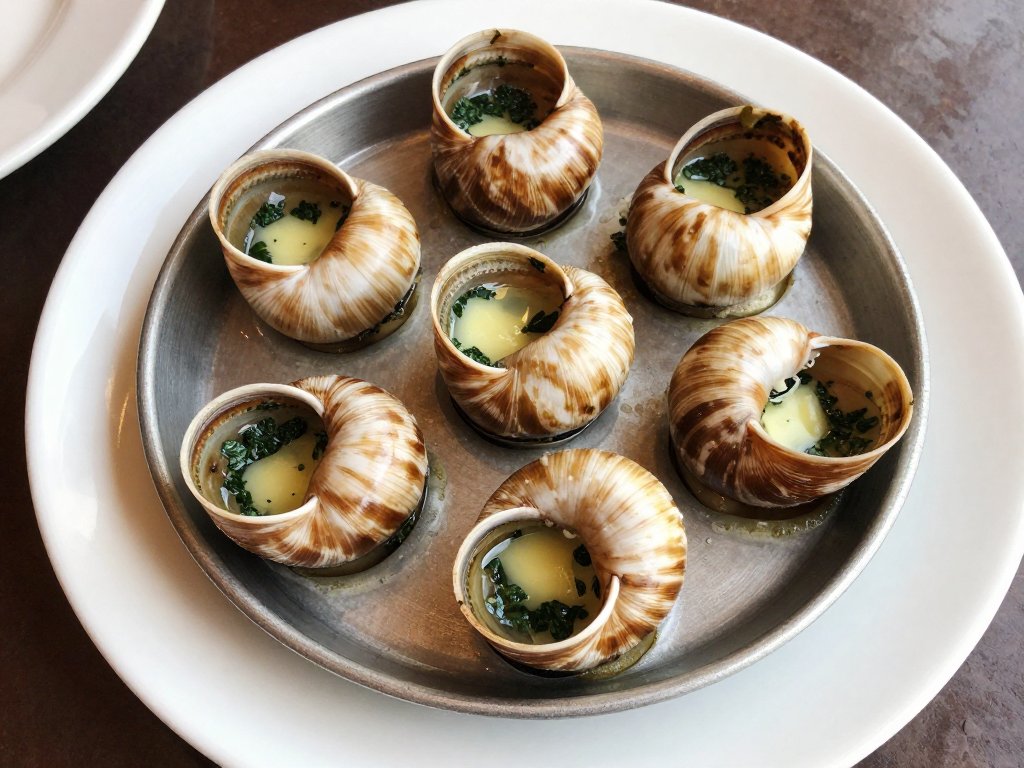
Escargots
Escargots de Bourgogne
Snails baked in their shells with garlic-parsley butter. You use a special clamp and tiny fork to extract them. The butter is the real star.
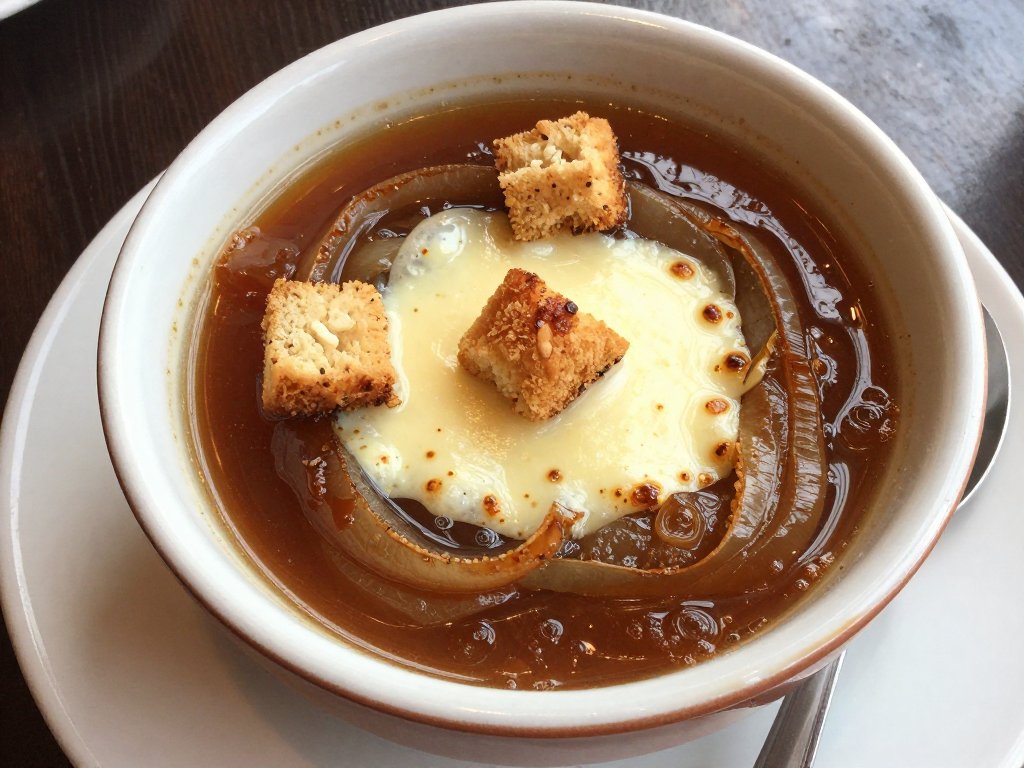
Soupe à l'Oignon
Deeply caramelized onion soup topped with a crouton and melted Gruyère cheese. Traditionally a late-night workers' meal at Les Halles.
Street Food
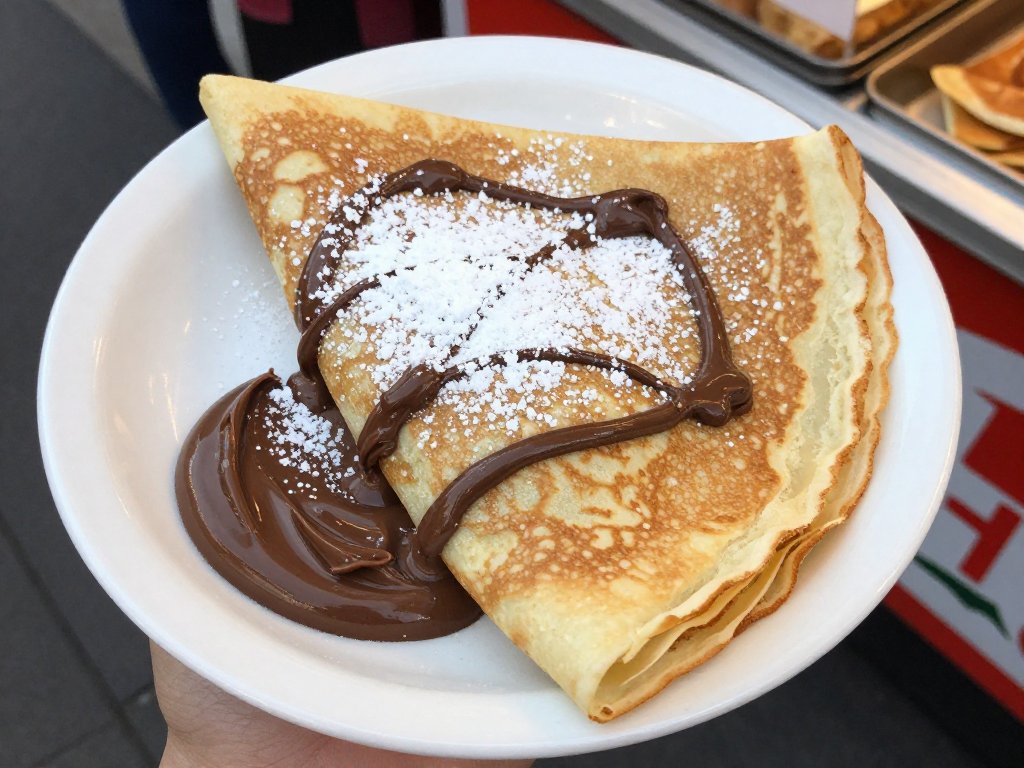
Crêpes
Paper-thin pancakes served sweet (Nutella, sugar-lemon, jam) or savory as galettes (buckwheat crêpes with ham, cheese, and egg).
Main Courses
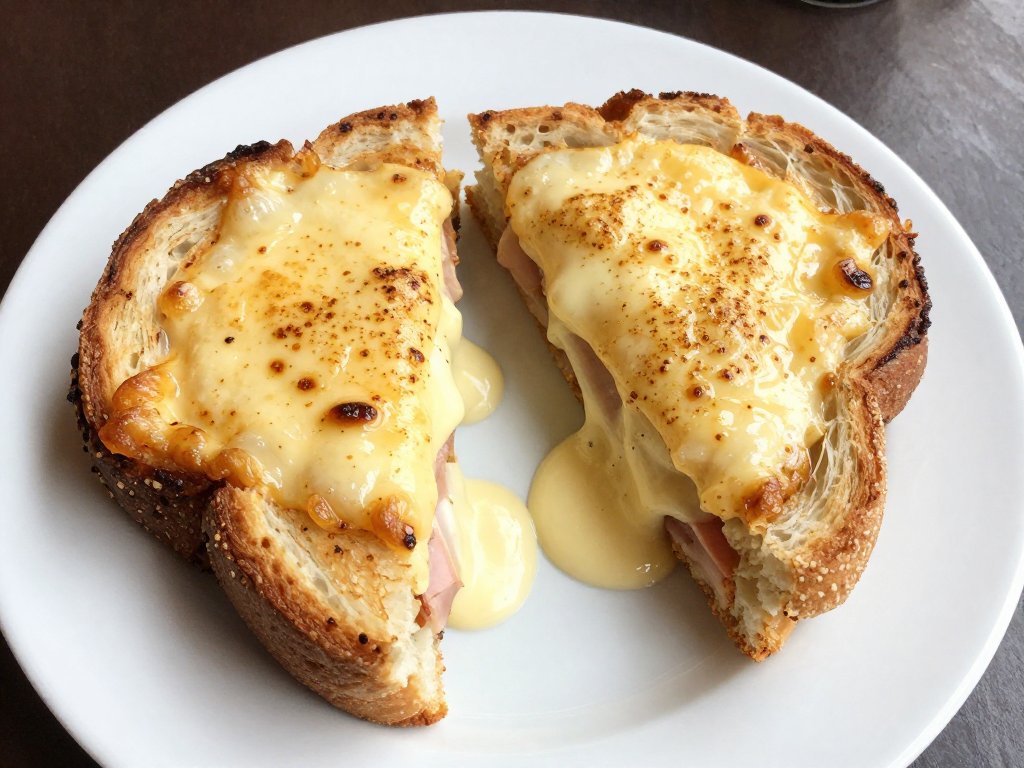
Croque-Monsieur
Grilled ham and Gruyère sandwich with béchamel sauce. Add a fried egg on top and it becomes a croque-madame.
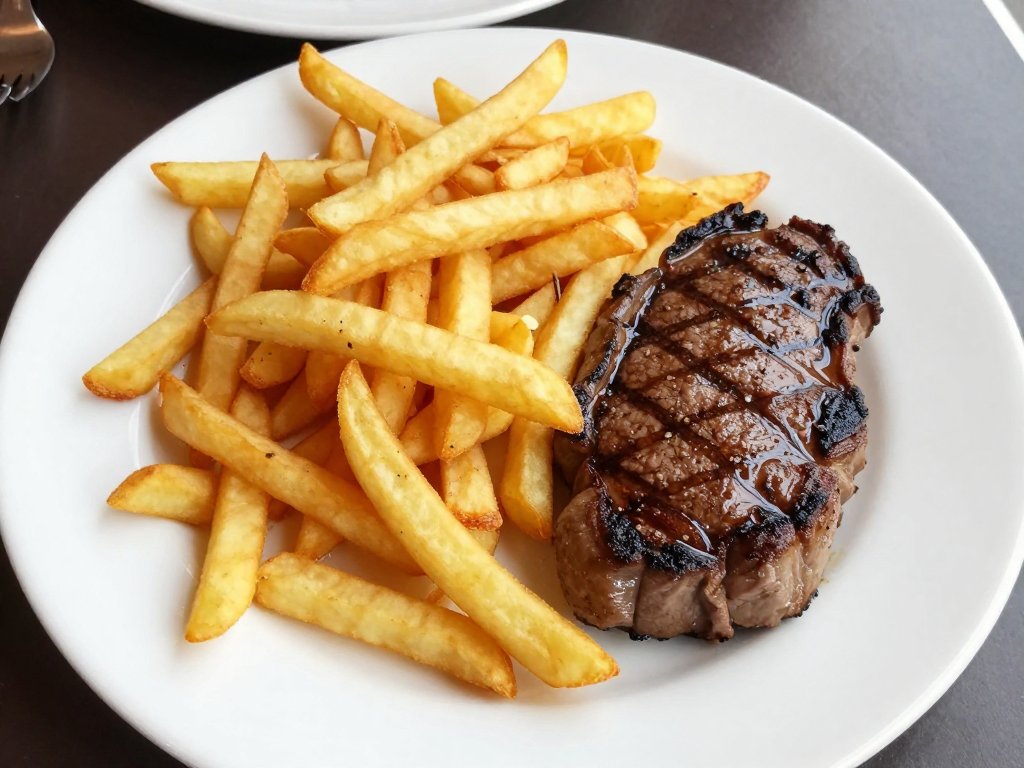
Steak Frites
Pan-seared steak (usually entrecôte or bavette) with thin, twice-fried French fries. The most ordered bistro dish in France.
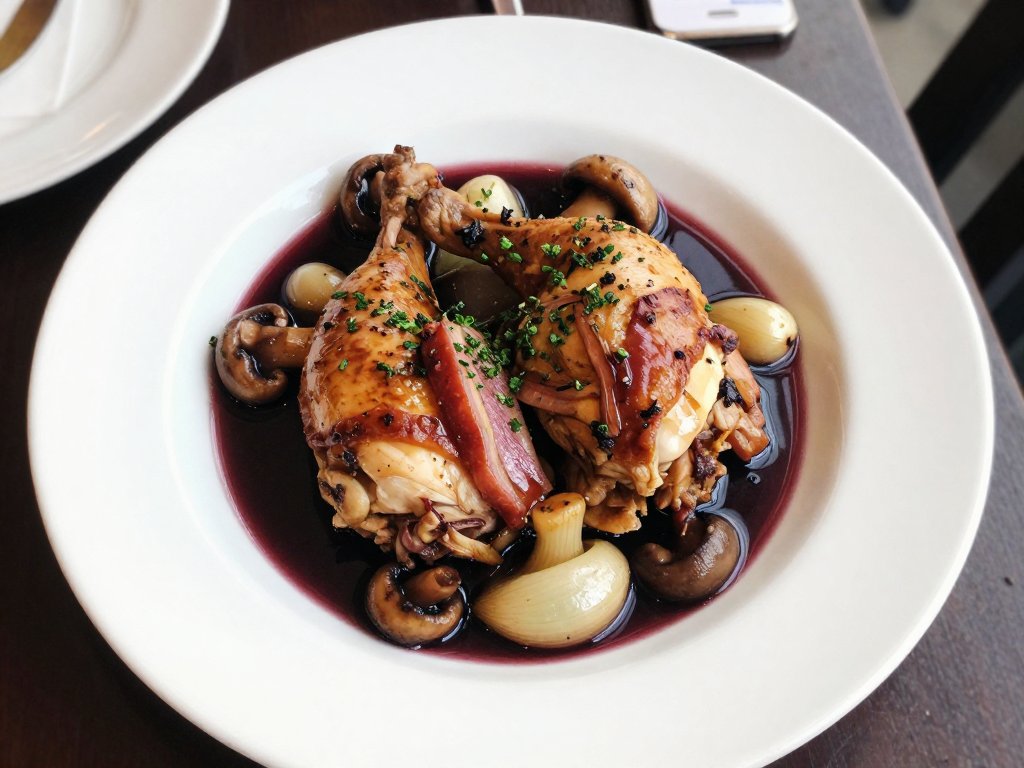
Coq au Vin
Chicken braised in red wine with mushrooms, lardons, pearl onions, and herbs. A Burgundy classic that takes hours to cook properly.
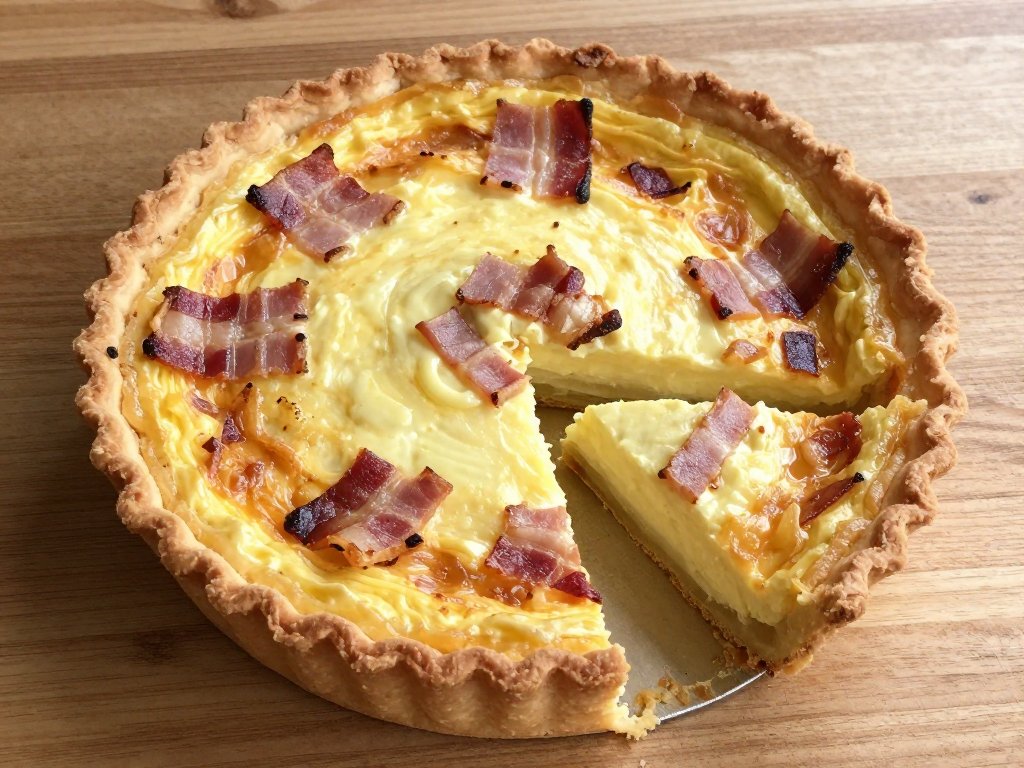
Quiche Lorraine
Savory custard tart with lardons (smoked pork belly) in a buttery pastry shell. The original from Lorraine contains no cheese.
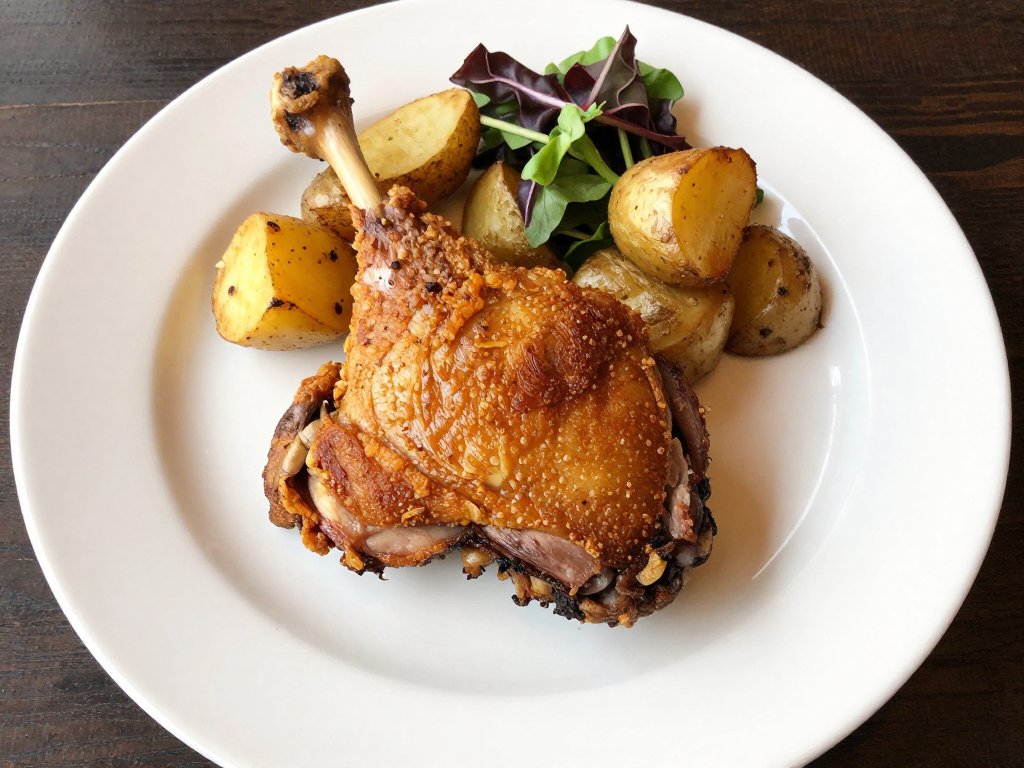
Confit de Canard
Duck legs slow-cooked in their own fat until falling off the bone, then crisped in a hot pan. A southwestern France staple from Gascony.
Side Dishes
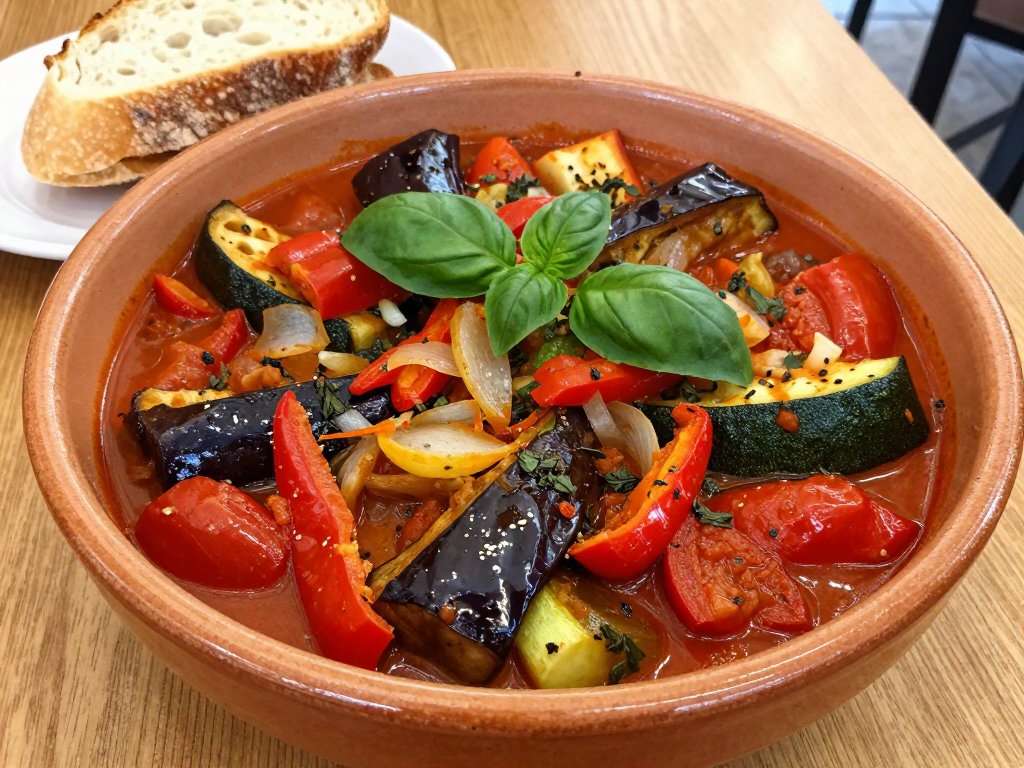
Ratatouille
Provençal stew of tomatoes, zucchini, eggplant, and bell peppers cooked slowly in olive oil. Served as a main or side dish.
Desserts
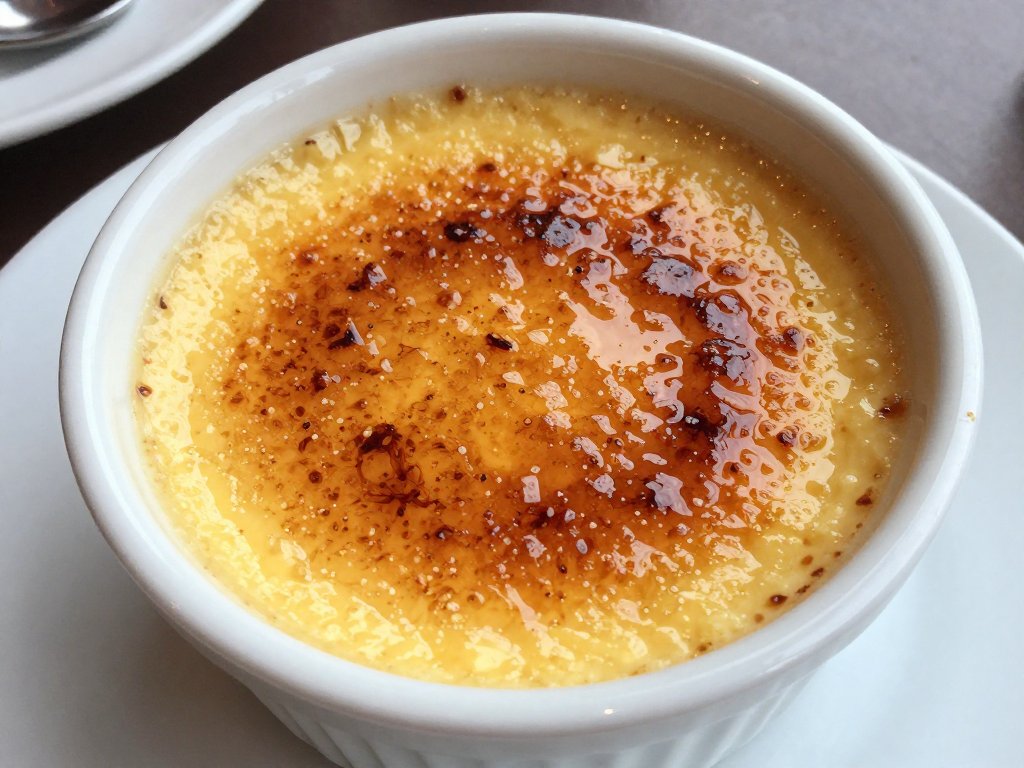
Crème Brûlée
Vanilla custard with a caramelized sugar crust cracked with a spoon. Served in a shallow ramekin, always cold underneath, hot on top.
Drinks
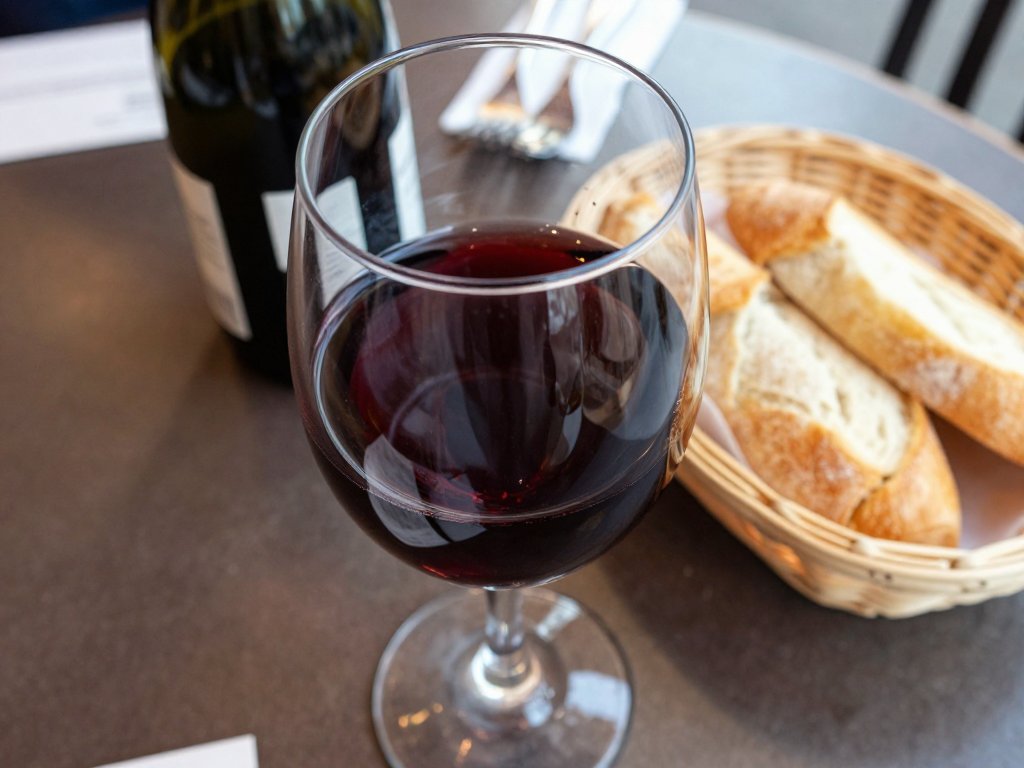
Vin Rouge
Red wine is inseparable from French dining. House wine (vin de la maison) by the carafe is standard at bistros and often excellent.
Traveling to France?
Translate any menu instantly with your camera.


Useful Phrases for Dining
Learn these essential phrases to navigate restaurants and food stalls in France.
English
French
Pronunciation
Can I see the menu, please?
Est-ce que je peux voir la carte, s'il vous plaît ?
ess-kuh zhuh puh vwar la kart, seel voo pleh
I'd like to order, please.
Je voudrais commander, s'il vous plaît.
zhuh voo-dreh koh-mahn-DAY, seel voo pleh
I am vegetarian.
Je suis végétarien/végétarienne.
zhuh swee vay-zhay-tah-ree-EN/EN
I have a food allergy.
J'ai une allergie alimentaire.
zhay oon ah-lair-ZHEE ah-lee-mahn-TEHR
The bill, please.
L'addition, s'il vous plaît.
lah-dee-see-OHN, seel voo pleh
Thank you very much.
Merci beaucoup.
mair-SEE boh-KOO
What do you recommend?
Qu'est-ce que vous conseillez ?
kess-kuh voo kohn-say-YAY
A carafe of water, please.
Une carafe d'eau, s'il vous plaît.
oon kah-RAHF doh, seel voo pleh
Frequently Asked Questions
Everything you need to know about dining in France.
In Paris, eat a fresh croissant from a proper boulangerie, steak frites at a zinc-counter bistro, and crème brûlée for dessert. Outside Paris, regional food is the whole point: cassoulet in Toulouse, bouillabaisse in Marseille, choucroute in Strasbourg, and crêpes in Brittany. France's food changes dramatically by region.
Never struggle with a foreign menu again
Point your camera at any menu and get instant translations with dish descriptions, dietary info, and more.